


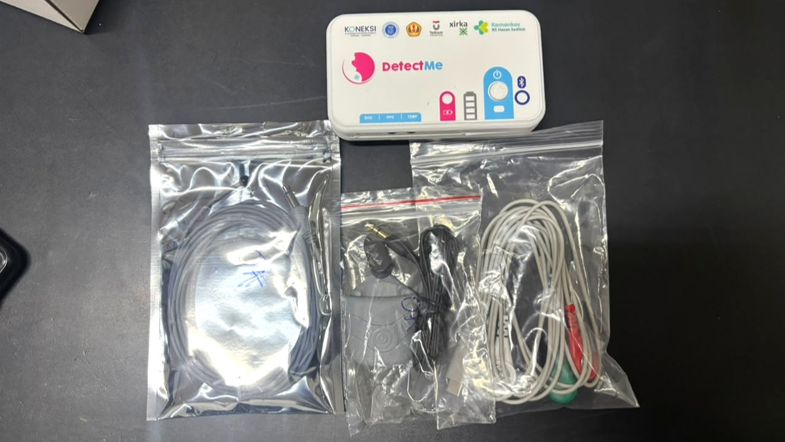
DetectMe Ultralight, a Collaborative Innovation to Strengthen Maternal and Fetal Health Monitoring
Bandung, stei.itb.ac.id – Lecturers at the School of Electrical Engineering and Informatics, Bandung Institute of Technology (STEI ITB) have taken a key role in the development of DetectMe, a digital health technology innovation designed to support easier, more connected, and sustainable monitoring of the condition of pregnant women and fetuses.
The innovation was developed through the ULTRALIGHT Project, an Indonesia-Australia collaborative research project that brings together experts in engineering, digital technology, healthcare, service implementation, and product development. The project's development results were presented at the ULTRALIGHT Project Final Dissemination event held on Tuesday, July 7, 2026, at the UTC Hotel, Bandung.
DetectMe is a maternal and fetal health monitoring system that integrates portable sensor devices, smartphone applications, cloud-based services, and a digital dashboard that can be used to support monitoring by health workers.
Dr. Hasballah Zakaria, S.T., M.Sc., a lecturer from the Biomedical Engineering Research Group at STEI ITB and a member of the research team, explained that the device was developed to make pregnancy health monitoring more accessible to users.
“The ULTRALIGHT Project is developing a system to monitor the health of pregnant women. It incorporates ECG, PPG, and temperature sensors. Once the device is worn by a pregnant woman, it is activated and connected to a smartphone,” Hasballah said. ujar Hasballah.
Through the integrated system, data collected by the device can be transmitted through the application to cloud-based services and a monitoring dashboard. This approach enables healthcare professionals to access health information and support the continuous monitoring of maternal and fetal conditions.
The development of DetectMe is focused not only on creating a device, but also on building a monitoring ecosystem that connects pregnant women with midwives, community health centers, and healthcare services. The system is expected to broaden access to pregnancy monitoring and support the early identification of indications that may require further medical attention.
Within the collaboration, ITB is responsible for developing the device and the computational algorithms that form an essential part of the DetectMe system. These engineering and computing contributions are intended to produce a device capable of processing sensor data while remaining seamlessly connected to an integrated digital system.
“ITB develops the device and its computational algorithms. Universitas Padjadjaran is responsible for introducing and implementing the system among pregnant women, while Telkom University develops the smartphone application that connects the device to the cloud,” Hasballah explained. jelas Hasballah.
Product development also involves PT Xirka Dama Persada as an industry partner. Meanwhile, collaboration with healthcare institutions helps ensure that the system is developed with careful consideration of healthcare service requirements and maternal health monitoring standards.
The collaboration received funding support from the KONEKSI program, which promotes knowledge and innovation partnerships between Indonesia and Australia. The ULTRALIGHT Project began in 2024 and entered its final stage in 2026.
In addition to supporting technological development, the involvement of the University of Newcastle has opened opportunities to explore the potential application of DetectMe within the Australian community. The team also held discussions with communities in Australia to gain insights into local needs and the potential use of similar technologies in the country.
According to Hasballah, cross-country collaboration creates opportunities to expand the benefits of DetectMe beyond a single region.
“We hope that this product will not only be beneficial to Indonesia, but will also serve communities in other countries,” he said.
The final dissemination event provided a platform for presenting the project’s achievements and gathering input from a wide range of stakeholders. The event was attended by representatives from the Ministry of Health of the Republic of Indonesia, the Ministry of Higher Education, Science, and Technology, the Ministry of National Development Planning/Bappenas, as well as partners from the healthcare, education, research, and industry sectors.
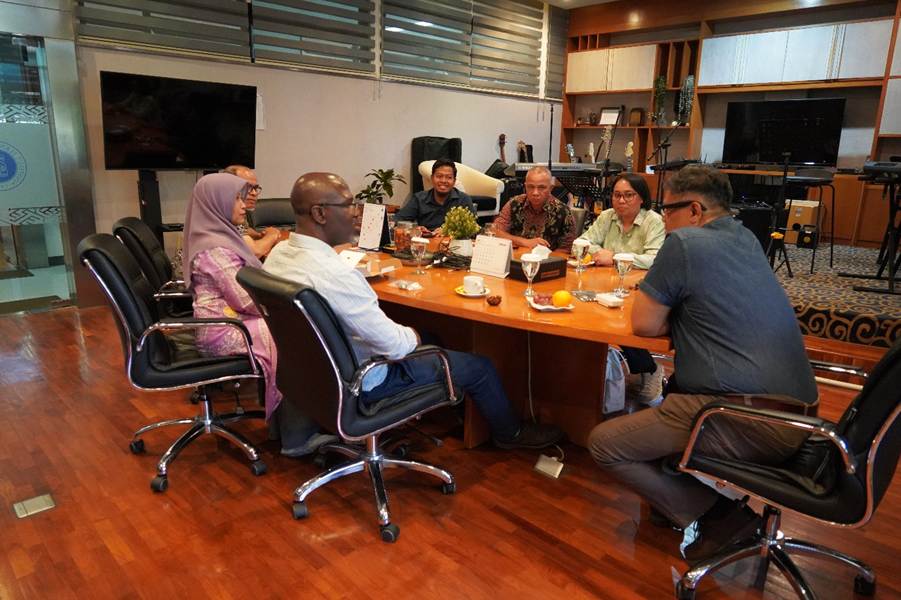
During the event, the team presented its research findings, demonstrated the use of DetectMe, and discussed the steps required to advance the innovation and enable its wider use by the public.
Feedback from the Ministry of Health included recommendations regarding the stages and requirements involved in obtaining marketing authorization for the device. Discussions also addressed the readiness of the system to support Indonesia’s national digital health ecosystem.
Meanwhile, the Ministry of Higher Education, Science, and Technology provided information on potential follow-up funding opportunities to support the commercialization process, including the need for further validation and clinical trials, product refinement, and the development of a more portable and user-friendly device.
From a national development planning perspective, discussions with the Ministry of National Development Planning/Bappenas provided insights into the potential development of DetectMe as part of broader efforts to strengthen maternal health monitoring in Indonesia. The various recommendations serve as an important foundation for the team in preparing the next stages of development following the completion of the research project.
“All stakeholders provided input to help ensure that this product can eventually reach and be used by the public,” Hasballah said.
As the project enters its final stage, the development of DetectMe will focus on technological refinement, improved ease of use, further validation, regulatory compliance, and stronger commercialization opportunities. These steps are necessary to ensure that the research outcome does not remain merely a prototype, but continues to evolve into a digital health solution that can be implemented on a broader scale.
The strength of DetectMe lies in the integration of portable devices, sensor technology, mobile applications, data processing, and healthcare monitoring systems. This approach creates opportunities for more connected maternal and fetal health monitoring, particularly for communities with limited access to regular healthcare services.
STEI ITB’s involvement in the development of DetectMe reflects the contribution of biomedical engineering, healthcare instrumentation, signal processing, and digital technology expertise in addressing real societal needs. Through interdisciplinary and inter-institutional collaboration, technological innovation is directed not merely toward producing a functional device, but toward delivering a relevant, user-friendly solution with the potential to create a sustainable impact on the improvement of maternal and fetal healthcare services.