
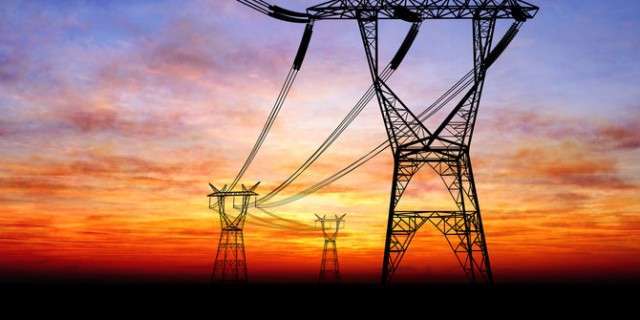
The 35,000-watt MW Power Plant Brings Fresh Wind to the Economy
“There is no development that does not require electricity.,” ujar Dr Ir Nanang Hariyantoa lecturer and electricity practitioner from the Bandung Institute of Technology (ITB), welcomed the government's plan to open up cooperation with the private sector. In his view, this megaproject is one way to open up investment opportunities for the private sector in the electricity sector, particularly in the power generation sector.
.With the involvement of the private sector, this infrastructure project should stimulate the Indonesian economy. The question is, which private sector will participate in/contribute to the construction of the power plant? If it's not domestic private sector, then the nation's children will undoubtedly benefit little.” terangnya. “I'd honestly say the 35,000 MW plan is quite ambitious. However, it will drive the country's economy as a spin-off..
However, one question the electricity lecturer raised was whether this infrastructure development could be enjoyed by all the nation's children. Nanang calculated simply that building a power plant like a coal-fired power plant (PLTU) at a price of US$1.2 million per MW would require US$42 billion over five years. This figure is substantial compared to the national budget, which will spend approximately US$8 billion annually.The problem is that the national capacity to build these power plants currently only reaches a maximum of 100 MW, which can be built by domestic companies. Consequently, with this program, it appears that only neighboring countries will benefit from Indonesia's infrastructure development.” terangnya.
To prevent this from happening, Nanang suggested the development process be carried out in two stages. The first stage is preparing national production capabilities and capacity, followed by the construction of the infrastructure. This means that development is based on planning.The accelerations that need to be implemented are indeed quite complex, because as far as I know, the national capacity to build power plants only reaches tens of megawatts. This requires well-educated professionals, which we don't have in abundance. Even if all universities offering electrical engineering education were forced to produce, it would be very difficult to produce a large number of professionals.” jelasnya.
"There is no development that does not require electricity"
see also Interview with Dr. Ir. Nanang Hariyanto on Elshinta FM radio
Furthermore, with the significant entry of private power plants, the government needs to consider a level playing field for the electricity market, ensuring a balanced market mechanism between PLN (State Electricity Company) and these private sector groups. In his view, the energy market, particularly electricity, is highly attractive for long-term investment. Although the return on investment (ROI) is somewhat slow, it will clearly grow in the long run. Furthermore, given the current situation, PLN's electricity selling price is approaching its economic point, particularly in Java. Therefore, this investment, at such a price, would be highly attractive for a long-term business venture. Furthermore, there is currently a tariff adjustment mechanism that links electricity selling prices to global economic conditions.
However, Nanang doesn't actually agree with this pricing concept. He believes it will lead to instability.By linking electricity prices to inflation, modern control theory considers it a form of positive feedback control. This means that if inflation rises, electricity prices will rise. And rising electricity prices will cause inflation to rise, and so on. Positive feedback in modern control theory would lead to instability. In control theory, there must be a constraint that limits these prices.” jelas Nanang.
According to the electricity practitioner, the business model that should be developed to attract investors must pay attention to two things: a consistent legal clarity mechanism and speed of decision-making processes in each related sector, starting from licensing aspects, selling price agreements, COD limits, and so on.Good coordination between sectors, from PLN as the electricity recipient and the electricity directorate as the regulator, as well as the finance department must be clear,” tutupnya.
Source: Indonesian Electricity Magazine
DISCLAIMER: This article is a personal opinion and does not represent the opinion of the institution.