Exploring Collaboration between Bandung Institute of Technology and University of Campinas for Talent Development and Semiconductor Research
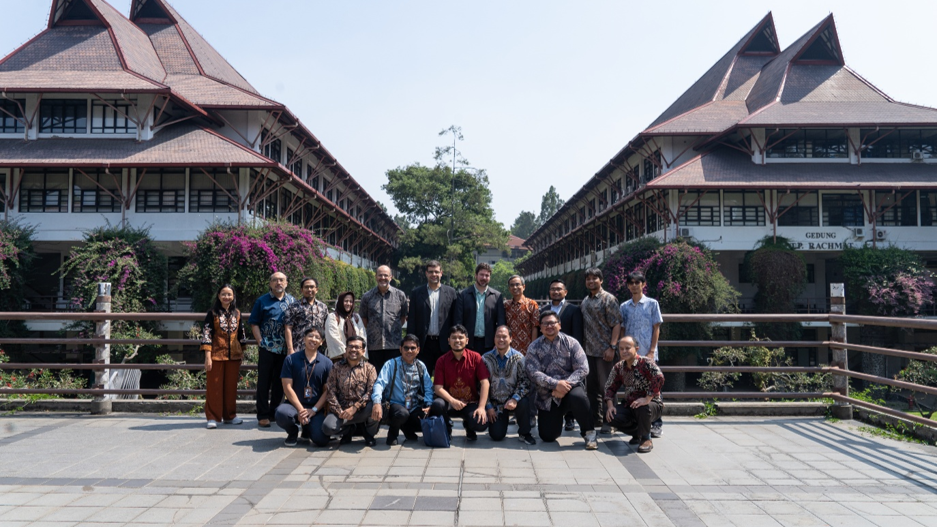
Bandung, stei.itb.ac.id – The School of Electrical Engineering and Informatics, Bandung Institute of Technology, received a visit from a delegation from the University of Campinas (UNICAMP), Brazil, on Thursday (11/6/2026) at the STEI ITB Meeting Room, Labtek VIII, 2nd Floor. This visit is a follow-up to the preparation of the Fast-Finding Mission program which aims to strengthen international cooperation in the semiconductor field between the two institutions.
The meeting marked a strategic step in exploring various forms of collaboration focused on human resource development, research, and higher education in the semiconductor sector. One of the main agenda items discussed was training opportunities for postgraduate students at the University of Campinas, Brazil, as part of efforts to increase academic and research capacity in semiconductor technology, currently a global priority sector.
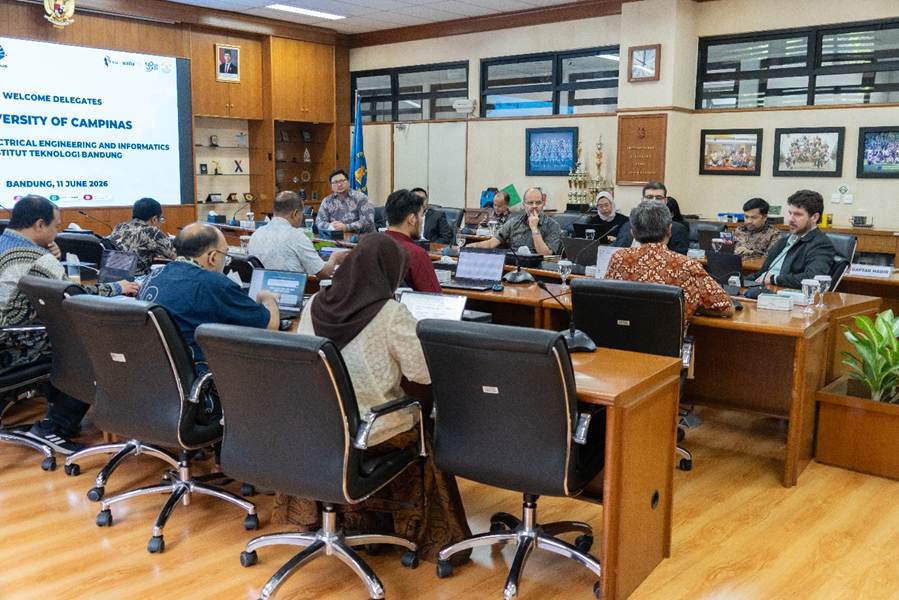
The collaboration currently being prepared covers three main areas: strengthening academic activities, research collaboration, and student mobility. Through this partnership, the two institutions are expected to build a sustainable collaborative ecosystem to support the development of semiconductor technology while expanding the international network of the academic community.
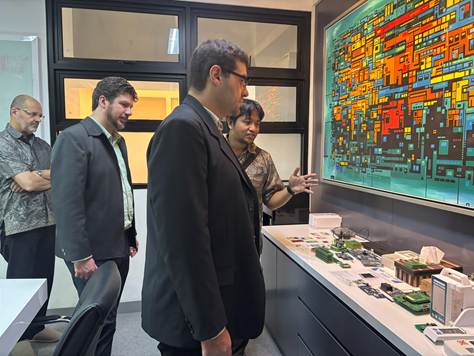
As part of the series of activities, the University of Campinas delegation also visited several laboratories and research facilities within ITB related to the development of semiconductor technology. The visit included the Integrated Circuit (IC) Design Laboratory at STEI ITB, the Engineering Physics Laboratory, and the Nano and Nuclear Laboratory. The visit aimed to introduce ITB's research capabilities and to open up opportunities for more concrete research collaboration between the two institutions in the future.
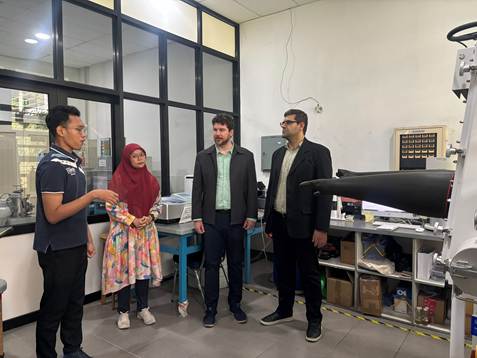
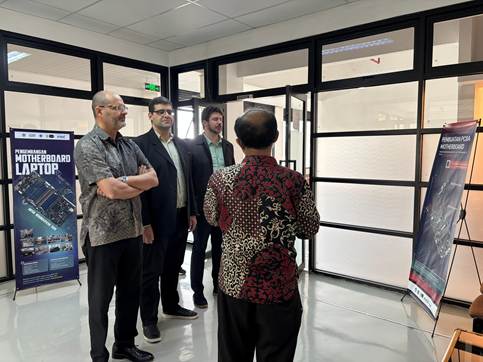
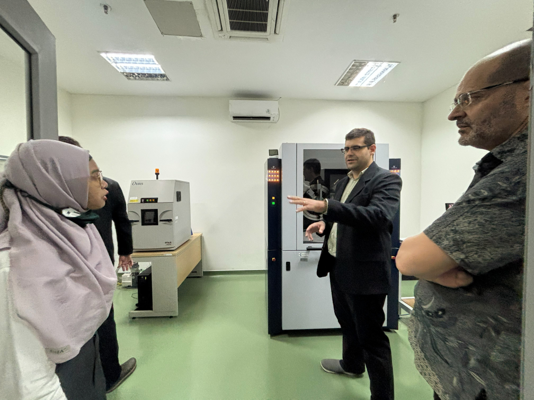
From ITB, this activity was attended by the Vice Dean for Academic Affairs of STEI ITB, Dr. techn. Muhammad Zuhri Catur Candra, S.T., M.T.; Vice Dean for Resources of STEI ITB, Dr. Eng. Ir. Arwindra Rizqiawan, S.T., M.T.; Lecturer of PIC Semiconductor STEI ITB, Nur Ahmadi, S.T., M.Eng., Ph.D.; Dean of the Faculty of Mechanical and Aerospace Engineering (FTMD); Prof. Hari Muhammad from FTMD; Ganes Shukri from the Faculty of Industrial Technology (FTI); and Dr. Akhmadi Surawijaya, S.T., M.Eng., Dr. Eng. Infall Syafalni, S.T., M.Sc., Nana Sutisna, S.T., M.T., Ph.D., and Rahmat Mulyawan, S.T., M.T.
Also present were representatives from the Ministry of Higher Education, Science, and Technology, including Oki Earlivan Sampurno, Special Staff to the Minister for Industrial Networks and International Cooperation, along with Wisnawan Bayuadi, Hilman Arrasyid, and Rahmat Kamarudin, Experts in Industrial Networks and International Cooperation. The meeting was also attended by representatives from the ITB Partnership Directorate.
During the discussion, both parties exchanged views on opportunities to develop joint programs that could benefit students, lecturers, and researchers. In addition to supporting improvements in the quality of education and research, this collaboration is expected to strengthen Indonesia's position in the development of the semiconductor ecosystem through strategic partnerships with leading international higher education institutions. The University of Campinas visit is part of STEI ITB's commitment to continuously expand its global network of collaborations and encourage collaborative initiatives that support the development of science, technology, and innovation. Through strong international synergy, STEI ITB strives to create broader opportunities for student competency development and enhance Indonesia's research contribution to the global stage.