
Promoting the Realization of Human-Centered AI Technology, SEEI ITB Organizes the National Webinar “Humanizing Artificial Intelligence”
Bandung, 31 May 2025 – In an effort to promote the ethical, inclusive, and human-centered use of artificial intelligence (AI), the School of Electrical Engineering and Informatics, Institut Teknologi Bandung (SEEI ITB), organized a National Webinar titled “Humanizing Artificial Intelligence.” This activity forms part of SEEI ITB’s commitment to shaping the direction of AI technology development in Indonesia that is not only technically excellent, but also aligned with the social and cultural interests of society. ..
The webinar highlighted the urgency of a human-centered AI approach in responding to the transformational impacts of technology on the world of work and the social order in Indonesia. Featuring Dr. Eng. Ayu Purwarianti, S.T., M.T. (Researcher at the ITB AI Center), Iradat Wirid (Deputy Executive Secretary of CfDS UGM), and Indri Dyah Saptaningrum (Senior Researcher at ELSAM), the session examined structural challenges arising from automation and algorithmization—ranging from the potential loss of various types of jobs to the widening gap in digital skills. . .
Panel 2: Human-Centered AI Development
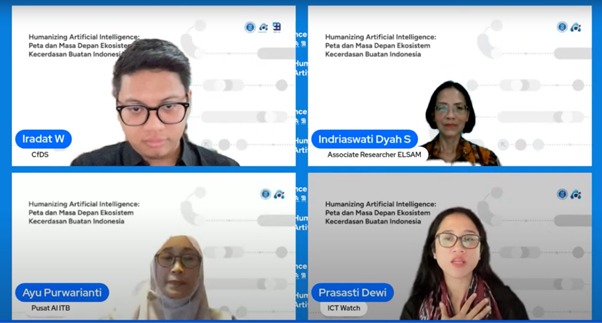
The second panel, titled “Power to the People: Human-Centered Approach to Shape Better AI,” emphasized the importance of developing and utilizing AI technology that places humans as its core foundation. The panel stressed that, in principle, humans must remain the subject—not the object—of technology. Moderated by Prasasti Dewi, Program Director of ICT Watch, the discussion presented perspectives from diverse backgrounds. . .
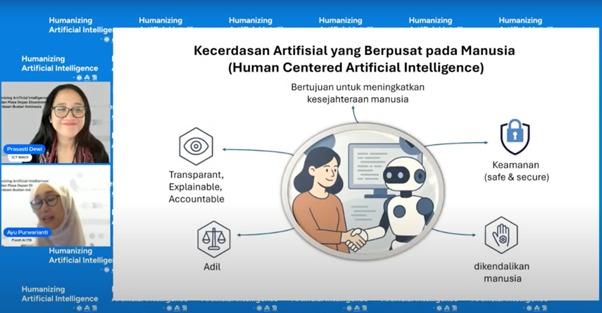
“The main purpose of AI is to improve human well-being and must not harm humans. This means that when developing AI, it must not be used for actions that are detrimental,” stated Dr. Eng. Ayu Purwarianti, S.T., M.T., Researcher at the ITB AI Center, as one of the speakers in the second panel. “At least four principles must be considered in AI development: safety, human control, transparent applications, accountability, and fairness,” she continued. .. ..
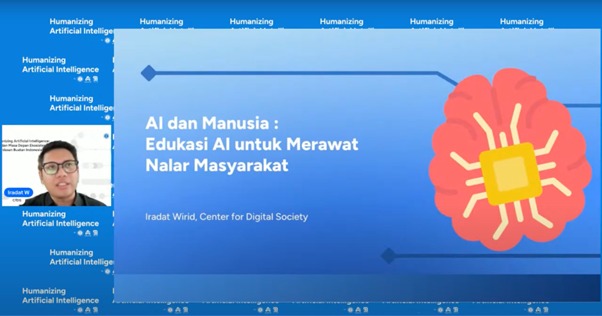
The importance of placing humans at the center of every technology design process, including AI, was also emphasized by other speakers. “Technology should indeed be centered on humans and used for good purposes in the interest of humanity. We must not allow the worship of technology to blur the boundaries of human values and human functions themselves. A basic understanding of ethics is needed so that humans can continue to keep up with the speed of technology, ensuring that they do not lose their humanity,” said Iradat Wirid, Deputy Executive Secretary of CfDS UGM. . .
The importance of human involvement throughout the entire AI development process was also highlighted by Indri Dyah Saptaningrum, Senior Researcher at ELSAM. She emphasized that a human-centered approach does not only concern the final outcome, but also includes processes that truly place humans at the center of every stage of technology design and operationalization. “Human centrality in AI development and operation must be understood as an empowering process, not a replacing one. Human interaction and involvement at every stage—from intervention and review to evaluation—are the core of the human-in-the-loop principle,” she explained. . . .. ..
Realizing Humanistic and Sustainable AI
The organization of this webinar represents a tangible manifestation of ITB’s commitment to implementing the Tri Dharma of Higher Education through discussions on the development of a sustainable and humanistic AI ecosystem in Indonesia. The webinar opened an important dialogue on concrete steps to measure and ensure that the AI being developed truly supports human dignity and capacity, rather than merely accelerating efficiency. . .
This webinar not only broadened perspectives on the opportunities and challenges presented by technologies such as AI, but also raised fundamental questions about how we can tangibly ensure that AI development genuinely strengthens human dignity and capacity, instead of simply pursuing efficiency and productivity. In addressing this challenge, cross-sector contributions are key—one of which is the active involvement of civil society in playing a strategic role as ethical guardians, social advocates, and bridges between affected communities and stakeholders in the development of policy and technology.
***
For further information, please contact:
Masgustian
Media & External Relations
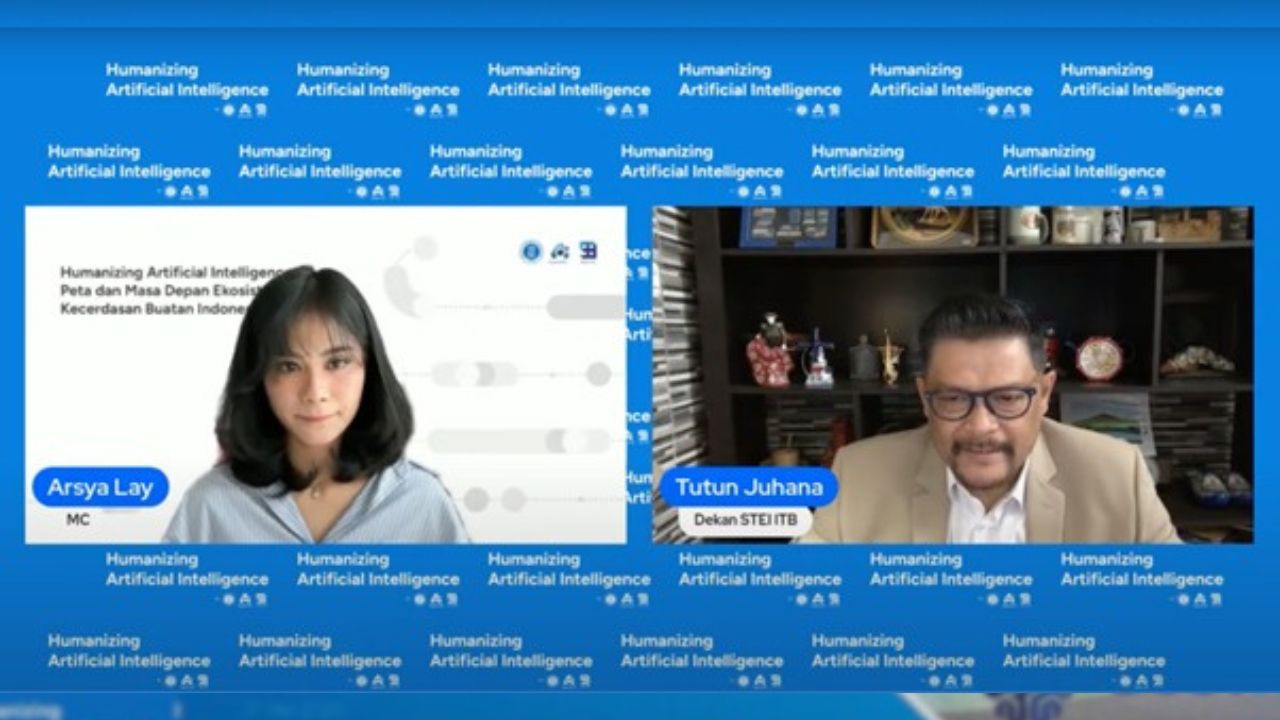
Webinar Humanizing Artificial Intelligence: Mapping and the Future of Indonesia’s Artificial Intelligence Ecosystem, held on Saturday, 31 May 2025.
+62 857-9931-2383 (WhatsApp) or masgustian@gmail.com
Tayangan Webinar dapat disaksikan di link berikut:
DOKUMENTASI