
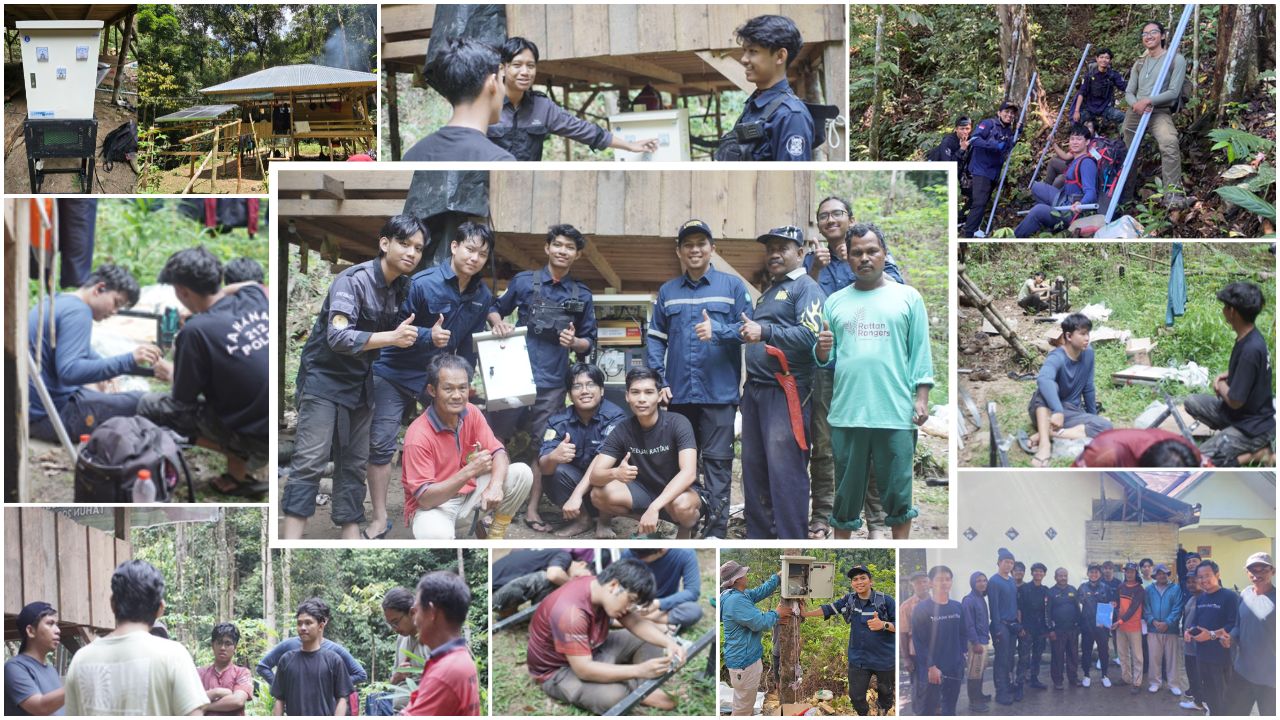
SEEI ITB Team Continues Renewable Energy Innovation with a Hybrid Pico-Hydro and Solar PV System to Support Rattan Harvesting in Sumpur Kudus Village
Bandung, stei.itb.ac.id As a continuation of the 2024 community engagement program, a team of lecturers from the School of Electrical Engineering and Informatics (STEI) ITB carried out another series of activities in Sumpur Kudus Village, Sijunjung Regency, West Sumatra..
Running from 9 April to 28 November 2025, . this program marks the next phase of renewable energy system development that began with the implementation of a portable pico-hydro generator in 2024 to improve energy reliability in the conservation forest area.
(See also: SEEI ITB Team Develops Portable Pico-Hydro Power Plant to Support Rattan Harvesting in Sumpur Kudus Village (2024)))
Sumpur Kudus Village in Sijunjung Regency, West Sumatra, is known as an important forest conservation area spanning 4,862 hectares. The forest supports the local ecosystem and water resources, while also serving as a source of livelihood for rattan farmers who rely on forest products for their welfare.
However, the challenging geography—steep hills and dense forest—makes activities in the area far from easy. Rattan farmers often stay in the forest for several days during the harvesting period, facing limited lighting and depending on costly, inefficient disposable battery-powered headlamps.
Recognizing this urgent energy need, the Sumpur Kudus community submitted an official request through the Desanesha ITB platform for a sustainable electricity solution. Responding to this request, the Directorate of Research, Community Service, and Innovation (DRPM) ITB launched a community engagement program led by Dr. Bryan Denov, S.T., M.T., from SEEI ITB. . . . . Dr. Bryan Denov, S.T., M.T. . ...
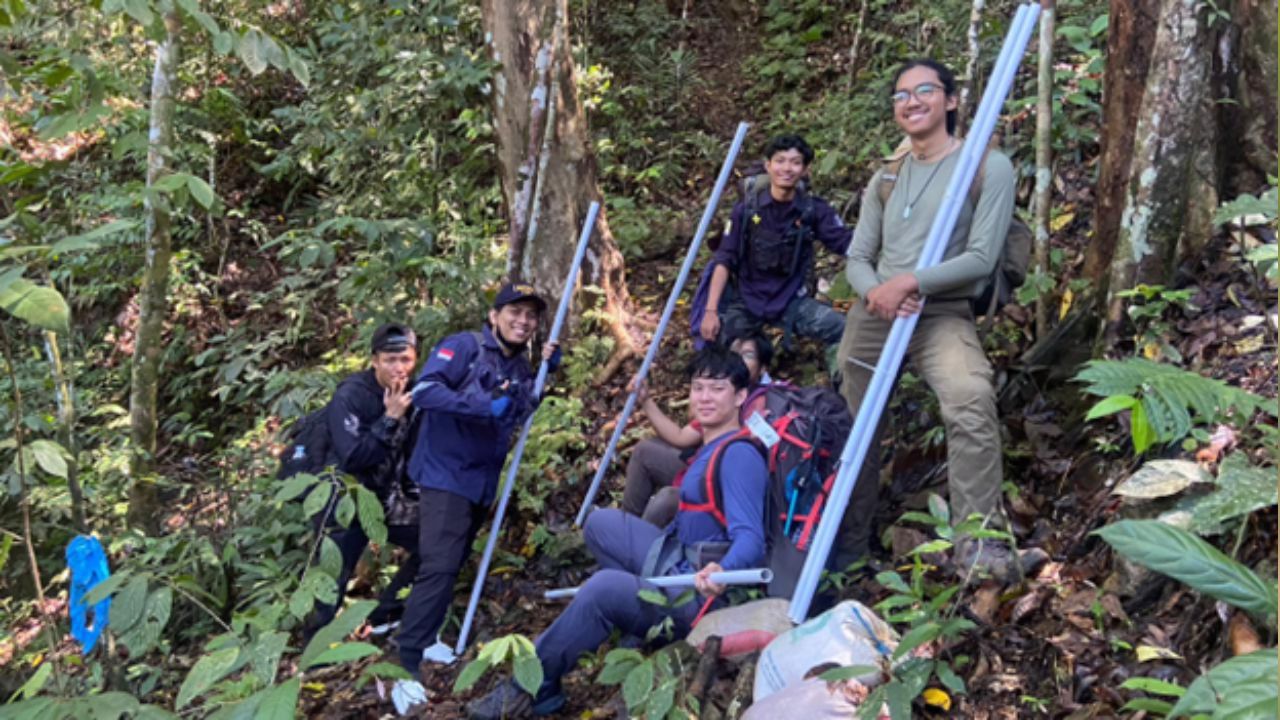
The program was carried out from 9 April to 28 November 2025, covering field surveys, system design, and on-site installation in the Sumpur Kudus conservation forest. ..
From Pico-Hydro to a Hybrid Energy System
Based on field survey results, the team designed and installed a 1 kW portable Pico-Hydro Power Plant (PLTPH) equipped with a generator, 12V battery, and charge controller. The system utilizes a small river stream to supply electrical power for patrol posts and residents operating in the forest area. . .
However, the extreme terrain and high lighting demands prompted the team to develop a more resilient system. As a follow-up solution, STEI ITB designed a hybrid energy system that integrates pico-hydro and solar PV to ensure continuous power supply even when water discharge decreases or the pico-hydro unit requires maintenance. . .
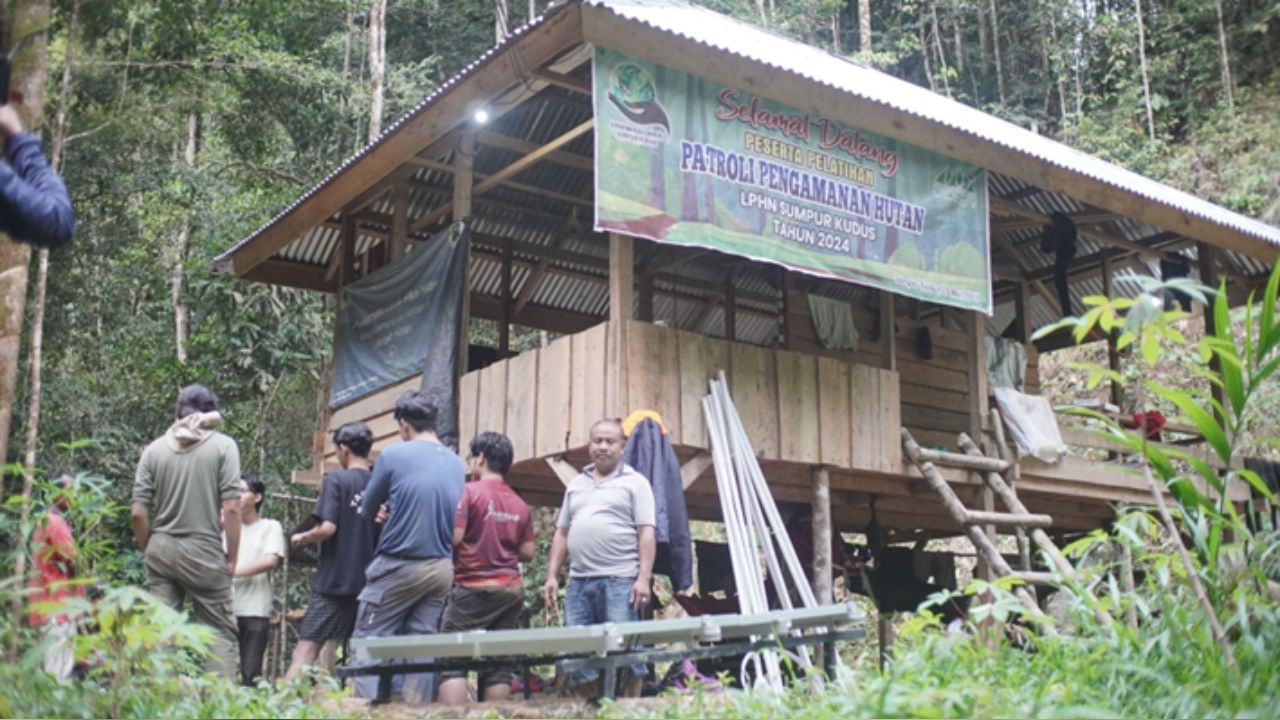
Integrated Energy System Implementation
The program goes beyond installing power generators by creating an energy infrastructure that improves safety and productivity for forest workers. Several key initiatives were implemented:
-
Forest Trail Lighting System
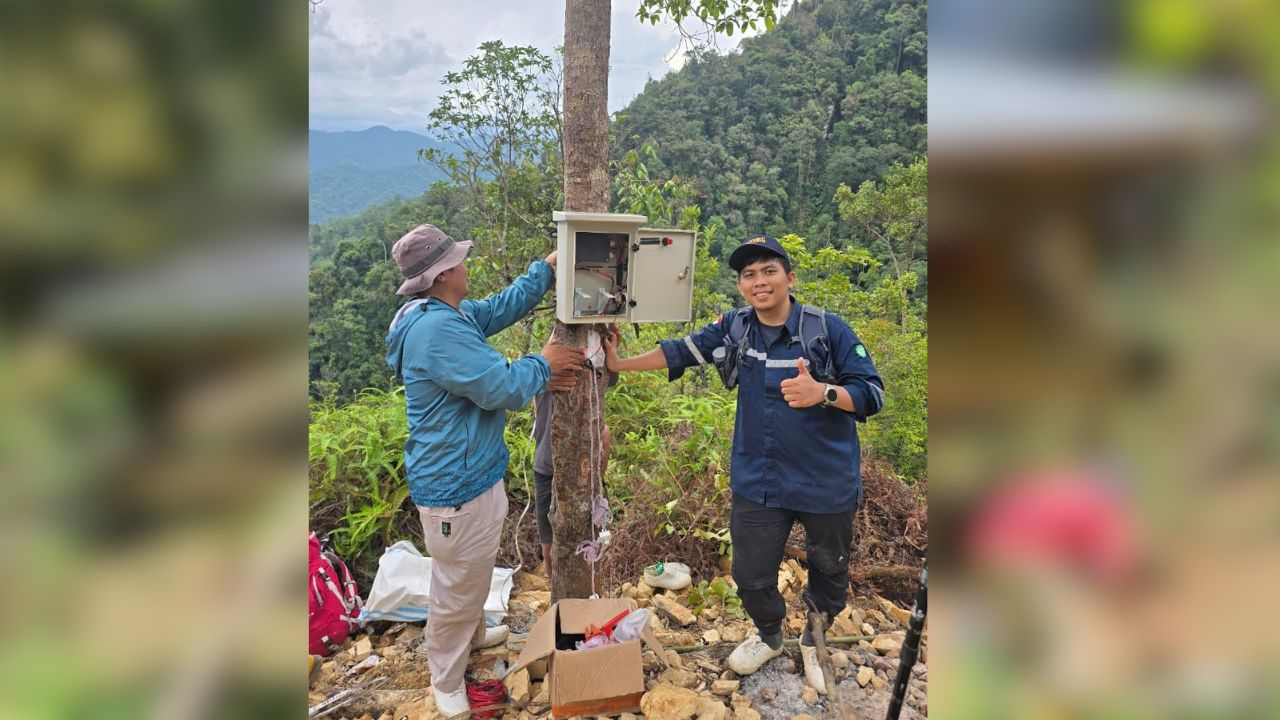
Installation of four lighting posts and one monitoring post equipped with LED strip lights strategically placed along forest trails. These lights are powered by batteries charged by the pico-hydro system, significantly improving nighttime visibility for farmers and forest patrols.
- Solar Panel Integration
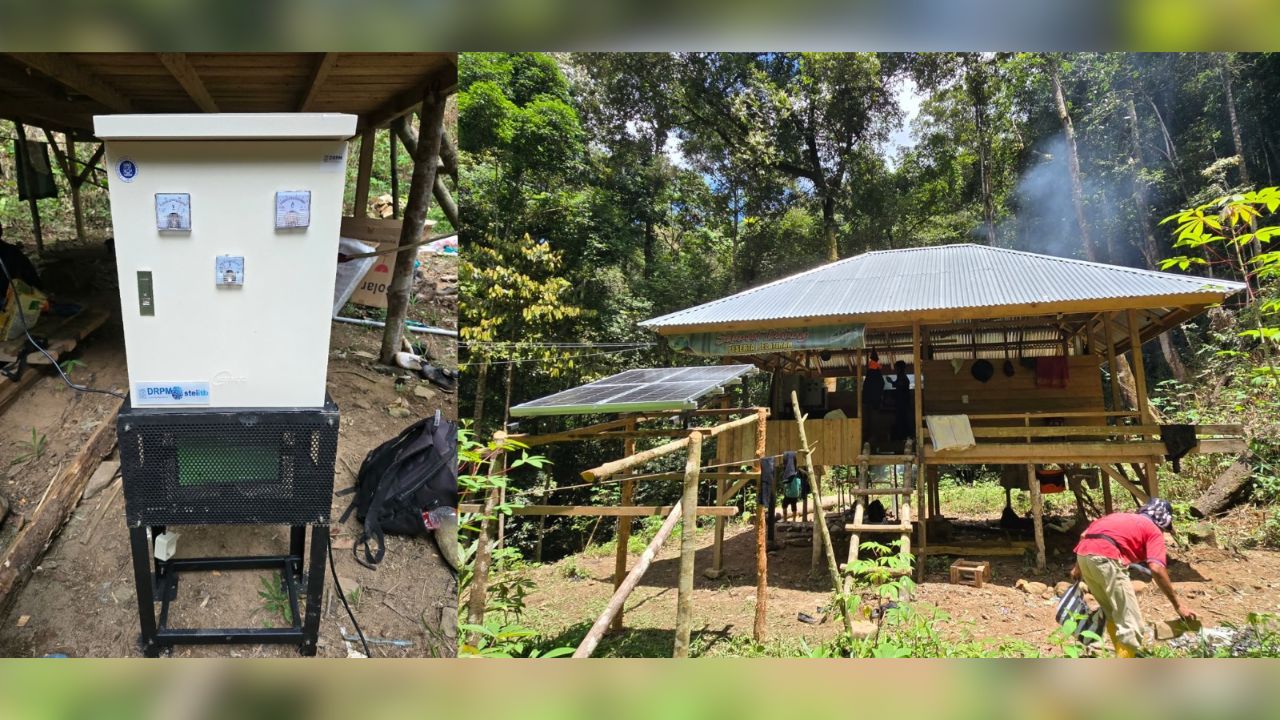
Solar PV units were installed as a backup system to maintain stable electricity supply when water flow decreases. The solar panels help power lighting, communication tools, and battery charging for residents' devices.
- Rechargeable Headlamps for Farmers
To reduce the economic burden on residents, the team provided eight rechargeable headlamps that can be charged at the patrol post. This removes the need for farmers to purchase AAA batteries every month while supporting environmentally friendly energy use.
Social and Economic Impact
The combination of renewable energy systems provides tangible benefits for the Sumpur Kudus community. Forest trails are now safer to navigate at night, reducing the risk of accidents and improving patrol and harvesting efficiency.
Eliminating the need for disposable batteries also increases the farmers’ net income. Meanwhile, the availability of continuous electricity strengthens communication and operational activities in the forest, particularly for conservation efforts.
The program involved MBKM SEEI ITB students who contributed to surveys, system design, and field installations. This collaboration demonstrates the real impact of universities in applying technological innovation to address the specific needs of rural forest communities. ..
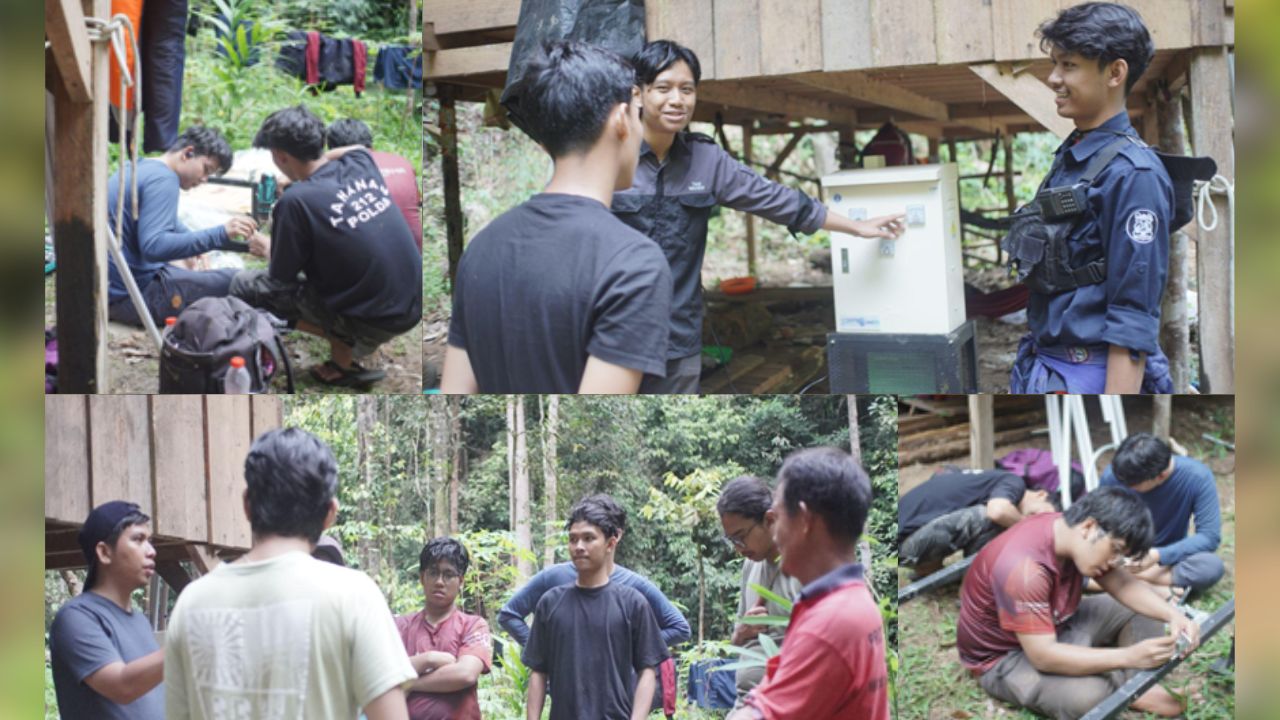
“Developing this hybrid energy system is not only about providing electricity, but also ensuring sustainability and safety for the communities who protect the forest,” said Dr. Bryan Denov, SEEI ITB lecturer and program leader. ..
Advancing Village Energy Independence
The efforts in Sumpur Kudus align with ITB’s commitment to supporting national energy transition and empowering rural communities through appropriate technological innovation. By utilizing local resources such as river flow and sunlight, residents now have access to reliable energy without harming forest conservation.
This project stands as an example of effective collaboration between academics, students, and local communities in creating sustainable energy solutions with both technical and socio-economic impact.
Information about this community engagement activity was also published through several news platforms, including Kilatpost And Rakyat Merdekaas part of the dissemination of STEI ITB’s renewable energy innovation activities in Sumpur Kudus Village.
Source:
-
Publication Manuscript by Dr. Bryan Denov, S.T., M.T. and the SEEI ITB Team