
STEI ITB Students Propose Biogas-Based Cattle Barn Sanitation System with Carbon Counting at WISEC 2026
Bandung, stei.itb.ac.id — Students of the School of Electrical Engineering and Informatics, Institut Teknologi Bandung (STEI ITB), have once again demonstrated their contribution to advancing innovative ideas in support of sustainable development. Through their work submitted to the World Innovation for Sustainability Essay Competition (WISEC) 2026, the STEI ITB student team proposed an innovative biogas-powered cattle barn sanitation system integrated with carbon counting and monitoring features.
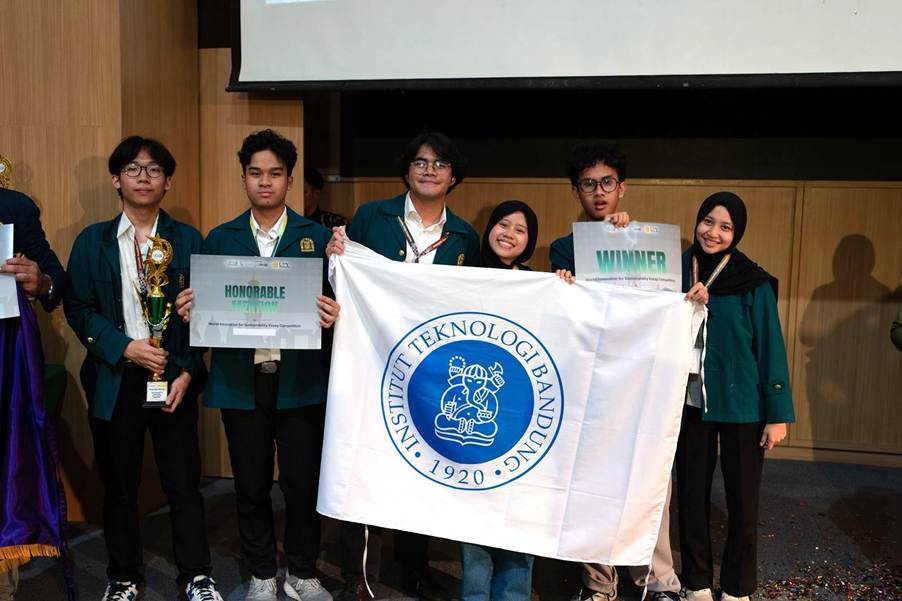
The team consists of Danandaya Raditya Rozano P. (EP’24), Christopher Clement Carl (EP’24), and Timothy Yves Halim (EL’24). Their idea was developed in response to sanitation challenges in the livestock sector, particularly in the context of the Foot-and-Mouth Disease (FMD) outbreak, which had significantly affected cattle farmers in Indonesia.
Through this work, the team designed a barn sanitation system that utilizes biogas produced from cattle manure as an energy source. This energy is then used to support the operation of the sanitation system, helping maintain barn cleanliness in a more sustainable manner.
One of the key aspects of this innovation is the design of a three-phase biogas system intended to maintain a stable energy supply. In addition, the team also developed a carbon counting concept to enable the potential reduction of greenhouse gas emissions from the system to be monitored and measured more clearly.
According to the team, the livestock sector is an important issue to address because it plays a major role in people’s lives, while also contributing to greenhouse gas emissions. Therefore, innovative approaches are needed not only to meet the operational needs of livestock farming, but also to promote more environmentally friendly practices.
“Livestock farming is one of the essential sectors in human life. However, this sector also produces greenhouse gas emissions that need to be managed through innovative solutions in order to remain sustainable,” said a representative of the team.
In developing their work, the team went through several stages, including brainstorming, research, essay writing, and poster design. This process was carried out amid a demanding academic schedule, including exams, laboratory work, and other coursework responsibilities. The guidance of their advisor, Bryan Denov, as well as collaboration with peers who supported the technical and writing aspects of the project, also contributed to the team’s success.
Presenting their idea before the panel of judges became one of the most memorable experiences for the team. Through this opportunity, they were able to communicate their innovation directly and gain attention from the evaluators.
“We felt that we were given a platform for this innovation to truly be heard and noticed. That became one of the most memorable moments throughout the competition,” the team shared.
The team sees strong potential for this innovation to be implemented in suitable livestock farms through collaboration with local communities and government stakeholders. If developed further, the system could help farmers reduce conventional electricity costs, maintain barn cleanliness, and raise public awareness of the importance of reducing carbon emissions.
Beyond offering a technical solution, the carbon credit monitoring system designed by the team could also serve as an educational tool for surrounding communities. In this way, the innovation is not only oriented toward efficiency and sanitation in livestock farming, but also toward improving environmental literacy.
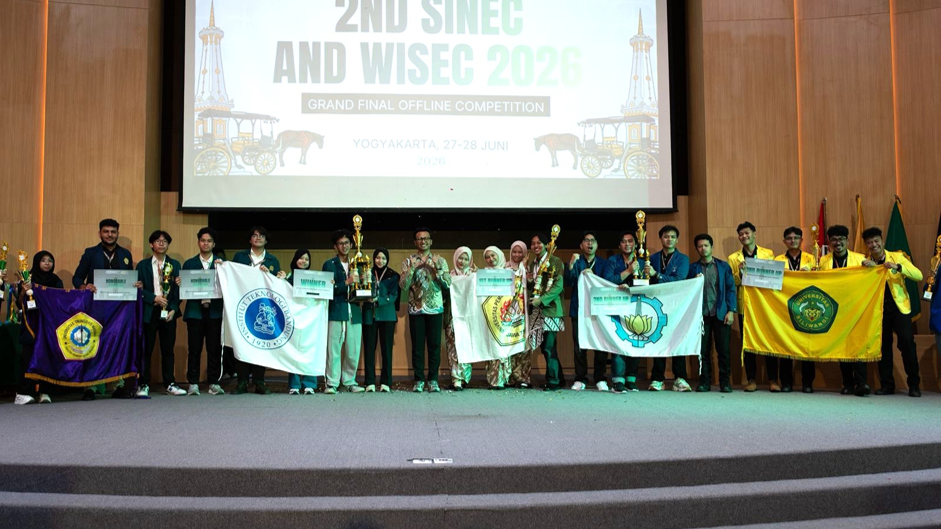
The team’s achievement at WISEC 2026 also contributed to Institut Teknologi Bandung’s success in earning the title of Grand Champion at SINEC & WISEC 2026. This accomplishment demonstrates that STEI ITB students are capable of presenting ideas that are relevant, applicable, and aligned with the spirit of sustainable innovation.
Through this work, STEI ITB students have shown that technological innovation can emerge from a strong concern for real-world problems in society. With a multidisciplinary approach, this innovation is expected to serve as an initial step toward the implementation of cleaner, more efficient, and more sustainable livestock farming systems.