UAV-UGV Coordination for Monitoring Gas-Contaminated Areas
Peneliti: Bambang Riyanto Trilaksono, Egi Muhammad Idris Hidayat
Students: Yaqub Aris Prabowo, Duddy Soegiarto, Agung Nugroho Jati
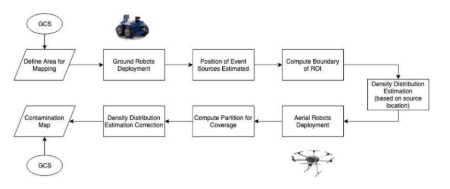
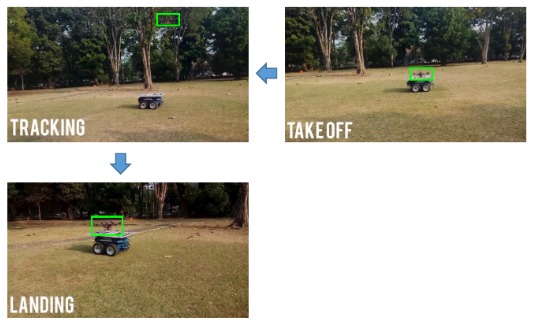
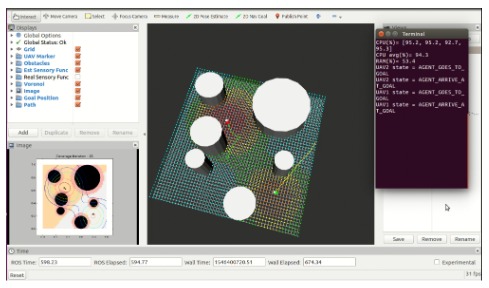
In recent decades, incidents related to environmental pollution with hazardous and toxic materials have continued to increase, where these hazardous materials are often grouped into the CBRNE (Civil, Incinerator, and Disposal) category.Chemical, Biological, Radiological, Nuclear, and Explosive). This refers to various types of materials that can have negative impacts on humans and the environment. To anticipate this condition, it is necessary to map the affected areas quickly and accurately so that evacuation measures can be carried out immediately. In the proposed research, a system model consisting of several UAVs (Unmanned Aerial Vehicle) and UGV (Unmanned Ground Vehicle). Both of them work together to explore the area and find the source of dangerous chemical gases in the area. This exploration can be done in several ways, namely by using the method collaborative distributed coverage control or swarming with a certain formation.
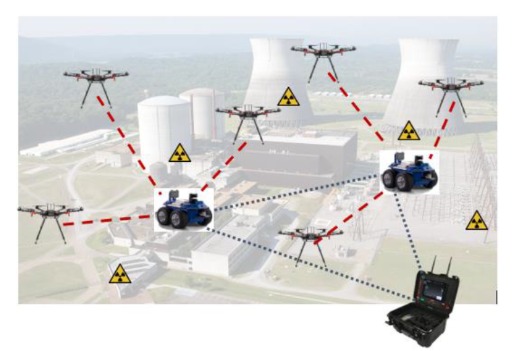
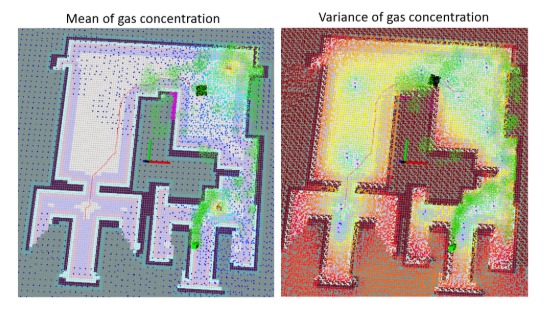
Then, the development of sensor models that suit the behavior of each type of robot is also important, to create accurate maps based on the disturbance/noise of chemical gas sensor measurements. In general, aerial and ground robots have different dynamics, functions, and sub-tasks, which are built with a hierarchical architecture model for decision-making. The contribution of our research is to develop high-level control of aerial and ground robots as an optimal solution for localization and mapping of gas source distribution, accompanied by practical test analysis and supporting theory.