
Sharon Loh, Informatics Engineering STEI-ITB Receives AIMS Short Stay Program 2014 at TUAT Japan
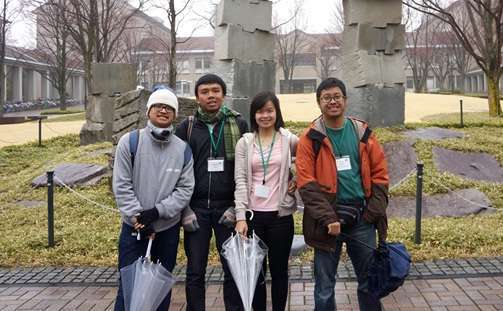
Muhammad Alifa – Irfan Nurhadi – Sharon Loh – Hilfi Amri
In March 2014, I, Sharon Loh (ITB Informatics Engineering 2010), had the opportunity to participate in the AIMS Short Stay Program organized by TUAT (Tokyo University of Agriculture and Technology) in Tokyo, Japan. The AIMS Short Stay Program (also known as ASSP) 2014 was held for 2 weeks from March 2nd – 15th, 2014. The ASSP 2014 program aims to introduce academic activities at Japanese universities as well as Japanese life, culture, and traditions to students in ASEAN countries.
ASSP 2014 participants numbered 20 people and came from Malaysia (UPM, UTM, MJIIT) & Indonesia (ITB, IPB, UGM). I was one of the people chosen to represent ITB along with 3 other friends, namely Muhammad Alifa Farhan (Industrial Engineering Management ITB 2010), Irfan Nurhadi (Environmental Engineering ITB 2010), and Hilfi Amri (Environmental Engineering ITB 2010).
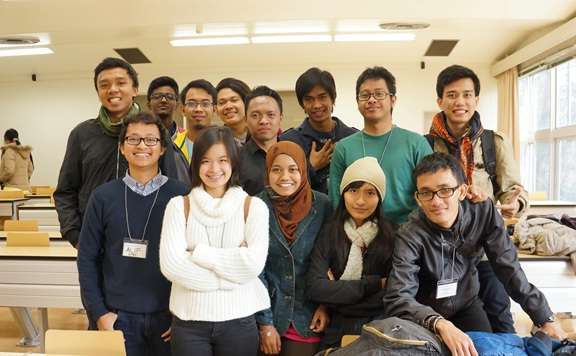
During the 2-week program, we attended several classes at TUAT such as Japanese Language, Intercultural Communication, Introduction to Artificial Intelligence, Japanese Traditions and Climate, Japanese Culture, and Learning and Action for Sustainability. In addition to attending classes, we also had the opportunity to conduct comparative studies by visiting laboratories at TUAT, including the Environmental and Natural Resources Sciences Lab, Biological Production Lab, Chemical Engineering Lab, Mechanical Systems Lab, Computer and Information Sciences Lab, Bio-Applications and Systems Engineering Lab, and Plant Factory Lab.
I was amazed when I visited the laboratories at TUAT. There are so many research which is carried out in each laboratory with very specific fields. And even though research – research what they did had been done by other countries several years before, they still did it research that's so they don't depend on other countries. Learning spirit This is what makes Japan a developed and independent country, in my opinion.
During our stay in Japan, we also interacted extensively with the local population, learning more or less about their customs, manners, and the culture they bring to everyday life. One thing that fascinated me was the way they communicated with each other. Their communication is two-way, meaning that if one person speaks, the other must listen and respond to ensure a seamless communication. Another unique aspect is the Japanese habit of '...bowing' (bowing) to greet, apologize, and so on. The degree of bowing also varies according to the situation at that time.
However, there's one important thing we should emulate from Japanese customs: punctuality. The Japanese highly value punctuality. This ensures that everything planned can proceed according to plan. Typically, Japanese people arrive five minutes before the scheduled start time. This also applies to informal activities like attending parties.
In addition to participating in academic activities, we were also given the opportunity to travel and see the beauty of Japan. We were given one day. free time, and a 2-day tour guided by Prof. from TUAT. At the time free time, I went for a walk with other friends by bus and train to downtown Tokyo. Although none of us could communicate in Japanese, we learned that body language is a universal language, one that can be understood by others without having to speak the same language. Perhaps that's why point from the streets themselves, namely to interact with people, no matter how different you are.
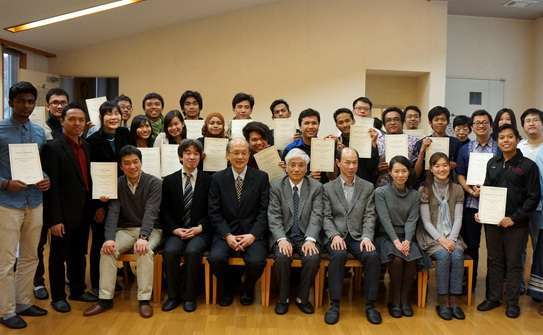
On the last day, we did a presentation about what we gained and learned during our stay in Japan.
I am very grateful to have been entrusted to represent ITB in the 2014 ASSP program. I learned a lot from cultural differences. One thing I always remember from my learning is that even though Japan is a modern country with advanced technology, they haven't forgotten their native culture. In fact, they maintain their culture and develop technology to support their culture and customs. The Japanese also don't give up easily and continue to learn even though their country is far ahead of other countries. That spirit is what we must carry and adapt to our country. It is this spirit that can ultimately bring change to Indonesia.
Thank you, TUAT for the unforgetable experience! I hope there will be more lucky students from ITB next year.
Sharon Loh (13510086)
lohh.sharon@gmail.com
Informatics Engineering
Institut Teknologi Bandung