
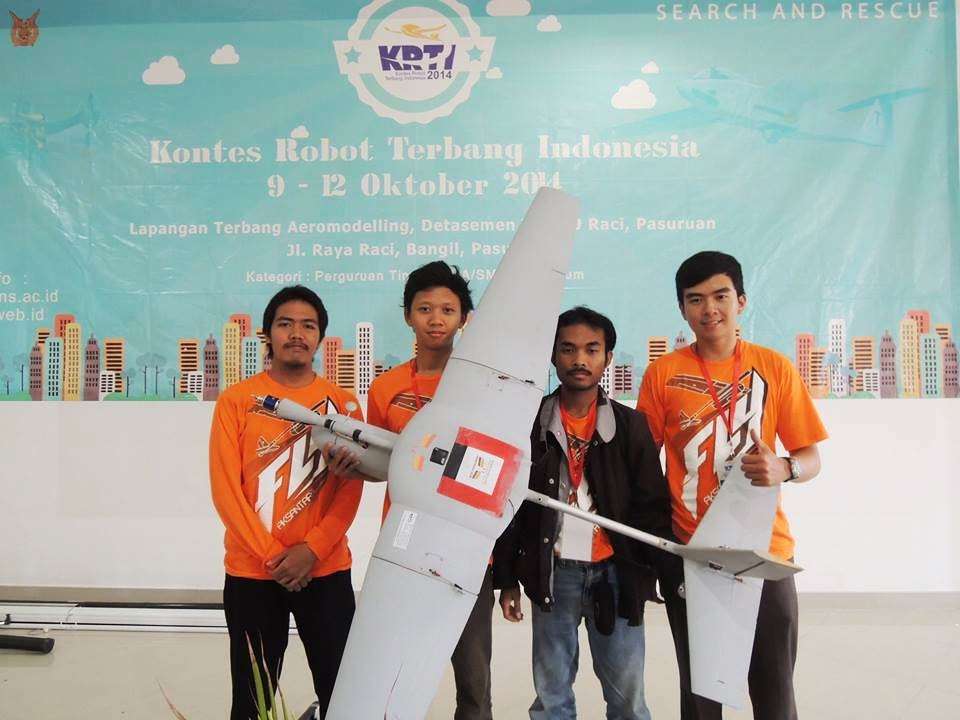

Aksantara Team Wins 1st Place in the Indonesian Flying Robot Contest
The ITB Aksantara Team won three awards at the prestigious contest, namely the 2014 Indonesian Flying Robot Contest (KRTI). The award was 1st Place for Fixed Wing Flying Robot (KRTI).fix wing), best design, and best presentation. This contest, held in Pasuruan, was the second held by the Ministry of Education and Culture, with more than 30 participants from universities throughout Indonesia and the general public.
This contest is divided into two categories, namely fixed-wing aircraft (fix wings) and rotary wing aircraft (rotary wingsfor the public and universities. ITB sent 3 teams to compete with various universities throughout Indonesia such as ITS, Unila, and UI. The team that won 1st place was the team led by Rivaldy Varianto (Aeronautical Engineering 2010) who also won the best design by the division led by Galan Fazlur Rahman (Aeronautical Engineering 2011) with two other main team members, namely Harish Mahatma Putra (Electrical Engineering 2010) and Muhammad Rafi Hadytama (Aeronautical Engineering 2011). In addition to these four, the team was supported by approximately 20 others from various disciplines, including Mechanical Engineering and Geological Engineering. Meanwhile, another ITB university team placed second.
Using Unmanned Aircraft Technology For Search and Rescue
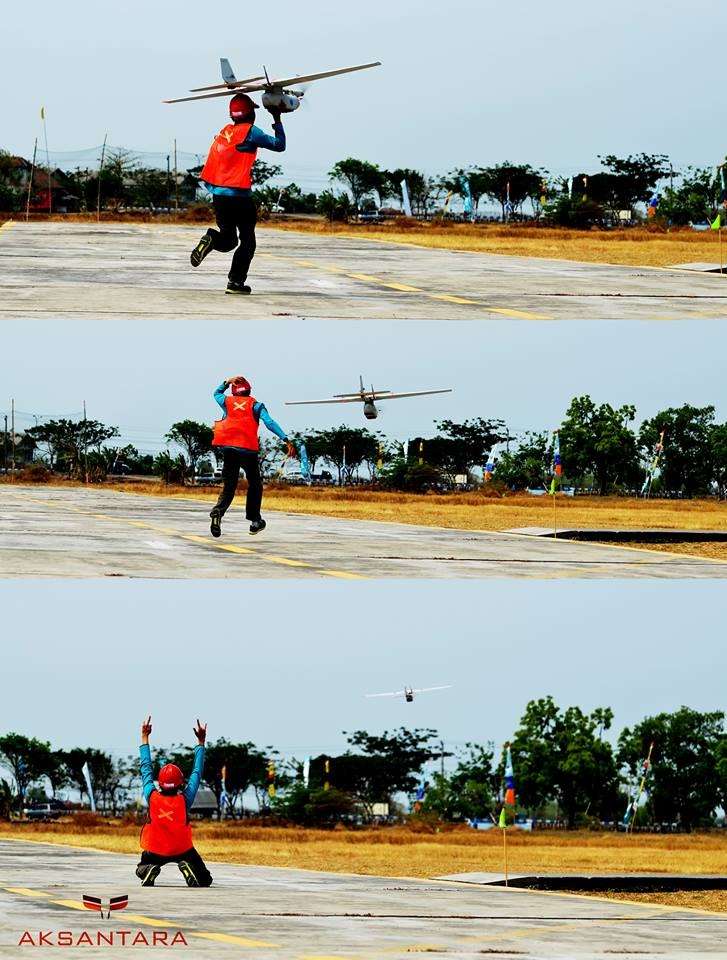
The team started preparations by designing according to DRO (Desain Requirements and Objectives). Galan explained that the aircraft on display had to carry out a mission. The mission was carried out in accordance with the theme carried by KRTI this year, namely Search and RescueFrom an aerodynamic profile, the first thing to consider is the aircraft's lift. Then, a lightweight and strong structure is sought. Therefore, a composite structure is used, combining the advantages of various structures. The aircraft, with an empty weight of 4 kg and a length of 1.5 meters, uses fiberglass and ligial as its primary structure.
Another factor is flight performance and stability. Galan and his team designed the aircraft to be stable at low speeds and, in terms of flight dynamics, to perform well. Furthermore, the system must have a robust electrical system to prevent electromagnetic interference, ensuring that components do not interfere with each other. The aircraft, also developed for this contest, utilizes drone technology. The aircraft must be designed to fly autonomously following predetermined geographic points, from takeoff, during flight, and landing. However, for safety reasons, the team manually controls landings to minimize potential errors caused by GPS errors in determining the point.
"Next, the aircraft on display must carry out a search and rescue mission. Surveys are conducted by aircraft over areas that need to be rescued or evacuated. Once we have a target point, we must drop a pilot to assist in that area autonomously," said Galan, describing the aircraft, which people know as the Aksantara Annisa.
Learning from Last Year's Failure
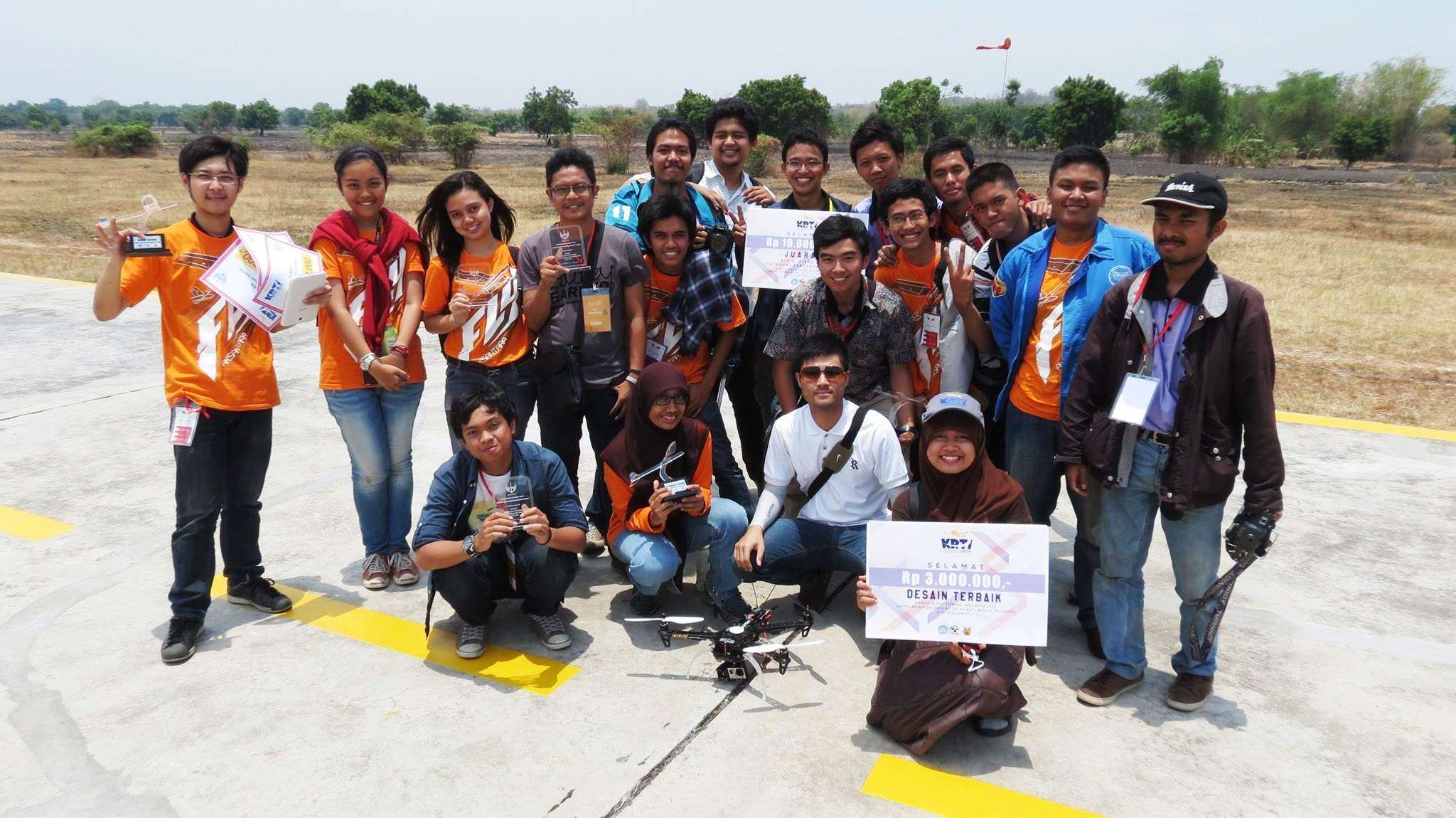
At the 2013 KRTI in Jatinangor, the Aksantara Team did not bring home any awards. Learning from their failure, the Aksantara Team re-evaluated from the beginning. "We conceptualized a different aircraft, conducted evaluations and improvements from last year. The point is, we were equipped with enthusiasm and hard work," said Galan. During the five months of preparation, the team faced various obstacles. Especially during flight tests. The calculation analysis would be different when tested in reality. This difference often caused technical errors in the aircraft, so that early tests often failed. Failures could include errors in the autonomous system, which even broke both wings of the Aksantara Annisa. However, despite these failures, the team was able to achieve victory at the 2014 KRTI.
Galan hopes that in the future, this aircraft can be used for real-life surveillance purposes. Furthermore, this model can also help the Indonesian National Armed Forces (TNI) maintain sovereignty. "I want to contribute to maintaining Indonesia's sovereignty, especially in coastal areas. Besides ships, this drone technology can also be used," Galan hopes.
Sumber: itb.ac.id