
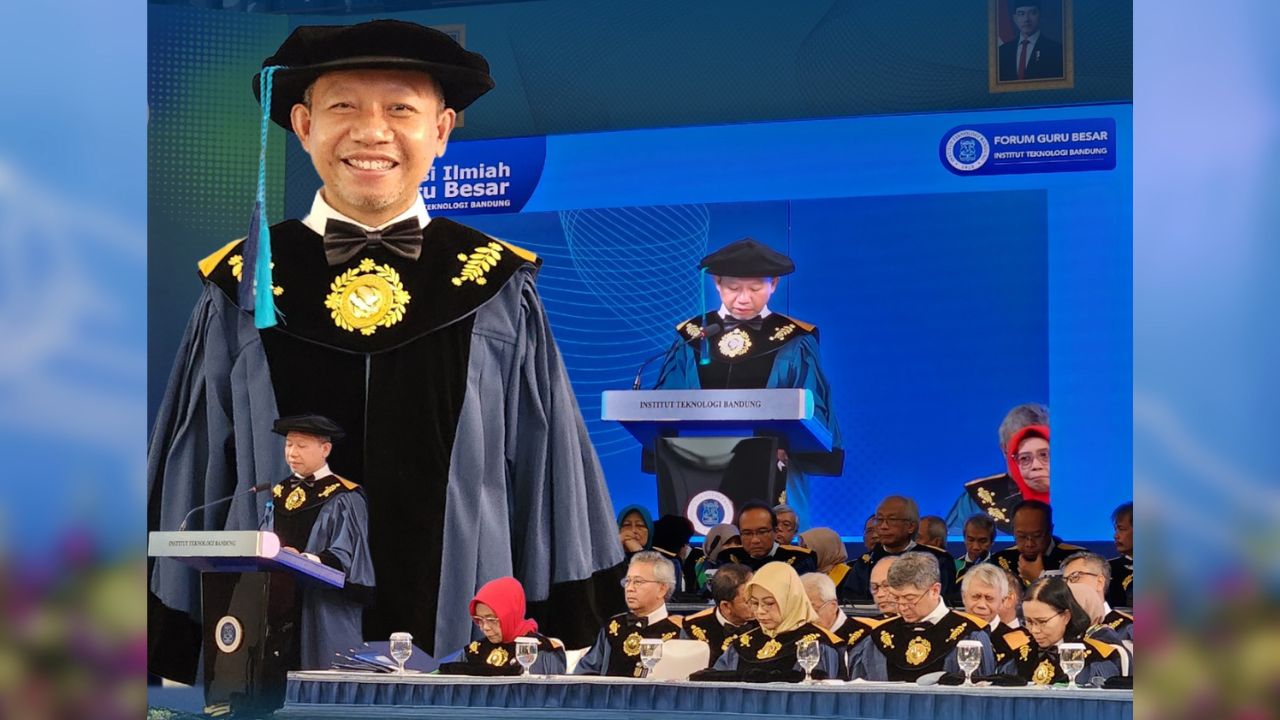
Professor Umar Khayam Delivers Inaugural Professorial Lecture: The Role of High-Voltage Testing in Power System Asset Management
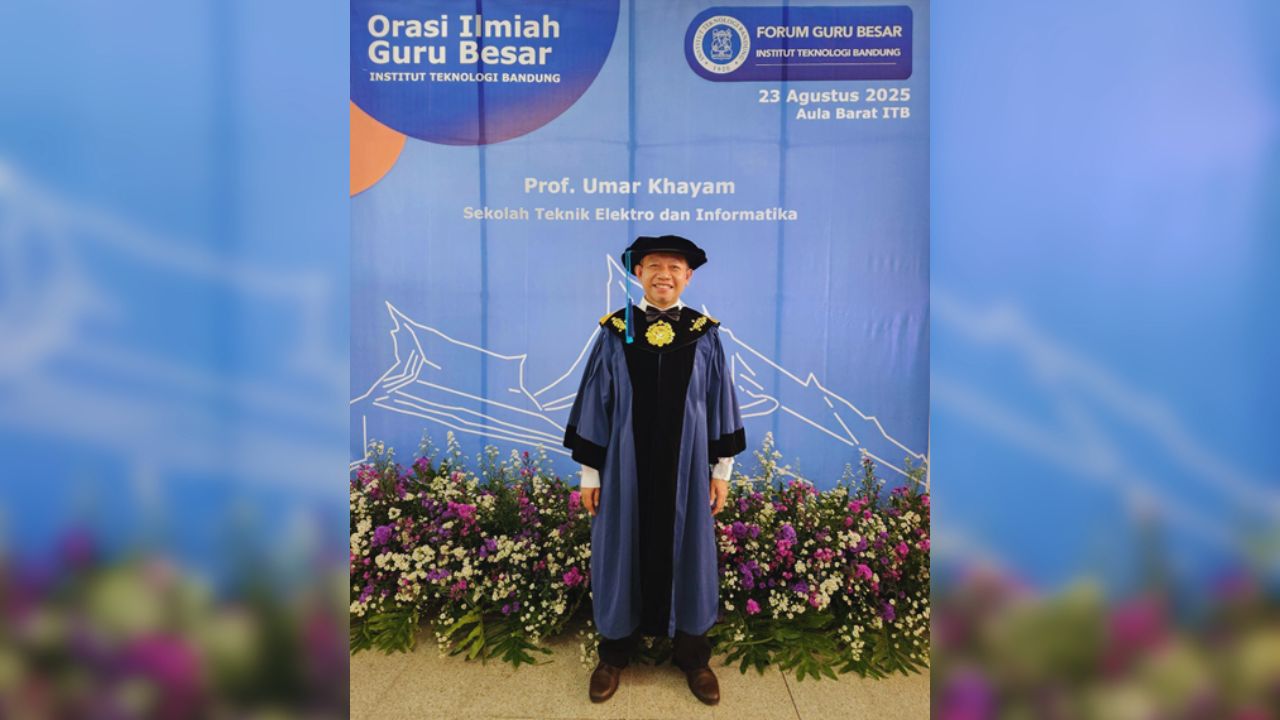
Bandung, stei.itb.ac.id — Prof. Dr. Ir. Umar Khayam, S.T., M.T.a faculty member of the School of Electrical Engineering and Informatics (SEEI) ITB, delivered his Inaugural Professorial Lecture entitled ““The Role of High-Voltage Testing in Power System Asset Management”. at the Inaugural Professorial Lecture event of Institut Teknologi Bandung, organized by the ITB Professors Forum on Saturday, August 23, 2025, at the West Hall Auditorium, ITB.
In his lecture, Prof. Umar Khayam emphasized that the reliability of electricity supply is a fundamental necessity in modern life, supporting almost all aspects of human activity—from households and healthcare services to education and industry. However, this reliability faces significant challenges, particularly due to increasingly complex and aging power infrastructure, as well as growing pressures from the energy transition, climate change, and the adoption of renewable energy.
Strategic power system assets such as generators, transformers, underground and submarine cables, gas-insulated switchgear (GIS), circuit breakers, and protection and control systems form the backbone of the electric power system. As these assets age and operational loads increase, they are subjected to higher performance stress. At the same time, budget limitations mean that comprehensive asset replacement is not always feasible. .. . . . .
In his lecture, Prof. Umar Khayam explained that power system asset management is key to maintaining the sustainability and reliability of electricity systems. Asset management involves managing the entire asset life cycle—from manufacturing, installation, operation, and maintenance to replacement—by taking into account technical condition, risk, and cost considerations.
One of the important pillars of asset management is high-voltage testing. This activity is required from the manufacturing stage of electrical equipment through operation and maintenance. Beyond merely assessing technical condition, high-voltage testing also serves as a proactive diagnostic tool to detect potential failures at an early stage. As such, test results can form a strong basis for more accurate decision-making regarding maintenance strategies, refurbishment, or asset replacement. . .
Prof. Umar Khayam emphasized that the role of high-voltage testing will become increasingly important in the future, in line with the growing need for resilient, reliable, and efficient power systems to respond to the dynamics of the energy transition.
SEEI ITB welcomes this inaugural lecture as an important contribution to the development of power engineering knowledge, while also strengthening the role of higher education institutions in addressing national challenges in the fields of energy and infrastructure.