


SEEI ITB Students Win 1st and 2nd Place at the SEA Quantathon 2025
Bandung, stei.itb.ac.id – Three students from the School of Electrical Engineering and Informatics (SEEI), Institut Teknologi Bandung (ITB), successfully won first place at the SEA Quantathon 2025, a Southeast Asia–level Quantum Hackathon competition that was held for the first time by the Quantum Technology Research Initiative Consortium (QTRic) Thailand and the Open Quantum Institute (OQI).
Registration took place in March 2025. Participants underwent two months of intensive training, covering fundamental concepts through applications of quantum computing. Based on performance during the training and the quality of initial project ideas, and after a rigorous online selection process from a total of 317 participants, the SEEI ITB student team was selected as part of the 24 finalists invited to compete onsite in the final round held in Bangkok, Thailand, on August 3–5, 2025.
The students participating in this competition are members of the quantum computing research group at SEEI ITB, under the supervision of Rahmat Mulyawan, S.T., M.T., M.Sc., along with Dr. Infall Syafalni, Dr. Fariska Zakhralativa Ruskanda, and Dr. Nur Ulfa Maulidevi. During the competition in Thailand, participants also received mentoring from Dr. Khoirul Anwar and Dr. Nopendri from Telkom University, who collaborate with ITB and BRIN within the Quantum Technology 2.0 Research Collaboration Center (PKR). Their participation in the Quantathon represents a continuation of ongoing research development and cross-institutional collaboration that has been established previously.
In an interview, the team supervisor, Rahmat Mulyawan, S.T., M.T., M.Sc., explained that his role was primarily technical and motivational, given the collaborative and cross-national nature of the competition.
“Because the competition is quite open and based on cross-country collaboration, my role was more as a mentor providing technical and motivational support. The students involved have demonstrated high independence and initiative, so my role focused more on giving feedback on their ideas and encouraging them to sharpen their logical thinking and analytical skills,” he said.
During the mentoring process, Mr. Rahmat emphasized the importance of cross-disciplinary collaboration and sensitivity to the social relevance of the technological solutions being developed.
“The main values I emphasize are the ability to think across disciplines and to collaborate effectively within international teams. In frontier fields such as quantum computing, openness to non-conventional approaches and the ability to adapt to new perspectives are crucial,” he explained.
“I also encourage students to focus on the relevance of their solutions to real-world problems, not merely on the technological aspects.”
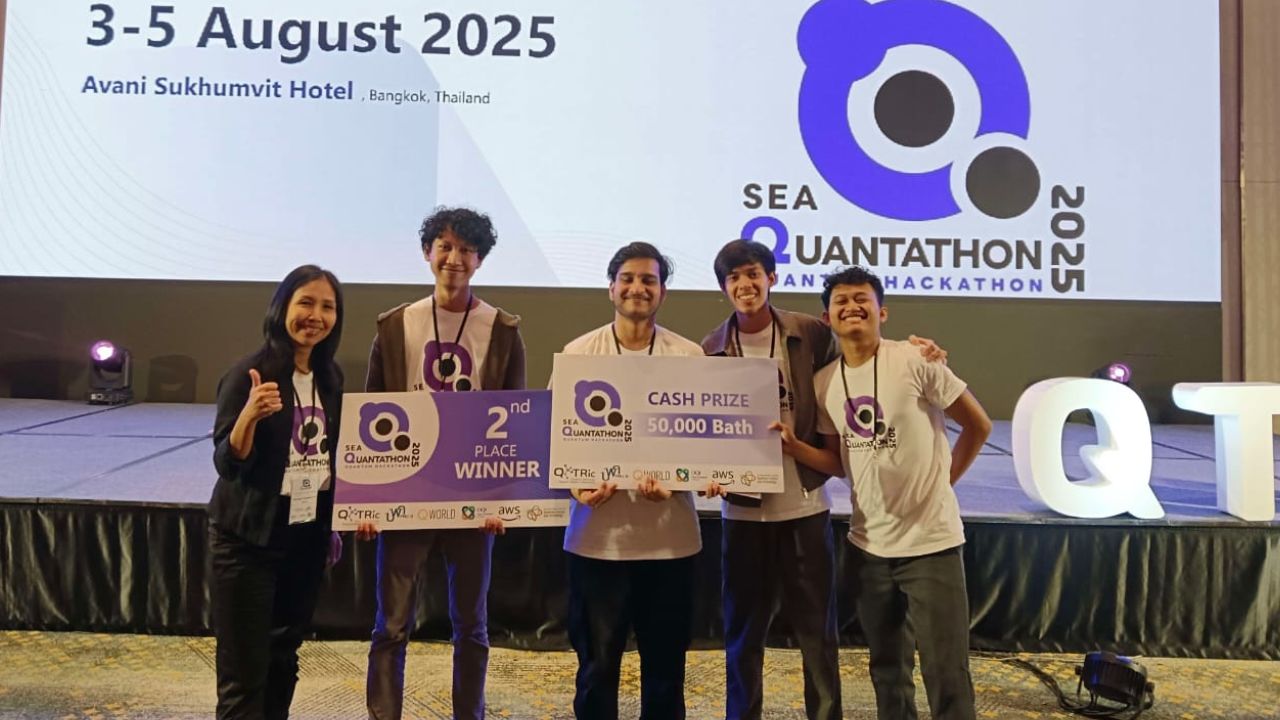
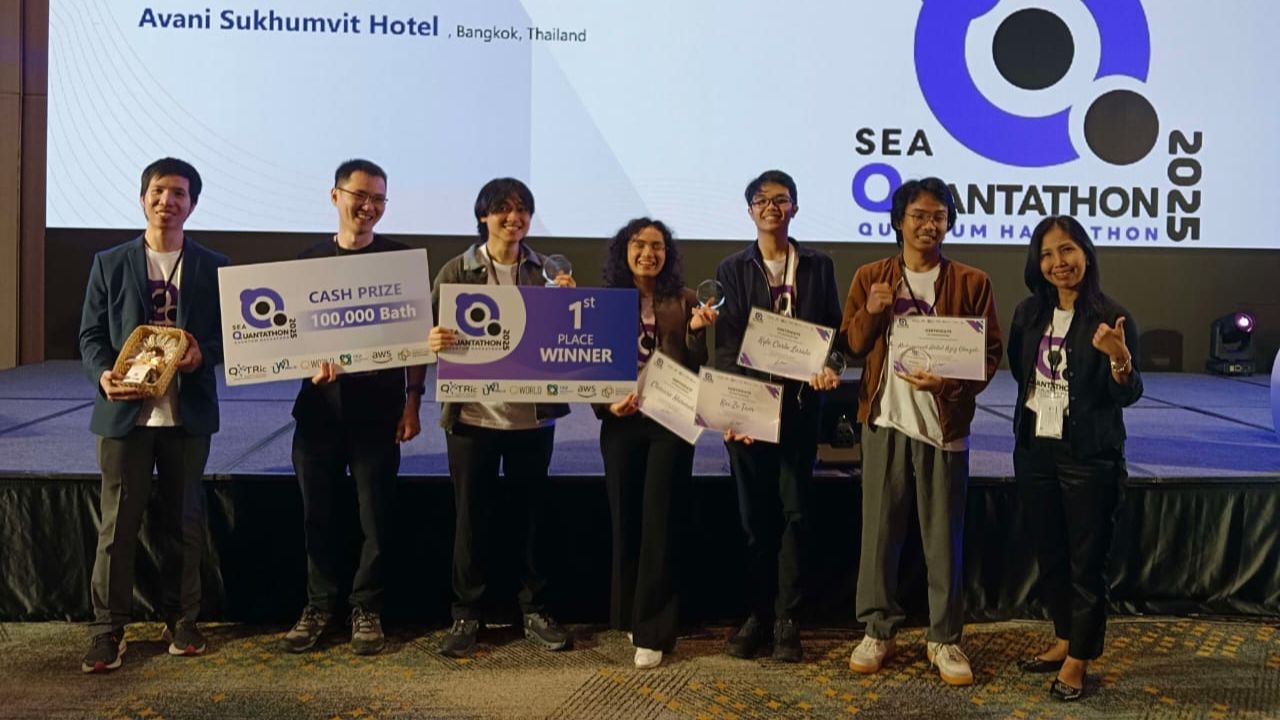
Regarding the achievements attained, he expressed deep pride and gratitude.
“Of course, I am very grateful and proud, especially because they were not only successful technically, but were also able to explain the social relevance of the solutions they proposed. This shows that our students are not only capable of keeping up with cutting-edge technological developments, but also possess sensitivity to context and needs at the regional level.”
Rahmat Mulyawan also expressed his appreciation for Quantathon 2025 as a staged learning platform that encourages cross-country collaboration and the development of idea presentation skills. He hopes that this competition will continue and become part of broader efforts to advance quantum technology in Southeast Asia.
“I hope initiatives like this can become a sustainable agenda supported by various stakeholders. Quantum technology is still in its early stages, but it has already begun to show great potential in addressing global challenges. With the right support, we can become an important part of the global development of quantum technology.”
 English
  Indonesian