Telecommunication Engineering Excursion to Singapore
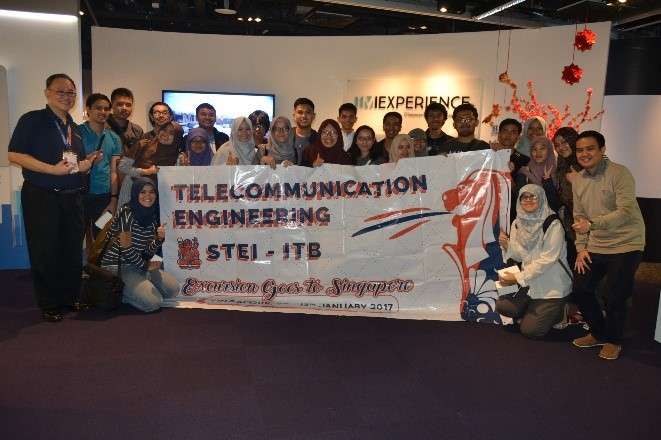
After organizing various necessary matters for more than a semester, finally the 2013 Telecommunication Engineering students of STEI ITB successfully carried out the Excursion activity. This event was chaired by Laras Adhianti, along with a committee of students who made efforts starting from organizing activities and funding. This event was also supported by lecturers, especially Mr. Rifqy Hakimi as the supervising lecturer. This event has been an annual event of Telecommunication Engineering since two years ago. The main goal is to increase students' knowledge about job opportunities related to their study program, and conditions at the excursion destination, so that students can make comparisons and create innovations for Indonesia.
The destination of this excursion is Singapore. Not only because it's the closest country to Indonesia, but also because this country places great emphasis on technological and infrastructure development in the telecommunications sector, pursuing its vision to become a global telecommunications hub. smart nation. There are many companies operating in the telecommunications sector, and two universities are among the top 20 universities in the world (according to the QS University Rankings). This excursion was held for six days, from January 9 to January 14, 2017.
Our first day was spent visiting the iExperience exhibition at Esplanade Junction. This exhibition showcased all the latest technologies that make Singapore a Smart Nation. Some examples are implementation . in the form of Smart Home, Smart Traffic, Smart Health, as well as Big Data Analytics. All of this technology is equipped with user interface attractive and easy to use. Guests can try it for free. The government recognizes that Smart Nation with high technology only known to a limited circle, so they decided to create iExperience in the midst of food court to introduce the concept Smart Nation to the population.
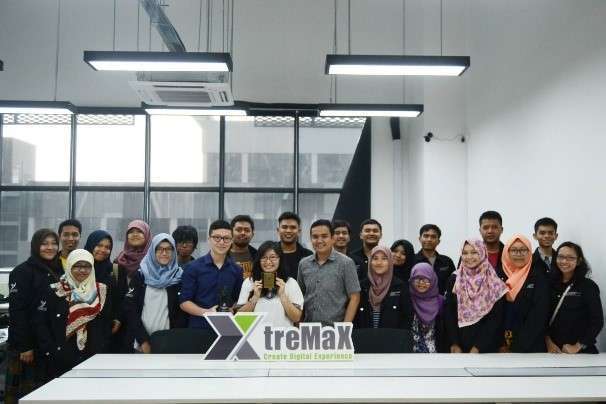


The next day, we visited Xtremax. This company specializes in creating and developing websites for the Singapore government. Since 2003, they've had a development center in Bandung, Indonesia. In fact, the Bandung office has more employees than the Singapore office. Most of the employees in Indonesia are alumni of STEI-ITB. The Singapore headquarters focuses on running the business, while the Bandung office focuses on the IT sector. engineering. Telecommunication Engineering graduates have a great opportunity to occupy management facilities and infrastructure divisions, such as holding . And cloud computing.
On the third day, we visited MyRepublic, one of the best ISP (Internet Service Provider) companies. This type of company is also known as thin operatormeaning the company doesn't incur significant operating costs. MyRepublic offers three business layers: Retail (running distribution, products, and brands), Active (running operations and technology), and Passive (Fiber Optic Packaging). All of these layers will continue to evolve over time, with the exception of the Passive Layer, which is slower to develop rapidly. MyRepublic has become a national broadband network company in Singapore and is expanding its business to New Zealand, Australia, and Indonesia.
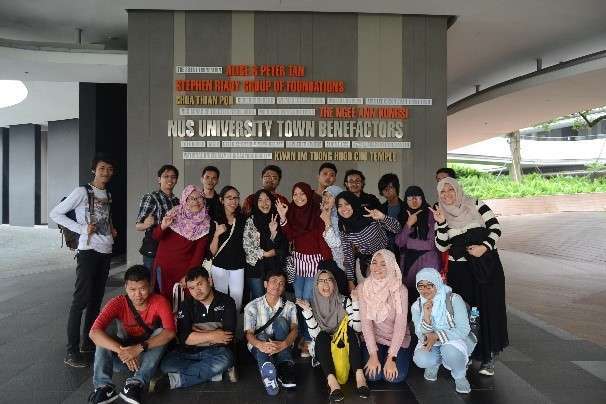
Our next destination was the National University of Singapore (NUS). NUS is the best university in Asia and ranked 14th in the world. Our visit coincided with the first week of the academic year, so the faculty couldn't formally welcome us. Fortunately, Mr. Ridho, an alumnus of STEI ITB and now a doctoral candidate at NUS, was kind enough to show us around. We were taken to the Faculty of Electrical and Computer Engineering and UTown. UTown is where the student activity center is located, including dormitories, clubs, dining options, and other facilities.
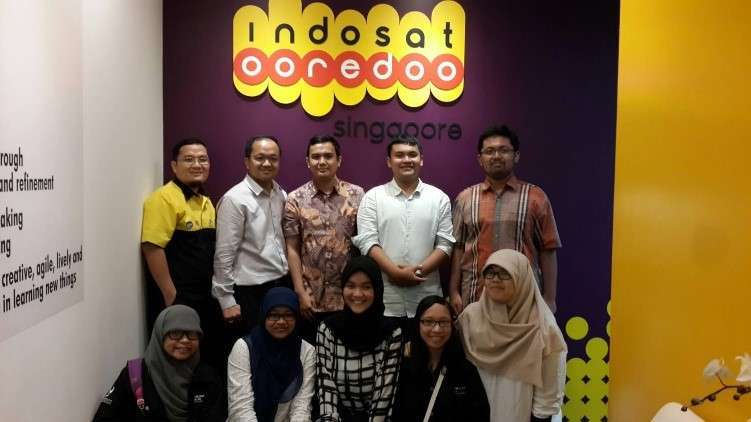

The following day, we continued our visits to two companies and a university. The first company was Indosat Singapore Pte. Ltd. (ISPL), an Indonesian telecommunications operator serving internationally. All of the employees were Indonesian. They warmly welcomed us and explained the company's profile in the field of telecommunications. . and business sectors in depth. The company was acquired by Ooredoo Asia PTe. Ltd., but the Indonesian government still holds a 14.29% stake in ISPL. ISPL offers several services, including business telecommunications networks, video and media industries, e-commerce, apps, games, and wholesale trade. Due to space limitations, only seven students are allowed to visit the office.
The next company is PCI Limited. This company operates a global technology manufacturing business. Its main office is in Singapore, with factories in Batam, Indonesia, and Shanghai, China. PCI focuses on helping clients build and market their products efficiently at competitive prices. They design, source the necessary electrical components, manage the supply chain, and provide logistics services. PCI has also signed an agreement with the Telecommunications Engineering Study Program to enhance collaboration, such as providing internship opportunities for students at the company.
The final visit on the fourth day was to Nanyang Technological University, located in western Singapore. Ranked one level below NUS, NTU offers a top-notch education, particularly in the fields of EngineeringNTU also provides research scholarships for those interested in conducting research and graduating with a Ph.D., even if they have a bachelor's degree. There's no need to pursue a master's degree first. We were officially welcomed by NTU and visited three laboratories: the Satellite Research Center (SaRC), Media Technology, and Robotics. The research environment is excellent. The university provides adequate facilities and infrastructure, as well as lecturers who lead the research. At SaRC, NTU designs, builds, and launches satellites. Examples of satellites built by SaRC include XSAT, pico-satellites, and nano-satellites. In the Media Technology Lab, students create Hand gesture recognition with depth sensor. The final lab, the Robotics Lab, showed us some of its projects, including robots for disaster management.
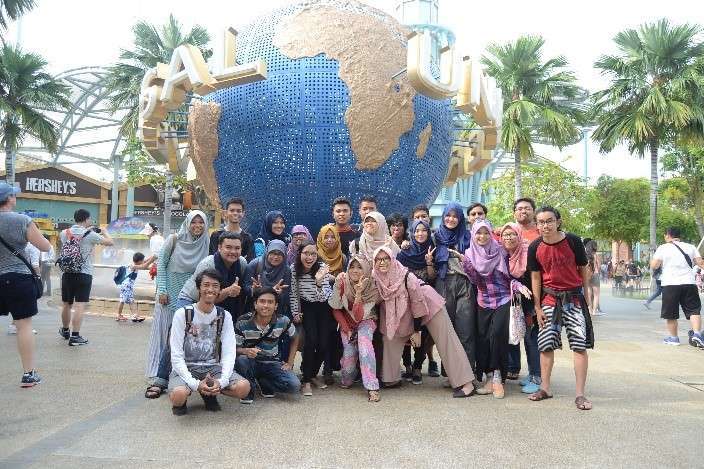
Finally, we arrived at our last day in Singapore. The last day was spent gathering at Universal Studios Singapore. Yes, "Gathering" is just the official title. After spending time visiting universities and companies, it was a day of fun. This excursion not only broadened our knowledge about job opportunities in the telecommunications field, but also gained our experience of conditions abroad. By organizing this event, we also learned how to organize various things such as finding sponsors, contacting companies, preparing accommodations, and maintaining academic activities (because this excursion activity was quite time and mind-consuming). But, this event was truly a valuable experience that cannot be replaced by anything. Thank you to all parties who sponsored and supported this event. In the end, choosing Telecommunication Engineering as a study program will never be wrong! The experience was very rich.
English Subtitles: Laras Adhianti
Terjemah: Mega Aulia Insani