
The 21st century is marked by changes in the economic policies of various countries from manufacturing/industrial based economies (manufacture-based economy) become a knowledge-based economy (knowledge-based economy) where knowledge, information, and technology play a major role in a nation's destiny. This necessitates changes in the economic/business system environment, as shown in the figure below:
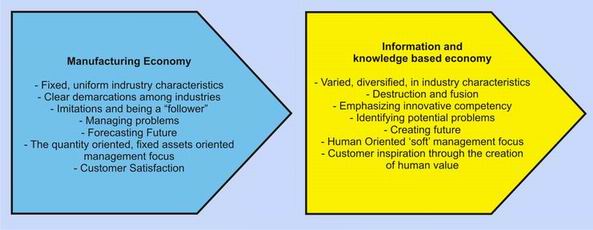 Figure 1. Changing Bussiness Environment [Friedman TL. (2006). The World is Flat : A Brief History of Twenty-first Century, page 38]
This change was made possible by the development of information technology, one of which is computers. Computer technology has multiplied the intellectual power of humans and the reach of knowledge. In fact, today computers are a central part of human life, having evolved from a simple computing device. (computational device) become a communication medium (communications medium).
The creative content industry has become a vital economic and sociocultural part of human life today, both globally and nationally. This significant development has been driven by the application of technology, particularly computer technology, in various aspects such as: (1) creative content formats dominated by digital formats; (2) production and distribution of content dominated by the use of high technology such as the internet; and (3) New application concepts and human-machine interaction concepts (digital media) were previously only dreams. Consequently, relevant and adequate human resources are required.
Digital media is defined as media experiences enabled by the development of primarily computer-mediated digital technologies for both entertainment and non-entertainment purposes. Examples of digital media include electronic games, digital animation, special effects, and films, interactive eLearning design, web development, mobile content, image processing, scientific visualization, simulators, and virtual environments such as Second Life .
Vision and Mission
Vision
To become a place of education/learning, research & development of superior, reliable Digital Media & Game Technology, able to adapt to technological developments and dignified in the world, which is expected to lead the Indonesian people to become a nation with dignity, dignity and prosperity.
Mission
Guiding the development and change of society through educational activities, research and development in the field of Digital Media & Game Technology, as well as innovative, high-quality and responsive services in global developments and local challenges.
Objective
- Producing high-quality graduates who are able to compete globally in the field of digital media and gaming technology.
- Producing graduates who are able to analyze, design and maintain everything related to the field of digital media and game technology.
- Producing graduates who are able to develop integrated applications between software and hardware to solve problems.
Human Resource Needs in the Creative Content Industry
While the creative content industry has existed substantially for a long time, it has only been specifically recognized in the last decade. The UK Department for Culture, Media and Sport is credited with first formally defining the so-called creative industries cluster in 1998, during the Labour Party's political campaign with the slogan "Cool Britanica."
One definition of a creative industry cluster is industries that stem from individual creativity, skills, and talents that have the potential to create jobs and wealth through the production and exploitation of Intellectual Property Rights (IPR). This type of industry is built on the production of artifacts rooted in ideas that lie at the intersection of art, business, and technology. Its foundation is multidimensional individual creativity in the form of artistic creativity, entrepreneurship, and technological innovation to generate new economic value.
According to the above definition, the UK Department for Culture, Media and Sport in the same year identified thirteen industry clusters that fall within the above definition, namely: (1) advertising, (2) architecture, (3) art and antiques market, (4) crafts, (5) design, (6) fashion design, (7) film & video, (8) interactive leisure software, (9) music, (10) performing arts, (11) publishing, (12) computer services and software, and (13) television and radio.
In his 2002 book, "The Rise of the Creative Class," Richard Florida proposed a new hypothesis about the value of creativity in relation to job growth. Briefly, his hypothesis can be explained as follows: The 20th-century economy relied on manufactured products, with creativity in various forms, though considered important, being a byproduct and supporting factor. Meanwhile, the 21st-century economy is one that relies on these products of creativity as the primary commodity in this information age.
Interestingly, this type of industry has actually developed into an industry with extraordinary economies of scale. A 1999 survey in Japan showed that the creative industry's share of services had reached 17.5% of total service industry revenue. In the decade 1989-1999, when the overall service industry experienced a 69.1% increase, the service-related portion of the creative industry experienced 88.5% growth. Even the share of the creative industry related to computer software experienced more than threefold growth in the same decade.
In a 2003 survey conducted by the University of Hong Kong on the comparison of the creative industry workforce portion of various countries (cf. Table 1) it was shown that the creative industry is associated with a fairly large portion, especially when linked to the economic scale of the sector.
|
Industri Kreatif |
||
|---|---|---|
|
Number of Workers |
Rasio |
|
| Jepang |
1.878.000 |
3.2% |
| Inggris |
1.300.000 |
4.6% |
| Amerika Serikat |
8.000.000 |
5.9% |
| Hong Kong |
170.000 |
5.3% |
| Singapura |
72.000 |
3.4% |
| Taiwan |
337.000 |
3.6% |
| Australia |
345.000 |
3.8% |
| New Zealand |
49.000 |
3.6% |
| 31 Negara Eropa |
4.700.000 |
2.5% |
Curriculum
In designing the curriculum structure, the provisions stated in the ITB Chancellor's Decree No. 126/SK/K01/PP/2006 concerning GUIDELINES FOR IMPLEMENTING APPLIED-ORIENTED MASTER'S STUDY PROGRAMS (PROFESSIONAL) are used as a reference, with the following structure:
First Year
|
Semester I |
Semester II |
||||||
|---|---|---|---|---|---|---|---|
|
No |
Code |
Course |
Credits |
No |
Code |
Course |
Credits |
|
1 |
EL5130 |
GPU Programming and Computer Graphics |
3 |
1 |
ELxxxx |
Elective |
6 |
|
2 |
EL5131 |
Interaction Design |
3 |
2 |
EL5135 |
Kajian Bisnis |
3 |
|
3 |
EL5132 |
Desain Aplikasi Media Dijital |
3 |
3 |
EL5098 |
Etika Profesi |
3 |
|
4 |
EL5133 |
Intelligence System |
3 |
4 |
– |
– |
– |
|
Jumlah |
12 |
Jumlah |
12 |
||||
|
Total credits for the first year = 24 credits |
|||||||
Second Year
|
Semester III |
|||
|---|---|---|---|
|
No |
Code |
Course |
Credits |
|
1 |
EL6098 |
Proyek Akhir |
4 |
|
2 |
EL6032 |
Kajian Proyek |
3 |
|
3 |
ELxxxx |
Elective |
5 |
|
Jumlah |
12 |
||
|
Total credits for the second year = 12 credits |
|||
|
Total Keseluruhan = 36 sks |
|||
Prospective Student Requirements
In general, candidates come from engineering and science educational backgrounds with adequate skills in mathematics and programming. Candidates come from undergraduate or diploma level education at accredited universities or polytechnics. Other requirements are in accordance with the provisions stated in the ITB Rector's Decree No. 126/SK/K01/PP/2006 concerning GUIDELINES FOR IMPLEMENTING APPLIED MASTER'S STUDY PROGRAMS (PROFESSIONAL)
For participants with a Diploma (D4) educational background or a background in engineering disciplines other than electrical engineering or informatics engineering, they are required to take part in bridging lecture activities with the following structure:
|
Bridging Lecture |
|||
|---|---|---|---|
|
No |
Code |
Courses / Working Hours |
Credits |
|
1 |
EL5230 |
Algoritma / 128 Jam |
2 |
|
2 |
EL5231 |
Struktur Data / 128 Jam |
2 |
|
3 |
EL5232 |
Organisasi Komputer / 192 Jam |
3 |
|
4 |
EL5233 |
Pemrograman / 192 Jam |
3 |
|
Jumlah |
10 |
||
In addition to the courses mentioned above, the program will also include structured tutorial activities in the Laboratory as needed. The selection of elective courses will be determined by the student's interests, which will be discussed as early as possible (in the second semester) regarding the research topic/final project to be completed by the student. Elective courses may be taken from other Master's Program courses in accordance with the applicable terms and conditions of the Program. Some examples of elective courses related to the Digital Media and Game Technology option are shown in Table 2 below:
Example of List of Elective Courses:
|
No |
Code |
Course |
Credits |
No |
Code |
Course |
Credits |
|---|---|---|---|---|---|---|---|
|
1 |
EL6033 |
3D Modeling & Animasi |
3 |
6 |
EL6215 |
Mobile Computing and Pervasive Computing |
3 |
|
2 |
EL5135 |
Kajian Bisnis |
3 |
7 |
EL6011 |
Embedded and Real-time System |
3 |
|
3 |
DK51HA |
Design Methodology |
2 |
8 |
EL5011 |
Problem Solving Using OOP |
2 |
|
4 |
EL6030 |
Game Engine Design & Development |
3 |
9 |
EL5013 |
Multimedia System |
2 |
|
5 |
EL6034 |
Intelligent Game Theory |
3 |
10 |
EL6115 |
Multiservices and Multimedia Networks |
3 |
|
– |
EL6031 |
Virtual reality & Augmented reality |
3 |
– |
– |
– |
– |
The areas of research concentration will continue to evolve in line with current scientific developments. Given the current state of the participating research groups, several areas of research concentration will be reflected in student work, including:
- Computer Graphics Algorithm
- Scientific Visualization
- Virtual Reality & Augmented Reality
- Complex System Modeling
- Interaction Device & Interaction Metaphor
- Human-Computer Interaction Theory
- Interactive digital media applications and infrastructure and online games
More information about the bus visit this page.