

In today's rapidly evolving digital landscape, information systems and technology have become an integral part of businesses, organizations, and societal development. This field plays a crucial role in shaping modern society by driving innovation, enhancing decision-making, and optimizing operational efficiency. Information systems and technology are deeply embedded in daily life, influencing various aspects such as knowledge management, engineering and design, service development, operational activities, and strategic management.
Recognizing the transformative impact of this field, the Information Systems and Technology undergraduate program was established in 2006. This program is designed to address the accelerating technological advancements, emerging challenges, and ever-evolving needs of organizations and society in managing information systems and technology. Its primary goal is to equip students with the knowledge, technical expertise, and critical thinking skills necessary to adapt to and contribute to the dynamic digital world.
The program adopts a multidisciplinary approach, combining theoretical foundations with practical applications. Students are trained in systems thinking, problem-solving methodologies, and strategic technology implementation. The curriculum is structured to ensure that graduates not only understand current technological trends but also anticipate future developments and their impact on industries and society.
Two Core Domains in the Program
The undergraduate program encompasses two primary academic domains within the field of computing:
-
Information Systems (IS)
This domain focuses on the principles and methodologies for capturing, storing, processing, analyzing, and distributing information. The objective is to develop systems that support organizational goals, improve decision-making, and enhance efficiency through data-driven insights. Students in this track will study database management, business intelligence, enterprise systems, and digital transformation. -
Information Technology (IT)
This domain emphasizes the selection, development, implementation, integration, and evaluation of technological solutions based on user and organizational needs. Students will explore software engineering, networking, cybersecurity, cloud computing, and system architecture. By integrating IT strategies into business processes, students will be able to develop solutions that enhance productivity, security, and innovation.
Industry-Oriented Approach
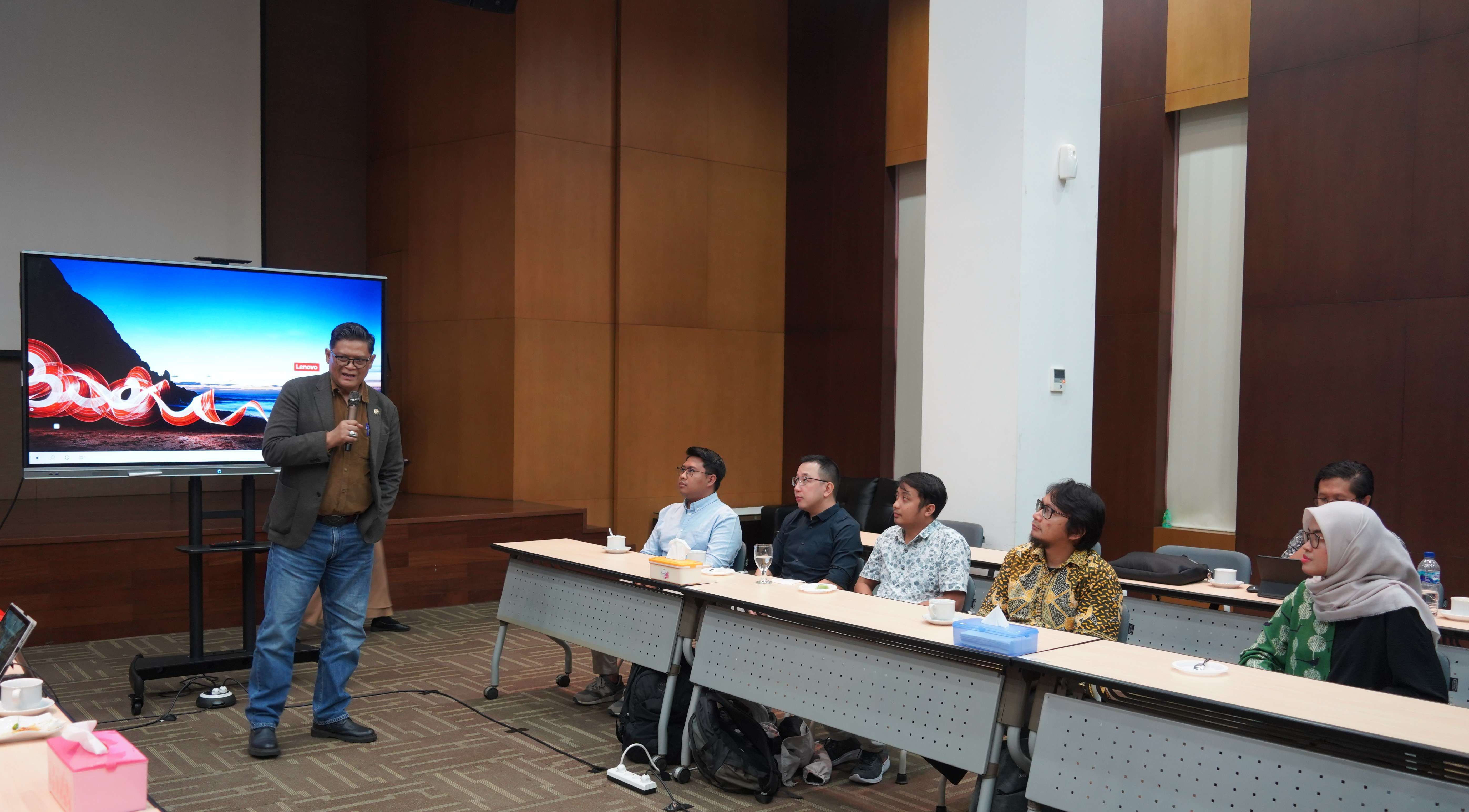
One of the key strengths of this program is its industry-oriented approach. The curriculum incorporates hands-on learning experiences, case studies, internships, and collaborative projects with leading organizations. Students have the opportunity to tackle real-world challenges, gain insights into the latest technologies, and understand best practices in the industry.
Career Opportunities and Contributions to Society
The effective and efficient utilization of information systems and technology is crucial for enhancing business competitiveness and accelerating societal progress. Graduates of this program contribute to various sectors, including business, education, healthcare, culture, transportation, manufacturing, tourism, and entertainment. With a strong foundation in both technical and managerial aspects, alumni are prepared for diverse professional roles, such as system analysts, IT consultants, software developers, data scientists, cybersecurity specialists, and tech entrepreneurs.
As the digital world continues to expand, the demand for experts in information systems and technology is rising. This undergraduate program equips students with the expertise and adaptability needed to succeed in a technology-driven society, ensuring they remain at the forefront of innovation and digital transformation.
Education Objectives
• Graduates will have a successful career in their profession in the field of systems, technology
information, or related fields.
• Graduates will successfully pursue postgraduate studies or engage in professional development.
• Graduates will demonstrate leadership and play an active role in advancing
their community.
Learning Outcomes
• Able to analyze complex computational problems and apply the principles of computing and other relevant scientific disciplines in identifying solutions.
• Able to design, implement, and evaluate computer-based solutions to meet computing needs related to information systems and technology.
• Able to communicate effectively in a variety of professional contexts.
• Understand professional responsibilities and be able to exercise informed judgment in computing practice based on legal and ethical principles.
• Able to perform functions as a leader or team member effectively in activities related to information systems and technology.
• Able to support the delivery, use, and management of information systems in an information systems environment.
• Able to identify and analyze user needs and consider them in the selection, creation, integration, evaluation, and management of computer-based systems.
Curriculum
| No | Code | Course | Credits |
|---|---|---|---|
| 1 | FI1101 | Basic Physics I | 3 |
| 2 | KI1101 | Basic Chemistry I | 3 |
| 3 | MA1101 | Mathematics I | 4 |
| 4 | WI1101 | Pancasila | 2 |
| 5 | WI1102 | Computational Thinking | 2 |
| 6 | WI1103 | Introduction to Sustainability Principles | 2 |
| 7 | WI1111 | Basic Physics Laboratory | 1 |
| 8 | WI1116 | Computer Interaction Laboratory | 1 |
| Credit Total | 18 | ||
| No | Code | Course | Credits |
|---|---|---|---|
| 1 | IF1210 | Algorithms and Programming 1 | 3 |
| 2 | II1200 | Introduction to Information Systems and Technology | 3 |
| 3 | WI2001 | Introduction to Engineering and Design | 3 |
| 4 | WI2002 | Data Literacy and Artificial Intelligence | 2 |
| 5 | WI2003 | Sport | 1 |
| 6 | WI2005 | Indonesian | 2 |
| 7 | WI2006 | Citizenship | 2 |
| 8 | WI201X | Citizenship | 2 |
| Credit Total | 18 | ||
| No | Code | Course | Credits |
|---|---|---|---|
| 1 | IF2010 | Object-Oriented Programming | 3 |
| 2 | IF2040 | Database Modeling | 3 |
| 3 | II2100 | Interpersonal and Public Communication | 2 |
| 4 | II2110 | Discrete Mathematics | 3 |
| 5 | II2120 | Computer network | 3 |
| 6 | II2130 | Computer Systems and Architecture | 3 |
| 7 | WI2004 | English | 2 |
| Credit Total | 19 | ||
| No | Code | Course | Credits |
|---|---|---|---|
| 1 | IF2050 | Software Engineering Basics | 3 |
| 2 | II2210 | Platform Technology | 3 |
| 3 | II2211 | Probability and Statistics | 3 |
| 4 | II2221 | Enterprise Needs Analysis | 3 |
| 5 | II2240 | Multimedia System | 3 |
| 6 | II2250 | Database Management | 2 |
| 7 | II2260 | . | 3 |
| Credit Total | 20 | ||
| No | Code | Course | Credits |
|---|---|---|---|
| 1 | IF3070 | Basics of Artificial Intelligence | 3 |
| 2 | II3120 | Information Technology and Systems Services | 3 |
| 3 | II3130 | Enterprise Architecture | 3 |
| 4 | II3131 | Human Computer Interaction | 3 |
| 5 | II3140 | Web and Mobile Application Development | 3 |
| 6 | II3160 | Integrated System Technology | 3 |
| 7 | II3170 | Information Technology Law and Ethics | 2 |
| Credit Total | 20 | ||
| No | Code | Course | Credits |
|---|---|---|---|
| 1 | IF3211 | Domain Specific Computing | 2 |
| 2 | II3220 | Information Technology Governance | 3 |
| 3 | II3230 | Information Security | 3 |
| 4 | II3240 | Systems Engineering and Information Technology | 4 |
| 5 | WI2022 | Project Management | 2 |
| Credit Total | 14 | ||
| No | Code | Course | Credits |
|---|---|---|---|
| 1 | II4090 | Internship | 2 |
| 2 | II4091 | Final Project Proposal | 2 |
| Credit Total | 4 | ||
| No | Code | Course | Credits |
|---|---|---|---|
| 1 | II4092 | Thesis | 4 |
| Credit Total | 4 | ||
Detailed explanations for each course can be accessed via the following link: https://akademik.itb.ac.id/id/program/S1/program-studi/182
Specialization
Minor
INTERNATIONAL UNDERGRADUATE PROGRAM
The International Undergraduate Program (IUP) at the Bandung Institute of Technology (ITB) provides an international educational experience through a global curriculum and the opportunity to participate in academic activities at partner universities abroad during the fourth year of study. Complete information regarding requirements, selection mechanisms, and registration procedures can be accessed through the official ITB Admissions website: https://admission.itb.ac.id/info/international-undergraduate-program/
Career Prospect
A wide range of career opportunities is available for graduates of the Information Systems Technology program. The following jobs represent just a small sample of the many options available:
- As a designer, to plan the development and manage information technology systems to support the operational management of various institutions and companies.
- As an engineer in the software industry, developing software for information systems within a corporate environment.
- As a researcher in a research institution or educational organization.
- As a creative individual with a forward-thinking vision, defining information as an asset.
- As a facilitator and emancipator, guiding the community in building a thriving and growing society.
Enrollment
Prospective students wishing to continue their studies at the School of Electrical Engineering and Informatics (STEI) can participate in the entire selection and admissions process, which is centrally organized by the Bandung Institute of Technology (ITB). Official information regarding requirements, selection mechanisms, schedules, and registration procedures can be accessed through the ITB Admissions page at the following link: https://admission.itb.ac.id/info/stei/
Contact
Contact Us
Undergraduate Program in Information System and Technology
Labtek VIII/Gedung Achmad Bakrie, Jl. II, Lebak Siliwangi, Coblong, Bandung City, West Java 40132
Program Administrator: M Rian Noviansyah
Phone/WA : +62-812-2233-6681
Parking at ITB
Vehicles on the ITB campus are restricted to employees and special guests. There are three main parking facilities:
- Sasana Budaya Ganesha (Sabuga) is the largest parking area for four-wheeled and two-wheeled vehicles. Access to this parking area is from Jalan Taman Sari or Jalan Siliwangi.
- Parkir Timur (SR) provides limited parking for four-wheeled and two-wheeled vehicles. This parking area is open 24/7, except on major holidays.
- Parkir Barat (Civil) is specifically for two-wheeled vehicle users.


 English
  Indonesian