


SEEI ITB Telecommunications Research Group Drives Rural Livestock Transformation through Digital Technology in Ciamis
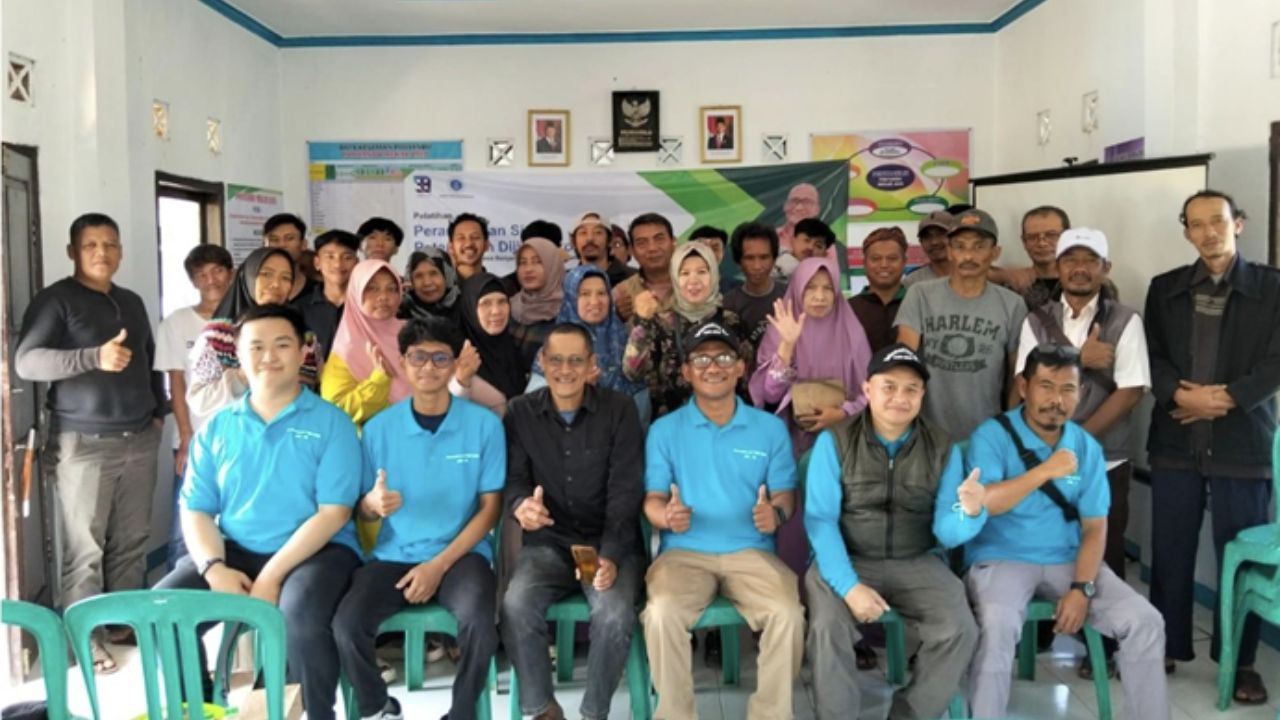
Bandung, stei.itb.ac.id – In an effort to support digital transformation in the agricultural and livestock sectors, a lecturer from the Telecommunication Engineering Expertise Group, Dr. Hamonangan Situmorang, S.T., M.T., together with two other researchers, Samuel Tommy Setiadjie, S.T., and Averroes Aji Van Tafakur, S.T., initiated a “Digital Livestock System Development Program” in Kampung Lember, Banjarangsana Village, Panumbangan District, Ciamis Regency. .. . . ... .
In an interview, Dr. Hamonangan explained that the digital livestock system being developed is a technology-based solution to help communities manage livestock efficiently and automatically. This system integrates sensors, actuators, and digital platforms to automate various critical processes such as feeding, regulating temperature and humidity in livestock sheds, as well as lighting and ventilation, including odor control through ammonia level detection. ., .. . .
“With this approach, livestock farming can be managed in a more time-efficient and labor-efficient manner, while remaining productive,” said Dr. Hamonangan.
The project focuses on two main sectors: poultry farming and inland fisheries. The system developed consists of: . . ..
• Sensor Subsystem: to monitor temperature, humidity, and ammonia levels in poultry sheds, as well as oxygen, nitrogen, salinity, and temperature levels in fish ponds.
• Actuator Subsystem: including automatic feeders, cooling fans, heating lamps, and exhaust systems to reduce shed odors.
• Digital Dashboard: displaying real-time and historical data, feed scheduling settings, and manual and automatic modes for daily management.
“All system components are interconnected so that farmers can monitor and control their facilities remotely, even using simple devices,” he explained.
The selection of Kampung Lember as the community service location was not without reason. With an elevation of 500–700 meters above sea level and a humid climate, the area is ideal for poultry farming and inland fisheries. In addition, the community’s collaborative social structure and openness to change are supporting factors for the success of this program.
“We see great potential here. The community is enthusiastic and the village authorities are very supportive. This becomes an important foundation for introducing an appropriate technology-based approach,” said Dr. Hamonangan.
Although the implementation of technology in rural areas faces challenges such as limited infrastructure and digital literacy, the research team was able to adapt the system design to local conditions. Continuous education is also provided to the community so that the system can be operated independently.
In the long term, Dr. Hamonangan hopes that this program can become a household-scale smart farming model, open up new economic opportunities, and encourage the creation of a community-based digital livestock ecosystem. .. .. ..
“We envision this system as a catalyst for rural economic transformation. The hope is that new partnership models will emerge that are inclusive, efficient, and sustainable, and even attract strategic investors to get involved,” he concluded.
With the success of this program, the team from SEEI ITB hopes to replicate similar systems in other villages, expand the impact of technological innovation for communities, and accelerate the transformation toward a digital economy based on local potential.
 English
  Indonesian