


ITB Holds National Webinar “Humanizing AI”: Cross-Sector Collaboration for Technological Sovereignty and Pancasila-Based Ethics
Bandung, 31 May 2025 – In an effort to promote the ethical, inclusive, and human-centered use of artificial intelligence (AI), the School of Electrical Engineering and Informatics, Institut Teknologi Bandung (SEEI ITB), held a national webinar titled “Humanizing Artificial Intelligence.” Conducted online on 31 May 2025, the event served as a cross-sector public seminar discussing key issues as the foundation for Indonesia’s AI roadmap grounded in Pancasila values. ..
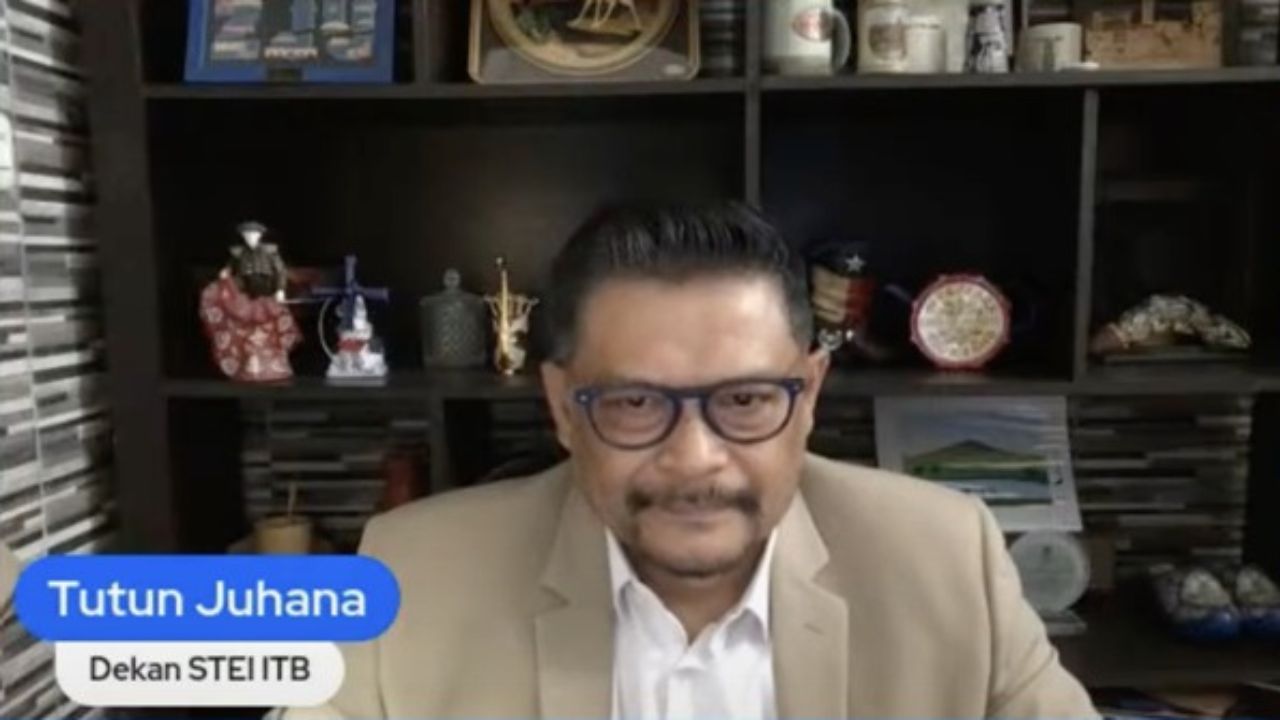
The webinar was opened by the Dean of SEEI ITB, Tutun Juhana, who emphasized that AI development should not be trapped solely in the pursuit of efficiency. “We must ground AI in accordance with our national philosophy, namely Pancasila values,” he stated. He also invited all stakeholders to collaborate to ensure that AI does not become a threat to human dignity, but instead strengthens human values.

Affirming Technological Sovereignty: Indonesia’s Strategic Position in the Global AI Ecosystem
The first session discussed Indonesia’s strategic position in the global AI development landscape. Ardi Sutedja, Chairman of the Indonesia Cybersecurity Forum (ICSF), underlined the need for a risk-based approach so that digital transformation does not reduce Indonesia to merely a market for foreign technologies. He emphasized the importance of governance and cross-sector collaboration in AI development. “This is not the work of a single party, but a multi-stakeholder collaboration across various disciplines,” he said.
Ajar Edi, SVP Government Affairs of PT Indosat Tbk., conveyed the urgency of building sovereign AI so that Indonesia becomes not only a technology consumer, but also a producer. He stated that downstreaming and data sovereignty are key. “When the AI factory is in Indonesia, all data will be processed in Indonesia,” he explained. This was considered important to ensure that AI solutions are relevant to the local context and deliver long-term economic impact. . .
From the global industry perspective, Panji Wasmana, National Technology Officer of Microsoft Indonesia, presented trends in the use of agentic AI in the workplace based on Microsoft’s research involving 31,000 global respondents. He emphasized that human control remains crucial even as AI becomes more autonomous. “How do we empower users to understand risks and ensure that AI can be properly controlled,” he said, highlighting AI literacy, innovative thinking, and adaptability as key future skills. . .
.Human-in-the-Loop: Ensuring Fairness and Accountability in the AI Era
The second session explored principles of human-centered AI development. Ayu Purwarianti, a researcher from the ITB AI Center, emphasized that AI must always remain under human control, ensure data security, and be transparent, explainable, and accountable. She stated, “AI must not be harmful or contrary to human principles and safety.” Strengthening AI literacy was also highlighted as a priority, including ethical understanding, an adaptive mindset, and character education from an early age...
Iradat Wirid from CfDS UGM reminded participants that human-centered AI is not only about outcomes, but also about how AI is designed and who is involved. Referring to early AI thinkers such as Norbert Wiener and J.C.R. Licklider, he emphasized that technological innovation must side with humans, not gadget worship. He also highlighted four major challenges in the AI era: data security, disinformation, economic inequality, and ethics.
Indriaswati Dyah from ELSAM added that the principle of human-in-the-loop—the presence of humans throughout the entire AI lifecycle, from development to operation—must be a core principle. She noted that Indonesia’s position as a technology user (rather than an original producer) makes a human rights–based approach to AI even more important. “Awareness of AI’s potential risks in reinforcing bias and discrimination remains low,” she stated, emphasizing the need for cross-sector collaboration beyond the government. . .
Ethics-Based AI Education: Building a Resilient Generation in the Digital Era
The third panel highlighted education as the foundation of an ethical and sustainable AI ecosystem. Henke Yunkins from the Indonesia AI Society revealed that AI is not designed to be honest, but to sound convincing. He emphasized four key components in AI education: basic literacy, experimentation, social-emotional aspects, and more meaningful learning outcomes. “Education is not just about chasing technology, but about shaping human beings. Humans must determine the direction of AI development itself,” he stated.
Andy Ardian from ECPAT Indonesia warned about the impact of AI on children’s privacy, especially as children begin interacting with AI-based chatbots. He highlighted the risk of data bias that could reinforce social stereotypes, as well as technological dependence that erodes children’s critical thinking abilities. Meanwhile, Narenda Wicaksono from Dicoding emphasized the need for industry involvement in developing relevant curricula. “After knowing and being able, there must also be the willingness to become part of this technological development,” he said.
Diena Haryana from the SEJIWA Foundation added that children must first be strengthened in their physical, social, and spiritual skills before being introduced to AI. She emphasized, “AI must not replace children’s playtime and exploration. Technology can be a supporting tool without disrupting children’s growth and development.” Teachers must be empowered, and technology should be used as a tool, not the ultimate goal of education.
Toward an Inclusive and Sovereign Indonesian AI Ecosystem
Through three panel sessions representing perspectives from academia, civil society, and industry, the webinar underscored the importance of a collaborative approach in building an inclusive and equitable national AI ecosystem. SEEI ITB reaffirmed its commitment not only to developing technology, but also to advancing the values and principles that underpin its use. By placing humans as the center and purpose of innovation, Indonesia is expected to navigate digital transformation in a sovereign, dignified manner, grounded in humanitarian values.
***
For further information, please contact:
Masgustian
Media & External Relations
Webinar Humanizing Artificial Intelligence: Mapping and the Future of Indonesia’s Artificial Intelligence Ecosystem, held on Saturday, 31 May 2025.
+62 857-9931-2383 (WhatsApp) or masgustian@gmail.com
The webinar recording can be watched again at the following link:
 English
  Indonesian