
Begini Kriteria Penilaian Kota Cerdas Versi ITB

The Indonesian Smart City Rating Team (RKCI) led by Suhono Harso Supangkat, Professor of Information Technology at ITB (fourth from left) poses with Vice President Jusuf Kalla.
Bisnis.com, JAKARTA – Fifteen cities and regencies in Indonesia have been included in the smart city category. What are the criteria for assessing these smart cities?
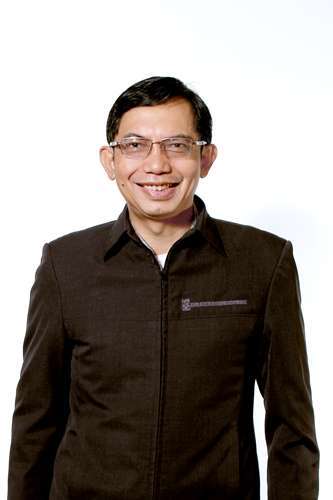
Suhono Harso Supangkat, Professor of Information Technology at ITB, explained that to understand the efficiency and effectiveness of smart urban planning in Indonesia, a comprehensive and thorough evaluation is needed.
According to him, the Indonesian Smart City Rating (RKCI) is an activity carried out to conduct mapping so that each city is able to understand its city so that it can transform into a Smart City.
"The awarding of the 2017 Indonesian Smart City Rating is the closing of the 2017 Indonesian Smart City Rating series of activities that took place from May 2017," he explained in a press release received by Bisnis.com, Monday (11/12/2017).
Suhomo explained that the 2017 RKCI awards were based on the Indonesian Smart City Rating Index, which was awarded to cities that met the study's criteria. Furthermore, to promote understanding of Smart Cities, a Smart City Talkshow was held with speakers from relevant stakeholders, including ministries, mayors, academics, and industry.
The mapping was conducted by assessing city conditions based on quality of life elements (economic, social, and environmental) and enabling elements (governance, infrastructure and technology, and community). This mapping was conducted through independent evaluations by the city government, in-person visits to city governments, and community surveys (n=400) in selected cities. This mapping activity is a biennial activity and first began in 2015.
RKCI 2017 measures 93 cities (except the administrative city of Jakarta) in Indonesia, with the classification of large cities, namely cities with a population of over 1 million people, as many as 14 cities; medium cities, namely cities with a population of between 200 thousand and 1 million people, as many as 43 cities and small cities, namely cities with a population of under 200 thousand people, as many as 36 cities.
The selection process consists of a self-evaluation, where cities are asked to complete an online questionnaire; assessment of the self-evaluation results; validation and on-site visits to the finalist cities; mapping of cities based on their respective potentials; and the announcement of the city mapping results.
Mapping is carried out by assessing the city management process in terms of resource utilization, management, integration and sustainability, e-government, strategies and plans as well as assessing the quality of life in terms of services, quality of life index and other indices, public perception and assessment of city innovation.
"Based on these various indicators, we mapped the best cities based on their size, including large, medium, and small; based on economic, social, and environmental classifications, as well as other categories. These various classifications allow cities to understand their condition and develop according to their respective potential," Suhono explained.
The 2017 Indonesian Smart City Rating Award was held on December 11, 2017 at the Vice Presidential Palace, Jakarta and the Dhanapala Building, Jakarta.
The 2017 RKCI award ceremony was attended by participants invited to the Talkshow and Awarding Event for the Indonesian Smart City Rating, consisting of Ministries related to Smart City development, city governments from all over Indonesia, lecturers and academics related to Smart City development, and stakeholders and industries related to Smart City development.
Source: kabar24