


Prof. Iskandar,
DR. ST., MT.
Telecomm Engineering
Email : iskandar@itb.ac.id
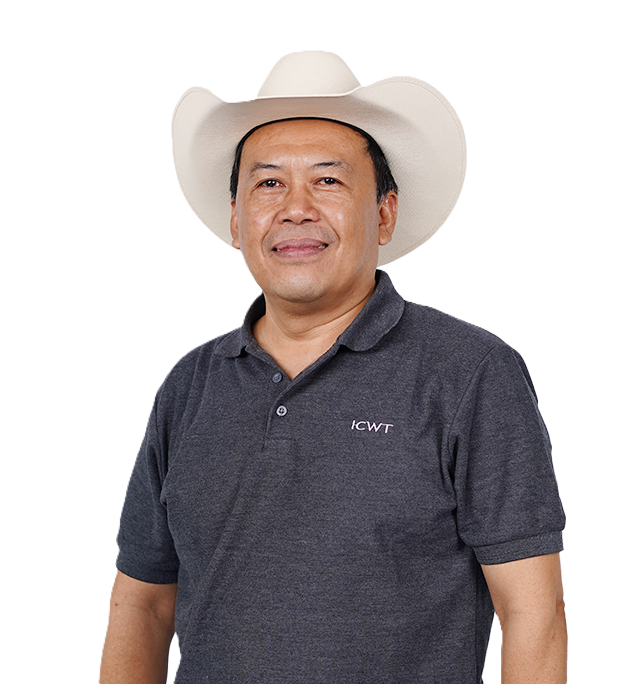
Dr. Iskandar is an Associate Professor in Telecommunications at the School of Electrical Engineering and Informatics (STEI), Bandung Institute of Technology (ITB). He is widely recognized for his contributions to wireless mobile communications and the development of the High Altitude Platform Station (HAPS) system.
Dr. Iskandar completed his doctoral degree in Telecommunication Science in March 2007 from Waseda University, Japan—one of Asia's leading research universities. Previously, he earned a Master of Engineering degree in 2000 and a Bachelor of Engineering degree in 1995 from the Department of Electrical Engineering, Bandung Institute of Technology, with a major focus in telecommunications. This strong academic background has served as the foundation for his career development as a researcher and academic in the field of advanced communications technology.
Dr. Iskandar's research focuses include next-generation (4G/5G) wireless mobile communication systems, MIMO-STBC technology, OFDM, and specifically the development and optimization of High Altitude Platform Station (HAPS)-based communication systems. Since his doctoral studies in Japan, he has been researching channel characterization and propagation modeling for HAPS-based mobile communication systems. His publications in IEEE proceedings and international journals have become important references in the field of wireless mobile communication and HAPS, demonstrating consistent and impactful scientific contributions. In recent years, he has led research on the coexistence of HAPS and 5G cellular networks (IMT-2020), the development of machine learning algorithms for 5G network planning. In addition, he is actively developing wireless access technologies to increase data coverage and capacity, as well as communication systems for high-speed trains and HAPS-based wireless sensor networks.
Outside of academic activities, Dr. Iskandar has been involved in various national research projects as a study team leader, consultant, and technical instructor. Since the late 2000s until now, he has handled several research projects in collaboration with government agencies such as Ministries and Institutions as well as state-owned and private companies. These projects cover a wide spectrum—from the preparation of frequency spectrum roadmaps, 5G and satellite spectrum harmonization, the development of SLA monitoring systems for the land segment, to IoT-based monitoring systems. He has also been a resource person for training at several institutions and helped develop national competency standards in the field of cellular telecommunications. Through these roles, Dr. Iskandar has bridged the academic world and the practical needs of the industrial and government sectors, making his expertise relevant and impactful in the development of national communications infrastructure.
- RSMA-UAV Based IoT Communication Model: Rate Splitting Decoding Complexity Reduction and UAV Trajectory Optimization to Improve Sum-Rate and Energy Efficiency (2025)
- Development of User Clustering Strategy in RSMA-MIMO to Improve Decoding Efficiency in Wireless Communication Systems (2025)
- Development of a Hybrid LSTM-Transformer Model for Time Series Traffic Prediction to Improve Cellular Network Capacity Management Intelligently and Accurately (2025)
- Optimization of OFDM Technology for NVIS Communications in Equatorial Ionospheric Anomaly Regions (2024)
- Forwarding Strategy on Data Networks Named as a Content Delivery Mechanism to Support Future Vehicular Networks (2024)
- Study on the Development of SLA Monitoring Strategy and Infrastructure & Technology Governance of the Directorate of Infrastructure (2024)
- Study of the Use of Earth Stations In Motion (ESIM) (2024)
- 5G Cellular Network Planning via Machine Learning Algorithm Enhancement for Accuracy Improvement
- The 17th International Conference on Telecommunications, Systems, Services, and Applications 2023 (TSSA 2023) (2023)
- Development of wireless access network technology to increase data rates and coverage area (2023)
- Development of Wireless Access Technologies to Improve Capacity, Connectivity, and Coverage in 5G/6G Communication Systems
- Government Radio Network (GRN) Pilot Project Preparation Study (2023)
- Towards Efficient Data Communication in Vehicular NDN: The Superiority of Adaptive SRTT-Based Forwarding (ASF) (2025)
- Comparative Analysis of Federated and Centralized Learning Systems in Predicting Cellular Downlink Throughput Using CNN (2025)
- Outage Probability on HAPS System as IMT Base Station (2025)
- User Trajectory Prediction in Cellular Networks Using Multi-Step LSTM Approaches: Case Study and Performance Evaluation (2025)
- Performance Evaluation of Coverage Prediction in 4G Networks Using Machine Learning Classification Algorithm (2024)
- Overfitting Defeat with Dropout for Image Classification in Convolutional Neural Networks (2024)
- LSTM Neural Network Algorithm for Handover Improvement in a Non-Ideal Network Using O-RAN Near-RT RIC (2024)
- Investigating SIC Performance Using Sequential Power Allocation for Downlink NOMA (2024)
- Comparative Analysis of ARIMA, Prophet, and Glmnet for Long Term Evolution (LTE) Base Station Traffic Forecasting (2024)
- Comparative Analysis of 5G New Radio (NR) Network Planning on Low-, Mid-, and High-Band in the Bandung City Area (2024)
- Analysis of Uplink and Downlink Interference between NGSO and GSO Satellites at Ku Band Frequency: Case Study on Starlink and Telkom-3S (2024)
- PIT Performance Measurement using NFD Pipeline Parameters in Named Data Networking (NDN) (2024)
- Estimating Base Station Traffic and Throughput Using Machine Learning Based on Hourly Key Performance Indicator (KPI) Network Analysis (2024)
- Development and Deployment of Web Application For User Clustering Using Modified K-Means On PD-NOMA (2024)
- User Clustering Using Modified K-means in PD-NOMA (2024)
- A Review of Coverage Predictions in Mobile Communication Systems using Machine Learning Algorithm (2023)
- Frequency Monitoring Interface Design and System using HackRF (2023)
- Hardware Implementation of Fishermen Radio for Data Communication via Audio Signal on Very High Frequency (VHF) Spectrum (2023)
- Design and Implementation of 433 MHz Radio Communications System as a Secondary Network for BMKG Sensor Data Acquisition (2023)
- Web Based Dashboard for Fisherman Radio System in VHF Frequency Band (2023)
- Mobile application and cloud system for Telecommunication natural disasters anticipation (2023)
- Neural Networks Architecture and Hyperparameter Exploration for Handover Simulation in 5G Network (2023)
- SPAVIC (Sistem Pemantauan dan Antisipasi Virus)-desain industri (2022)
- SPAVIC (Sistem Pemantauan dan Antisipasi Virus) Versi 2022-desain industri (2022)
- Buoy IoT untuk Sistem Monitoring Budi Daya Rumput Laut-desain industri (2021)
Keyword
Wireless telecommunication