




“Magic Mirror” Earns National Recognition as One of the 117 Most Prospective Indonesian Innovations of 2025
Bandung, stei.itb.ac.id/redesign Bandung, stei.itb.ac.id/redesign – School of Electrical Engineering and Informatics Institut Teknologi Bandung has once again achieved a remarkable milestone through its innovation, “Magic Mirror: AI-Powered Smart Health Monitoring Mirror,” which has been selected as one of the 117 Most Prospective Indonesian Innovations of 2025 organized by the Business Innovation Center. The innovation was recognized for its excellence in applying non-contact, artificial intelligence (AI)-based technology to monitor users’ vital parameters in a practical, hygienic manner seamlessly integrated into daily activities.
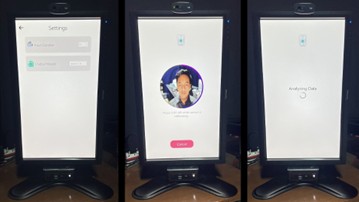
Magic Mirror was developed in response to the modern need for a more practical health monitoring system. Many individuals are not accustomed to routinely checking their heart rate or body temperature because conventional devices generally require physical contact, are less flexible, and are not always readily available in everyday settings. Inspired by the concept of a “magic mirror,” the development team transformed an ordinary mirror into an intelligent AI-based health device capable of facial recognition and vital parameter analysis simply by having users stand in front of it. This approach enables a health check experience that blends naturally into daily routines without disrupting activities.
The development of this innovation involved multidisciplinary collaboration among STEI ITB researchers and practitioners. Almer Fandriyanto, M.T., served as the lead AI system developer and was responsible for both front-end and back-end application development, including AI algorithm design, software integration, facial data processing, and user interface design to ensure real-time, user-friendly display of analysis results. Donny Danudirdjo, Ph.D., contributed to signal processing and physiological data analysis by developing remote photoplethysmography (rPPG) methods to estimate heart rate from facial imagery, as well as validating the model using mathematical and statistical approaches. Prof. Andriyan Bayu Suksmono, Ph.D., provided conceptual direction and scientific framework to ensure technological novelty and strong research foundations. Ir. Habibur Muhaimin, M.Sc., was responsible for experimental design and system testing through comparisons with conventional medical devices to measure accuracy levels, while Amarruddin Mu’tadz, A.Md., handled hardware design and integration, including the camera, display, and physical structure of the Magic Mirror to ensure ergonomic usability across various environments.
The development process began in January 2025, focusing on hardware design and AI algorithm development. After completing development phases and initial validation, the innovation was registered in July 2025 for the 117 Most Prospective Indonesian Innovations of 2025 selection process. The official announcement was received in February 2026. Overall, the journey from early-stage development to national recognition took approximately one year.
Looking ahead, Magic Mirror has broad implementation potential, particularly in households and healthcare facilities. At home, the device can function as an integrated family health dashboard embedded in daily routines, allowing family members to monitor their physical condition regularly. In hospitals, clinics, and community health centers, Magic Mirror has the potential to serve as a self-screening tool in registration areas or waiting rooms, helping streamline service workflows and reduce the burden on healthcare professionals.
Amid growing awareness of preventive healthcare, particularly in the post-pandemic era, Magic Mirror offers a more comfortable non-contact examination solution compared to conventional devices. The innovation integrates computer vision technology, physiological analysis, and product design that blends seamlessly into residential interiors and public spaces. Field testing involving 30 subjects and comparisons with conventional medical devices demonstrated promising accuracy levels, forming the foundation for further development. With strong scientific foundations, significant market potential, and a scalable development model, Magic Mirror represents STEI ITB’s commitment to delivering research-based innovations that are relevant and impactful for society.