


Sustainable Power Engineering: Engineering Energy, Shaping the Future
This program is an English-taught undergraduate program that focuses on the generation, delivery, and use of electrical energy. This program is designed to prepare graduates who are globally competitive, technically proficient, and adaptable in international professional environments. The developed curriculum offers sufficient depth for postgraduate studies and lifelong learning, preparing graduates to make significant contributions, particularly in the field of electrical power engineering, both in Indonesia and abroad.
This program equips students with fundamental knowledge in electrical power engineering, supported by mathematics, science, computing, and basic engineering. This program also fosters the aspects relevant to professional practices, including communication, teamwork, leadership, safety, ethics, and environmental awareness. With the rapid development in electrical power engineering, the overarching goal of this program is to create graduates who can bridge local and global perspectives in solving various energy challenges.
Curriculum Structure
| Course Types | Credits |
|---|---|
| ITB’s Compulsory Courses | 34 |
| The Program’s Compulsory Courses | 83 |
| Elective Courses | at least 27 (including at least 6 credits from other eligible programs) |
| Total | at least 144 divided into 8 semesters |
| Year / Phase | Focus / Content |
|---|---|
| 1st Year | College-level math & basic sciences + laboratory (math, physics, chemistry, biology), electrical engineering fundamentals, general courses (general engineering, computing fundamentals, data literacy, language, etc.) |
| 2nd Year | Electrical engineering fundamentals, advanced basic sciences, general courses (civic education, language, etc.) |
| 3rd Year | Core electrical power engineering courses + laboratory experiments |
| 4th Year | Final year: final project (capstone design), mandatory international exchange (for international class students), elective courses |
| Code | Course Name | Credits |
|---|---|---|
| MA1101 | Mathematics I | 4 |
| FI1101 | General Physics I | 3 |
| KI1101 | General Chemistry I | 3 |
| WI1101 | Pancasila | 2 |
| WI1102 | Computational Thinking | 2 |
| WI1103 | Introduction to Principles of Sustainability | 2 |
| WI1111 | Basic Physics Laboratory | 1 |
| WI1112 | Basic Chemistry Laboratory | 1 |
| Total | 18 | |
| Code | Course Name | Credits |
|---|---|---|
| WI2001 | Introduction to Engineering and Design | 3 |
| WI2002 | Artificial Intelligence and Data Literacy | 2 |
| WI2003 | Sports | 1 |
| WI2005 | Indonesian Language | 2 |
| EP1209 | Basics of Programming | 2 |
| BI1011 | Biology A | 2 |
| EL1200 | Introduction to Circuit Analysis | 2 |
| MA1201 | Mathematics IIA (for Natural Sciences and Engineering) | 4 |
| Total | 18 | |
| Code | Course Name | Credits |
|---|---|---|
| EP2001 | Probability and Statistics | 3 |
| MA2072 | Engineering Mathematics IA | 3 |
| EL2001 | Electric Circuits | 4 |
| EL2101 | Electric Circuits Laboratory | 1 |
| EL2150 | Digital System dan Microprocessor | 3 |
| MS2060 | Thermal Engineering | 2 |
| WI2004 | English | 2 |
| Total | 18 | |
| Code | Course Name | Credits |
|---|---|---|
| MA2074 | Engineering Mathematics IIA | 3 |
| EP2002 | Signal & System | 3 |
| EP2003 | Electromagnetics | 3 |
| EP2004 | Measurement System | 3 |
| EP2005 | Computation and Numerical Analysis | 3 |
| EP2201 | Power Engineering Laboratory I | 1 |
| WI201X | Religion | 2 |
| WI2006 | Civic Education | 2 |
| Total | 20 | |
| Code | Course Name | Credits |
|---|---|---|
| EP3001 | Electric Machines | 3 |
| EP3002 | Power System Analysis | 3 |
| EP3003 | Electrical Engineering Material | 2 |
| EP3101 | Power Engineering Laboratory II | 2 |
| WI2022 | Project Management | 2 |
| TI3004 | Engineering Economics | 2 |
| EL3015 | Control Systems | 3 |
| Total | 17 | |
| Code | Course Name | Credits |
|---|---|---|
| EP3004 | Power Electronics | 3 |
| EP3005 | High Voltage Technology | 3 |
| EP3006 | Power System Protection | 3 |
| EP3007 | Electric Power Plant | 3 |
| EP3008 | Smart Energy Systems | 2 |
| EP3009 | Utilization of Electrical Energy | 2 |
| EP3201 | Power Engineering Laboratory III | 2 |
| Total | 18 | |
| Code | Course Name | Credits |
|---|---|---|
| EP3001 | Electric Machines | 3 |
| EP3002 | Power System Analysis | 3 |
| EP3003 | Electrical Engineering Material | 2 |
| EP3101 | Power Engineering Laboratory II | 2 |
| WI2022 | Project Management | 2 |
| TI3004 | Engineering Economics | 2 |
| EL3015 | Control Systems | 3 |
| Total | 17 | |
| Code | Course Name | Credits |
|---|---|---|
| EP4003 | Final Design Project | 4 |
| — | Elective courses | max. 20 |
| Total | max. 24 | |
Internationalization Scheme
Required international experience (type, duration, partner).
| POTENTIAL Partner Name | Type (Exchange/DD) | Duration |
|---|---|---|
| Curtin University | Semester Exchange Double Degree (Bachelor) Integrated Bachelor and Master |
1 semester 2 semesters 4 semesters |
| Shibaura Institute of Technology | Semester Exchange | 1 semester |
| Universität Duisburg-Essen | Semester Exchange | 1 semester |
For further semester exchange, you can visit https://partnership.itb.ac.id/semester-exchange/
Estimated Cost of Student Exchange at Partner University (if applicable)
| Partner – Country | Tuition Fee | Living Cost | Housing |
|---|---|---|---|
| Curtin University (Australia) | • If the partner university does not charge a tuition fee, students are required to pay 50% of the Tuition Fee (UKT) to ITB. • If the partner university charges a tuition fee, students are required to pay 5% of the Tuition Fee (UKT) to ITB. |
30,000 AUD per year | — |
| Shibaura Institute of Technology (Japan) | 1,800,000 Yen per year | — | |
| Universität Duisburg-Essen (Germany) | 14,000 Euro per year | — |
Career Prospects
Alumni Stories
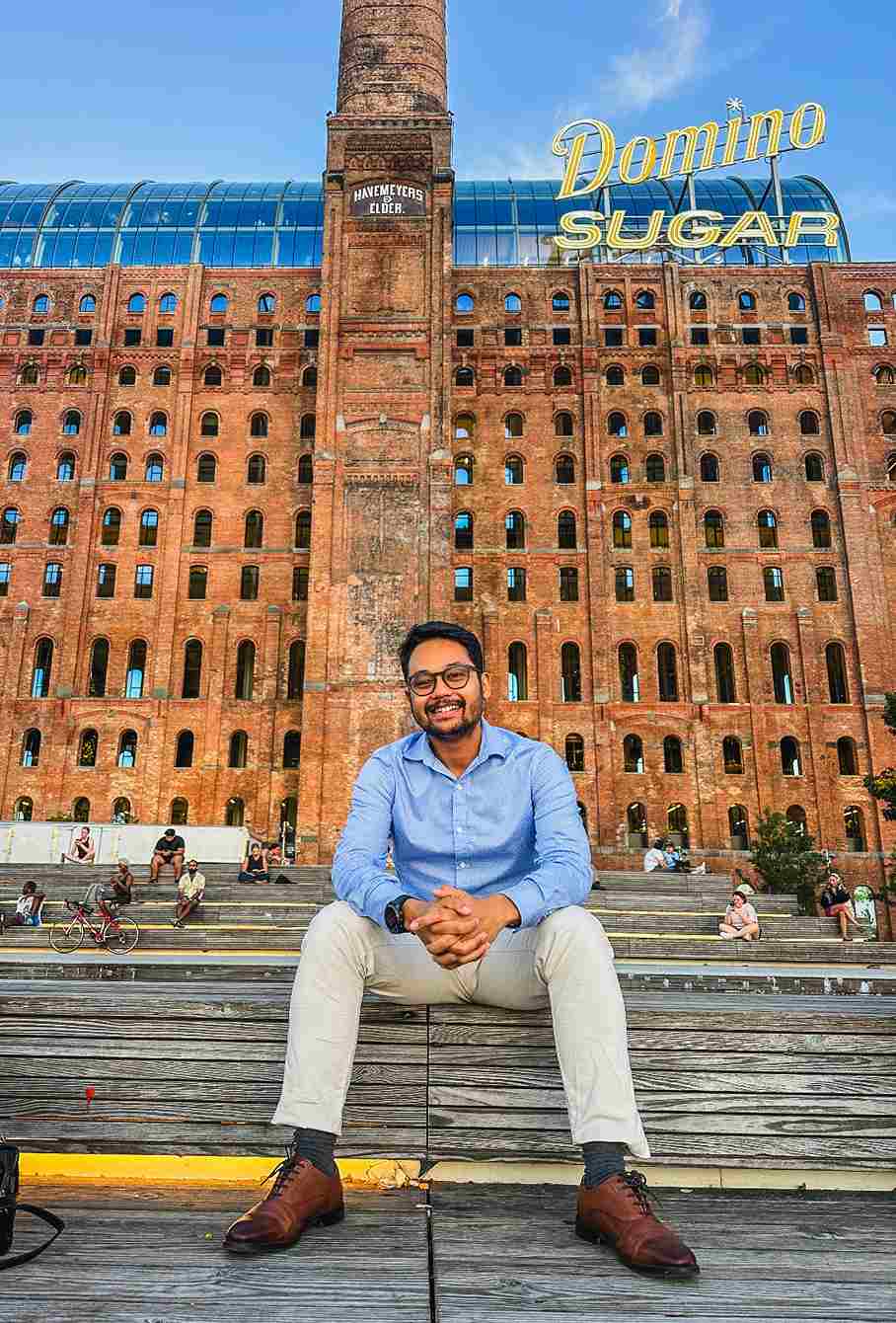
Immanuel Deo Hasian Silalahi
Choosing Electric Power Engineering (EP) at ITB is like getting the blueprint for how the modern world stays powered. It’s the perfect intersection: a unique blend of high-intensity field work and cutting-edge lab research. You’ll find yourself diving into Thermodynamics with Mechanical engineers one day, then switching to coding for smart systems the next.
My journey took me from a thesis on Geothermal energy in remote NTT to a Master’s at Columbia University. The foundation built at ITB was the key. We don’t just sit in class; we have incredible facilities like the Gedung Kerja Sama PLN for high-voltage thrills and the Energy Conversion Lab for power electronics. Witnessing actual lightning simulations and thousands of Volts dancing right in front of your eyes turns “boring” theories into a high-definition reality.
This technical “DNA” allowed me to navigate a career spanning from field engineering at Schlumberger to developing financial models for Virtual Power Plants in New York. Today, I’m back at a state-owned company, accelerating Indonesia’s low-carbon portfolio, such as hydrogen.
Whether you’re learning from global icons like Prof. Suwarno or visiting sites like geothermal ones, EP gives you the “free will” to choose your own path. If you want a high-impact, internationally recognized career that keeps the world moving, this is your home. Cus, masuk sini!
Enrollment Information
Learn about the registration procedures and application requirements to begin your academic journey at the School of Electrical Engineering and Informatics, ITB.