Prof. YusepRosmansyah, Ph.D.
STEI ITB
Yuda Sukmana, S.Pd., M.T.
STEI ITB
Fahma Waluya R., S.Sn., M.Ds.
FSRD-ITB
Nur Budi Utomo, S.Kom.
Abstrak
Screenshots are valuable data that provide visual insights into user behavior. In online exams, screenshots can be used to monitor examinees' activity on their devices. The modeling activity was carried out using a top-down approach using MBSE Grid and SysML, starting from the highest level of abstraction, which views the screenshot-based exam cheating detection system as a black-box or a single entity. Then, at the white-box level of abstraction, which views the system with its logical subsystems, down to the lowest level of abstraction, which is a solution that describes how the components that make up each subsystem. The implementation, verification, and validation of the model were carried out on an online exam platform in the form of an Android-based LMS, namely Edunex Mobile LMS.
Keyword: online exams, proctoring systems, system modeling, screenomics.
Pendahuluan
Maintaining the integrity of online exams has become a critical concern with the advancement of digital learning. Online exams allow students to take exams from any location via the internet using their computing devices. Previous research has found evidence of cheating in online exams, such as searching for answers online and colluding with other students. Various strategies are used to prevent or detect cheating in online exams, one of which is monitoring student activity on the devices they use during the exam. Common forms of computer monitoring include reviewing open application logs, monitoring network traffic, detecting keyboard or mouse input, and observing screen activity. This research focuses on screen activity monitoring because this strategy is still often performed manually using screen-sharing or screen-capture software with the involvement of a human proctor, in contrast to other strategies that can be automated using rule-based techniques.
Monitoring on-screen activity typically involves unstructured visual data in the form of screenshots. Extracting information from screenshots is no easy task; it requires a specialized approach, such as the use of computer vision, a field within artificial intelligence.
Research methods
This research consists of several stages, including modeling the r system using SysML, its implementation on an Android-based online exam platform, and trade-off analysis conducted using the TOPSIS method for testing results and measuring system performance.

The cheating detection system to be developed has three subsystems, namely the screen capture subsystem (Screen Capturing Group), the screenshot classifier subsystem (Screenshot Classifier Group), and the proctor response subsystem (Proctor Response Group). In this study, the overall system model has been completed, but the implementation and verification process has only been carried out on the first subsystem, namely the automatic screenshot subsystem. Three alternative algorithms are proposed, namely using a periodic timer with a certain interval, event-based triggers based on user interface changes, and a combination of both. This system was successfully implemented on an Android-based LMS that is often used for exams in educational institutions.

Discussion and Results
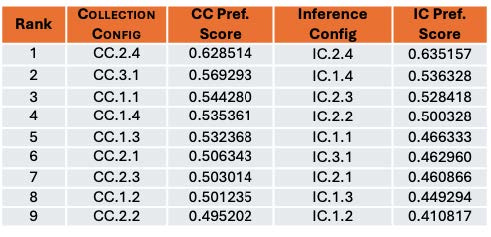
Verification was performed through a series of tests on Android devices and performance evaluation using the profiling feature in Android Studio. Performance measurements of 9×2 alternative configurations of the proposed screenshot algorithm in data collection and inference modes were analyzed using the TOPSIS method to determine the best configuration. The analysis showed that the best algorithm configuration for both modes, with a preference value of 0.6, was a periodic timer with a five-second interval.
Kesimpulan
The results of this study can serve as a basis for further research, particularly in the development of the other two subsystems. However, it is important to note that these results should not be overgeneralized, as testing was conducted on only one Android device and limited to multiple-choice and true/false questions within a single course topic. Further testing across different implementation environments, platforms, and devices is needed to validate and refine these findings.