Anggera Bayuwindra
STEI ITB
Pendahuluan
The EL4123 Digital Control System course is one of the elective courses in the Electrical Engineering undergraduate study program, Bandung Institute of Technology. This course consists of 3 credits, which explains the analysis and design of digital control systems with attention to the signal sampling process in the system, analysis of discrete control systems through conventional models (Z-transform) and state variable models, design of control systems through classical and modern approaches, and implementation of control systems with hardware and software.
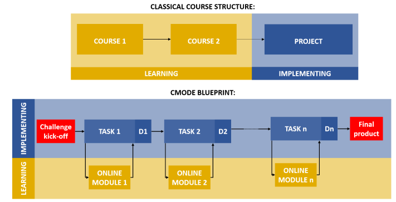
The Challenge-Based Student Centered Learning (C-SCL) learning structure will be designed to exploit the sequential structure, as shown in Figure 1. The most important aspect of this C-SCL structure is that students are required to work on Challenges (Major Assignments) from the beginning of the lecture topic. These Challenges or Major Assignments will be divided into subsections that must be completed in the form of Deliverables for each lecture topic. The theory and knowledge needed to complete each Deliverable will be provided in the form of two-way lectures, online modules, and also learning videos (if needed). All subsections, or Deliverables, will form a single Challenge/Major Assignment unit that covers all subtopics and learning outcomes of the EL4123 Digital Control Systems course.
The implementation of C-SCL, besides being student-centered, also combines project-based and problem-based learning. The primary goal of C-SCL is to:
- provide students with a challenge-based learning environment that is learning-centered, not content-centered,
- changing the role of lecturers from teaching and imparting knowledge to guiding, mentoring and motivating, and
- provide on-campus contact hours that complement the learning environment
In implementing C-SCL, the lecturer/instructor determines the system/plant where the control system will be implemented. Students are then given the freedom to conduct analysis, design control system algorithms, conduct simulations, and even choose a microcontroller for the control system implementation.
The aim of C-SCL is formulated to increase students' learning motivation by giving them additional freedom and responsibility, while aiming to exploit the potential benefits of challenge-based learning and project-based learning.
Metode Penerapan
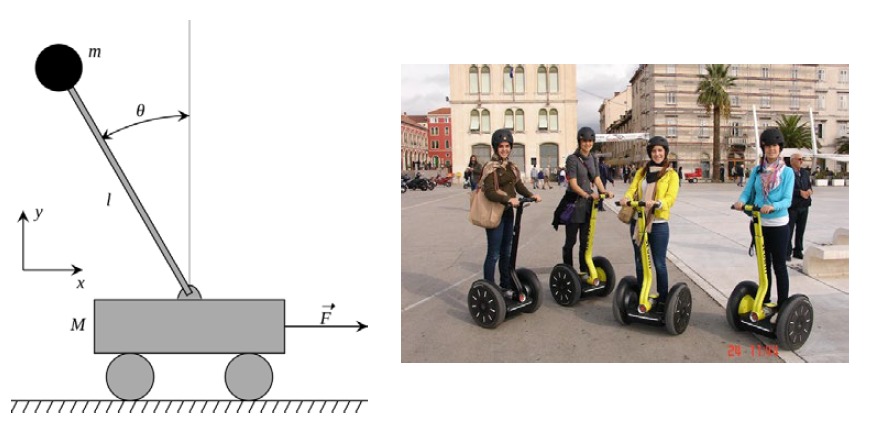
- Identifikasi TantanganStudents are given problems or case studies related to digital control, with a plant/system in the form of an inverted pendulum, and the implementation of control algorithms on
- Collaboration and Discussion: Students work in groups to analyze problems, design solutions, and perform simulations using software such as MATLAB or
- Solution Development and Implementation: Each group develops the proposed solution, either through simulation or hardware implementation (for example on the Arduino or Raspberry Pi platform).
- Presentation and Reflection: The results of the Major Assignment are presented in class, followed by a discussion session to provide input and reflection.
Results Achieved
- Peningkatan Hasil Belajar: Based on the evaluation of exam results, the average student score increased by 15% compared to the learning method
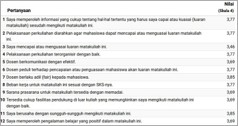
- Student Involvement: The questionnaire results showed that 90% of students felt more involved in learning compared to the lecture method.
- Penguasaan Keterampilan Teknis: Students are able to apply digital control system design techniques using simulation software and hardware independently.
- Kemampuan Kolaborasi: As many as 85% of students stated that their collaboration and communication skills within the team increased during the completion process.
Kesimpulan
The Challenge-Based Student-Centered Learning (C-SCL) project for the EL-4123 Digital Control Systems course, implemented in Semester 1, successfully improved the quality of learning, both in terms of student understanding and additional skills acquired. Despite some challenges, this approach provided a more meaningful and relevant learning experience.