Astri Handayani, ST, MT
School of Electrical Engineering and Informatics
Dr. Hasballah Zakaria, S.T, M.Sc.
School of Electrical Engineering and Informatics
BASED on data from the Basic Health Research of the Republic of Indonesia, the incidence of cardiovascular disease (PKD) in Indonesia
The prevalence of PKD is increasing year by year. At least 15 out of 1,000 people in Indonesia are recorded as suffering from PKD. In 2023, the Indonesian Ministry of Health recorded approximately 650,000 deaths annually due to PKD.
With the high rates associated with PKD, screening for heart and blood vessel disease is increasingly important. Screening aims to identify potential problems in the heart and blood vessels before the patient notices any symptoms. When performed promptly and accurately, it can reduce the risk of heart attack, stroke, aneurysm, and other heart disease abnormalities and complications.
Most heart and blood vessel diseases begin with chronic systemic damage to these organs, contributed to by an unhealthy lifestyle, including smoking, lack of physical activity, excessive alcohol consumption, and an unbalanced diet. The risk of heart and blood vessel disease is also known to increase in people with obesity, high blood pressure, diabetes, and kidney disease.
This disease often begins with an unhealthy lifestyle, so some of the population susceptible to heart and blood vessel disease actually has modifiable and reversible risk factors. If potential problems with the heart and blood vessel system can be identified early and followed by lifestyle changes, the risk of heart and blood vessel disease can be minimized.
In addition to lifestyle risk factors and specific diseases, various indicators play a role in describing heart and blood vessel health risks, including body mass index, blood cholesterol levels, the heart's electrical activity at rest and during high activity, and hemodynamic parameters such as blood pressure and flow. Together, these indicators provide a comprehensive picture of the health of the cardiovascular system.
Some of these indicators can be measured relatively quickly and non-invasively. Meanwhile, others require specialized measurements that require invasive intervention and a specific timeframe before results can be known.
The association with cardiovascular disease risk can also be explained more simply for some indicators and more complexly for others. For screening situations targeting mass populations, these aspects are crucial for the efficiency and effectiveness of screening implementation.
Noninvasif
In response to the high number of people with heart and blood vessel disease in Indonesia, including in West Java and especially in Bandung, the ITB Biomedical Engineering Expertise Group (KK) is conducting non-invasive heart and blood vessel risk screening for ITH faculty and the general public, particularly the elderly. The screening is intended to help the public understand their own risk of heart and blood vessel disease and begin adopting a healthier lifestyle.
The screening was conducted using a medical device developed by ITB called the non-invasive vascular analyzer (NIVA). The device was developed in the ITB Biomedical Engineering Research Group in 2013 under the leadership of Prof. Tati Latifah Erawati Rajab and Dr. Hasballah Zakaria, who is also the Head of the ITB Center for Health and Sports Technology.
Based on an analysis of pressure and blood flow measured simultaneously in the patient's feet and hands, NIVA can generate 15 hemodynamic parameters that describe the health of the cardiovascular system. NIVA received a certificate of clinical trial clearance in May 2023 and has been commercialized by industrial partner PT Selaras Citra Nusantara Perkasa THK (SCNP) since 2023. Information regarding the NIVA device's specifications can be found in the e-catalog.
More than 200 people aged 23 to 90 participated in the NIVA heart and blood vessel disease risk screening program, conducted from September 2023 to January 2024. The screening took place at the Biomedical Engineering Laboratory, School of Electrical Engineering and Informatics (STEI) Bandung Institute of Technology (ITB).

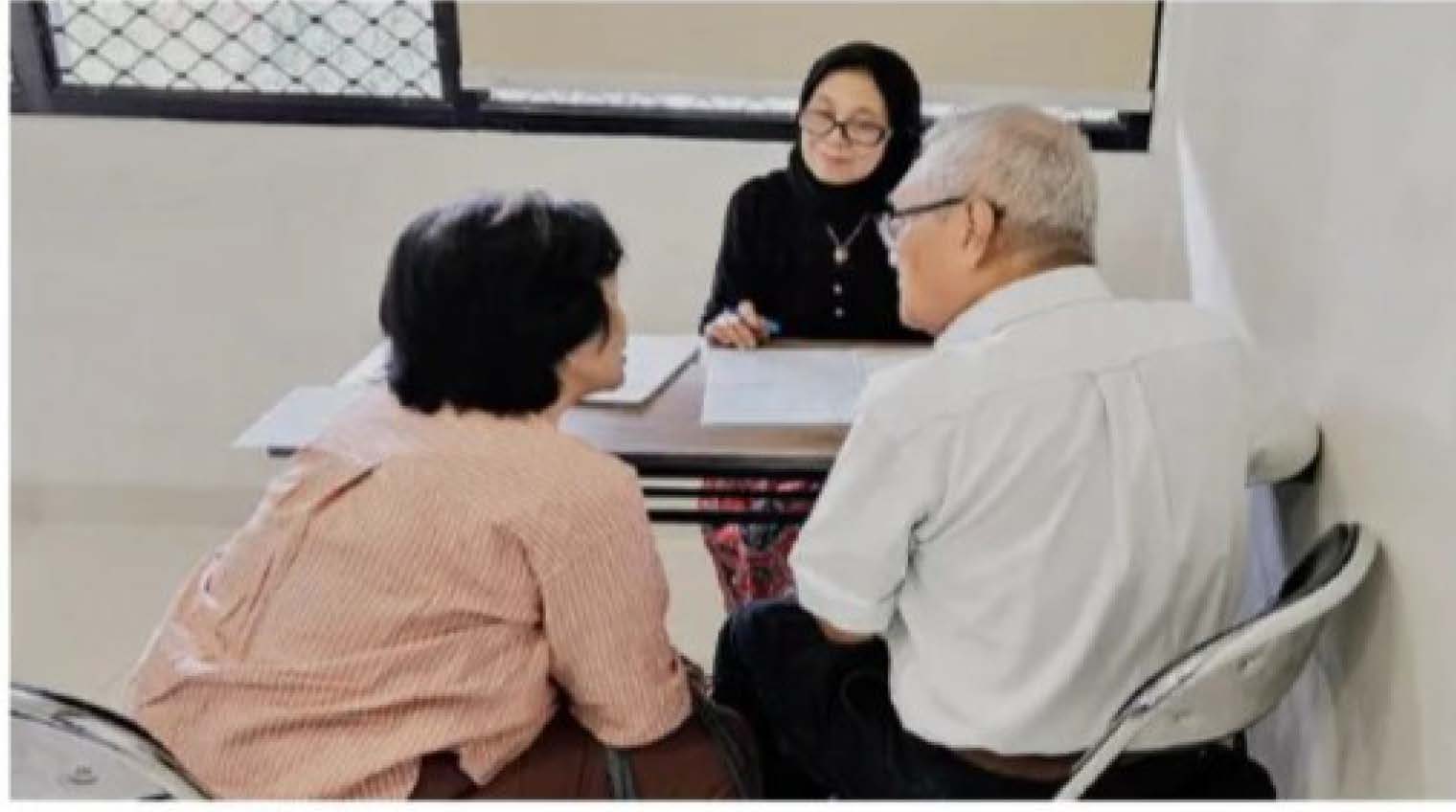

Participants were predominantly elderly, namely people aged over 60 years.
The implementation of heart and blood vessel disease risk screening using NIVA was initiated by Prof. Tati Latifah Erawati Rajab and coordinated by the Head of the Biomedical Engineering Laboratory, Astri Handayani, ST, MT. This Indonesian-made medical device can measure at least 15 different measurements that describe the health condition of a patient's heart and blood vessels. For example, NIVA can measure whether a patient's blood vessels are older or younger compared to their actual age.
Additionally, NIVA can detect the level of blood vessel stiffness. This can be crucial information for patients who are at risk for certain diseases and can adjust their lifestyles for better health.
The NIVA examination only takes 5-10 minutes, and the results are available immediately. During the screening, the ITB Biomedical Engineering Laboratory also offers consultations with doctors. This allows participants not only to gain a clearer picture of their heart health but also to understand the steps they should take to maintain heart health based on the identified risks. (M-1)
Not Complicated
EXAMINATION using NIVA is not a complicated procedure because it only requires installing familiar tools found in health facilities, such as blood pressure cuffs and pulse oximeters and the NIVA device is accompanied by a computer interface system that is very easy to understand and operate. The blood pressure cuffs are installed at four points, namely on both arms (above the antecubital fossa) and both ankles (above the ankles).
The device applies pressure to the arms and legs and then slowly deflates them while measuring the pressure signals generated by the arms and legs due to resistance to the cuff's pressure. The blood pressure in the arms and legs is recorded on the NIVA computer, and the pressure signals are processed to display other parameters.
pulse oximeter is attached to the patient's index fingers to record changes in blood volume as the heart contracts and relaxes. These measurements are then processed to obtain other parameters that reflect the health of the heart and blood vessels.
NIVA's ease of operation allows it to be installed in any level of healthcare facility and indirectly increases public accessibility to heart and blood vessel health screenings. (Astri Handayani/Hasballah Zakaria/M-1)