Ir. I Gusti Bagus Baskara Nugraha, S.T., M.T., Ph.D.
School of Electrical Engineering and Informatics
Prof. Dr. Jaka Sembiring, M.Eng.
School of Electrical Engineering and Informatics
Dr. Ir. Arry Akhmad Arman, M.T.
School of Electrical Engineering and Informatics
Prof. Dr. Suhardi, M.T.
School of Electrical Engineering and Informatics
Abstract
The weaving craft industry in Bali falls into the category of small and micro-enterprises, generally run by households or cooperatives. These businesses have a specific market, typically within Bali, and production is not continuous, relying solely on orders. Consequently, production capacity is limited, and labor and raw material requirements are difficult to predict. Furthermore, product availability and transactions are recorded on paper and are not properly archived, preventing product exposure and creating inefficiencies.
Craftsmen have tried mobile app-based product and transaction recording systems available on the market, but they proved difficult to use and discouraged them from using them again. Therefore, using an empathetic design thinking approach, we proposed and implemented a simple recording system tailored to the needs of weavers. The implementation has met user expectations. However, its effectiveness still needs to be tested over a longer period.
Kata Kunci: Tenun, UMKM, Accounting.
Introduction
The weaving craft industry, particularly in Bali, is a type of micro and small enterprise (MSME). These businesses can be run by individuals or households, or by entrepreneurs or cooperatives with several production machines. Unlike the batik industry, the weaving industry has a specific market with distinct characteristics.
Due to its small production scale, the weaving industry in Bali generally only accepts small orders, such as from agencies or schools for uniforms. Production continuity is also uncertain, as orders are not always available, and when they do arrive, the quantities are limited. The workers who make the woven fabric are usually elderly, especially women. Furthermore, there is the problem of yarn availability, the raw material for woven fabric. This irregular production capacity and income make the industry's future sustainability uncertain.
Therefore, appropriate and simple technology is needed to support the sustainability of the weaving industry, particularly in Bali. Currently, various technological aids, both machines and software, are available to assist in the production of woven fabrics. However, these devices are often short-lived due to their inadequacy and difficulty in handling when the devices malfunction.
Research Method
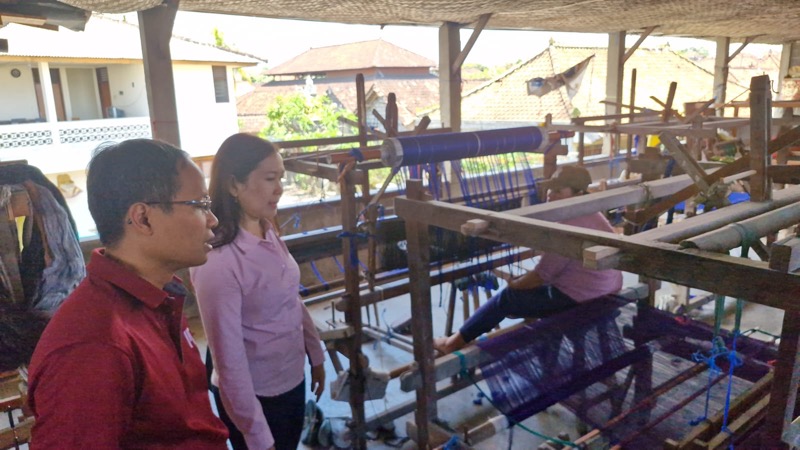
Figure 1 shows a scene in a woven fabric workshop. The weaving process uses traditional tools, without machines. In addition to the workshop, there is also a gallery space for product displays and a meeting room for buyers.
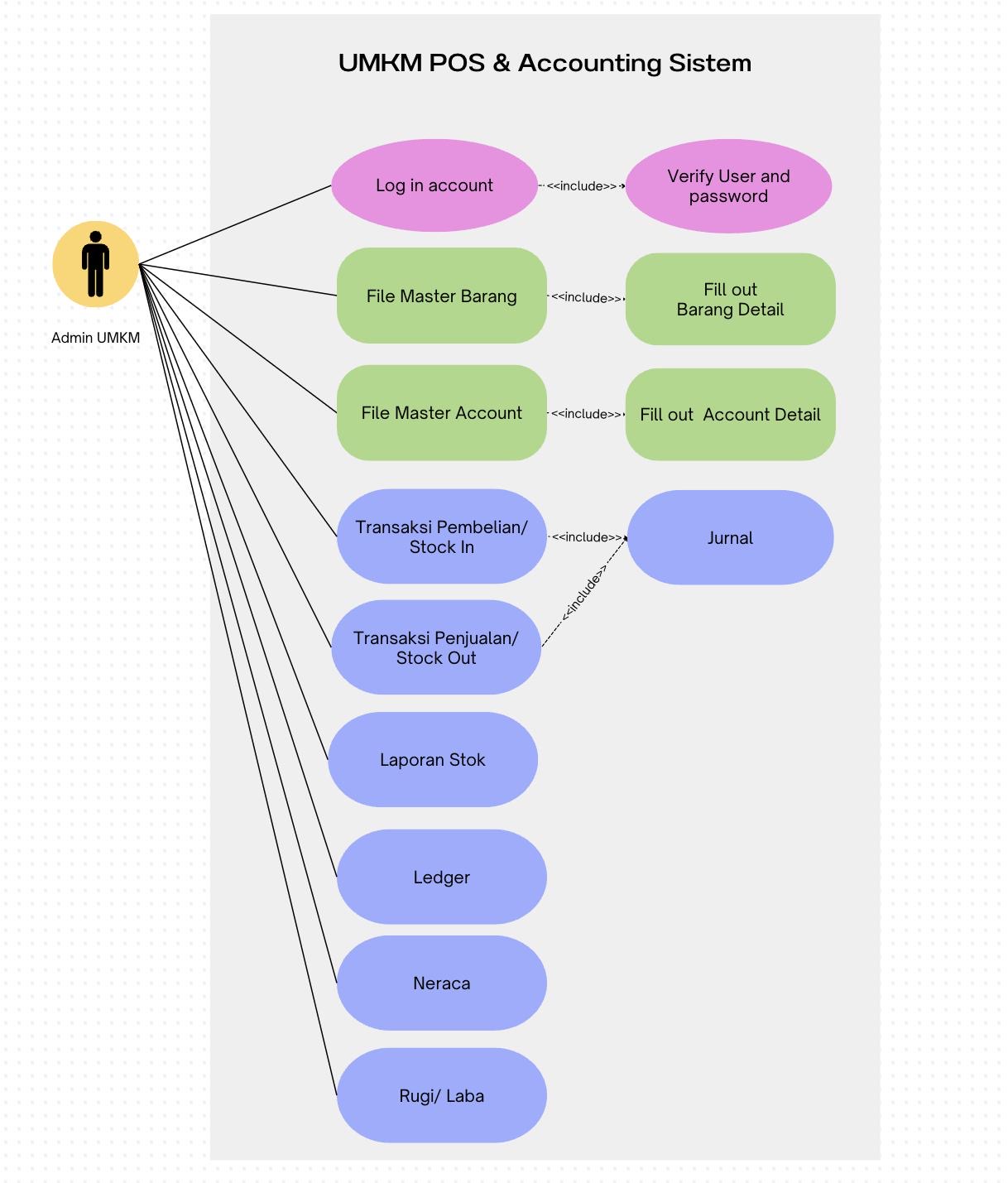
Several user needs were identified, including a durable stainless steel thread holder, a marketing platform and content management system, and software for ordering and sales recording. Within the context of this community service activity, in collaboration with lecturers from the Accounting Department at Ganesha University of Education in Bali, a product and transaction recording system was designed and implemented.
Discussion & Result
Figure 3 shows the main menu dashboard of the application being built. This application works simply in the following way:
1) The ordered fabric products are recorded in the Input Opname section.
2) To see all available fabric products, you can see them in the Product List menu.
3) If there is a purchase or the product has been paid for, the transaction amount is recorded in the “Sale” menu.
The application is made as simple as possible, with minimal features and using simple coding libraries so that it can be used on smartphones with low specifications that no longer have operating system update support.
However, going forward, if daily business processes are already running smoothly, other innovations are needed to help artisans streamline the production process, from motif design and ordering raw materials to marketing channels. In terms of design, software currently exists to assist with motif design, such as http://wastrabali.id. However, this application can only be used by users who are familiar with using similar image design applications. Therefore, it is deemed necessary to utilize LLM/AI to make it easier for fabric orderers to select and determine suitable motifs, and artisans will also be more creative.

Conclusion
MSMEs require simple, effective technology solutions that are easy to use and maintain. Therefore, in this activity, using a design thinking approach, a simple accounting system for MSMEs, particularly weaving artisans, was designed and implemented. However, it will take a relatively long time to validate the system's usefulness for artisans. Going forward, the system needs to be developed to help automate other business processes, such as motif determination using AI. This requires data collection to create a robust repository.