


Artificial Intelligence: Building Intelligent Software with Global Source of Excellence
The International Undergraduate Program in Artificial Intelligence offered under the School of elecTrical Engineering and Informatics (STEI), provides a premier pathway for students aspiring to become future leaders in artificial intelligence. Built on a strong scientific and informatics engineering foundation, the curriculum equips students with advanced knowledge in artificial intelligence. Learning is further enriched through hands-on projects, research opportunities, and exposure to real industry challenges. The curriculum includes a mandatory one-semester study abroad in the seventh semester at one of ITB’s overseas partner universities. Recognized nationally and internationally for its excellence, the program prepares graduates to excel as AI specialists, software engineers, innovators, and researchers. With ITB’s strong reputation and ecosystem, students gain the skills and confidence to shape the future of technology.
Curriculum Structure
| Course Types | Credits |
|---|---|
| ITB’s Compulsory Courses | 34 credits |
| The Program’s Compulsory Courses | 83 credits |
| AI Specialization Courses | 12 credits |
| Elective Courses at a Partner University | at least 15 credits |
| Total | at least 144 (divided into 8 semesters) |
| Code | Course Name | Credits |
|---|---|---|
| WI1102 | Computational Thinking | 2 |
| MA1101 | Mathematics I | 4 |
| FI1101 | General Physics I | 3 |
| KI1101 | General Chemistry I | 3 |
| WI1101 | Pancasila | 2 |
| WI1103 | Introduction to Principles of Sustainability | 2 |
| WI1111 | Basic Physics Laboratory | 1 |
| WI1116 | Computer Interaction Laboratory | 1 |
| Total | 18 | |
| Code | Course Name | Credits |
|---|---|---|
| WI2002 | Artificial Intelligence and Data Literacy | 2 |
| IF1220 | Discrete Mathematics | 3 |
| IF1221 | Computational Logic | 2 |
| IF1230 | Computer Organization and Architecture | 3 |
| WI2001 | Introduction to Engineering and Design | 3 |
| WI2005 | Indonesian Language | 2 |
| IF1210 | Algorithm and Programming 1 | 3 |
| Total | 18 | |
| Code | Course Name | Credits |
|---|---|---|
| IF2110 | Algorithm and Programming 2 | 3 |
| IF2120 | Probability and Statistics | 3 |
| IF2123 | Geometric and Linear Algebra | 3 |
| IF2130 | Operating System | 3 |
| IF2150 | Software Engineering | 4 |
| WI2003 | Sports | 1 |
| IF2180 | Sosio-informatics and Professionalism | 2 |
| Total | 19 | |
| Code | Course Name | Credits |
|---|---|---|
| IF2010 | Object-Oriented Programming | 3 |
| IF2211 | Algorithm Strategy | 3 |
| IF2224 | Formal Language Theory and Automata | 4 |
| IF2230 | Computer Network | 3 |
| IF2240 | Database | 3 |
| WI2022 | Project Management | 2 |
| Total | 18 | |
| Code | Course Name | Credits |
|---|---|---|
| IF3110 | Web Application Development | 3 |
| IF3130 | Parallel and Distributed Systems | 3 |
| IF3140 | Database System | 3 |
| IF3141 | Information System | 3 |
| IF3151 | Human-Computer Interaction | 3 |
| IF3170 | Artificial Intelligence | 4 |
| Total | 19 | |
| Code | Course Name | Credits |
|---|---|---|
| IF3210 | Mobile Application Development | 2 |
| IF3250 | Software Project | 4 |
| IF3270 | Machine Learning | 3 |
| WI2004 | English | 2 |
| IF3211 | Domain-Specific Computation | 2 |
| IF4090 | Industrial Internship | 2 |
| – | AI Specialization course *) | 3 |
| Total | 18 | |
| Code | Course Name | Credits |
|---|---|---|
| – | Elective courses at a partner university | 15 |
| Total | 15 | |
| Code | Course Name | Credits |
|---|---|---|
| WI201X | Religion | 2 |
| WI2006 | Civic Education | 2 |
| – | AI Specialization course *) | 3 |
| – | AI Specialization course *) | 3 |
| – | AI Specialization course *) | 3 |
| IF4091 | Project Proposal | 2 |
| IF4092 | Final Project | 4 |
| Total | 19 | |
*) AI Specialization courses:
| Code | Course Name | Credits |
|---|---|---|
| IF4070 | Knowledge Representation and Reasoning | 3 |
Choose minimum one of the following three courses:
| Code | Course Name | Credits |
|---|---|---|
| IF4071 | Speech Processing | 3 |
| IF4072 | Natural Language Processing | 3 |
| IF4075 | Computer Vision | 3 |
Choose minimum two of the following six courses:
| Code | Course Name | Credits |
|---|---|---|
| IF4041 | Data Mining | 3 |
| IF4042 | Information Retrieval System | 3 |
| IF4061 | Data Visualization | 3 |
| IF4071 | Speech Processing | 3 |
| IF4072 | Natural Language Processing | 3 |
| IF4075 | Computer Vision | 3 |
Internationalization Scheme
Required international experience (type, duration, partner).
| Potential Partner Name | Type (Exchange/DD) | Duration |
|---|---|---|
| NARA Institute of Science and Technology (NAIST), Japan | Exchange | 1 semester |
| Toyohashi University of Technology (TUT), Japan | Exchange | 1 semester |
| The University of Electro-Communications (UEC), Japan | Exchange | 1 semester |
| Universiti Teknologi Petronas (UTP), Malaysia | Exchange | 1 semester |
| University of Technology Malaysia | Exchange | 1 semester |
| TU Eindhoven, Netherlands | Exchange | 1 semester |
| University of Groningen, Netherlands | Exchange | 1 semester |
For further semester exchange, you can visit https://partnership.itb.ac.id/semester-exchange/
Estimated Cost of Student Exchange at Partner University (if applicable)
| Partner – Country | Tuition Fee | Living Cost | Housing |
|---|---|---|---|
| The University of Electro-Communications, Tokyo |
• If the partner university does not charge a tuition fee, students are required to pay 50% of the Tuition Fee (UKT) to ITB. • If the partner university charges a tuition fee, students are required to pay 5% of the Tuition Fee (UKT) to ITB. |
JPY 60,000 ~ 80,000 | JPY 26,000 |
| Universiti Teknologi Malaysia, Johor Bahru, Malaysia | MYR 1,000 ~ 2,000 Meal: 450 ~ 650 Transport: 150 ~ 200 Internet: 100 ~ 150 Entertainment etc.: 300 ~ 500 |
MYR 2,000 per semester (campus dormitory) |
Career Prospects
Data Scientist, Data Scientists analyze large and complex datasets to uncover patterns, trends, and insights. They design predictive models and provide evidence-based recommendations that support decision-making in industries such as finance, healthcare, and technology.
Data Analyst, Data Analysts focus on interpreting structured data and presenting it in accessible formats such as reports, dashboards, and visualizations. Their work helps organizations understand performance, identify opportunities, and make informed operational decisions.
Big Data Engineer, Big Data Engineers design and maintain large-scale systems capable of storing and processing massive amounts of information. They build data pipelines and infrastructure that enable organizations to manage and utilize data efficiently, supporting advanced analytics and AI applications.
AI Engineer, AI Engineers bridge the gap between research and application. They integrate machine learning models into real-world products and services, ensuring scalability, reliability, and performance. Their contributions make AI accessible in everyday technologies such as autonomous vehicles, recommendation systems, and fraud detection platforms.
AI Researcher, AI Researchers advance the theoretical and practical foundations of artificial intelligence. They develop new algorithms, explore innovative architectures, and contribute to scientific knowledge through publications and applied research in academic and industrial settings.
Alumni Stories
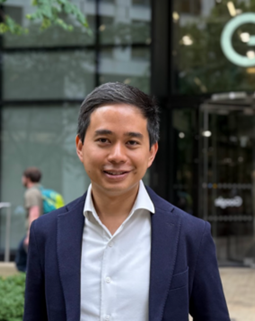
Adhiguna Surya Kuncoro
My time at IF ITB was an intellectually stimulating journey that also played a significant role in shaping my personal growth. Beyond gaining a strong academic foundation through my coursework and final project in artificial intelligence, at a time when the field was not yet as popular as it is today, I learned tremendously from my active involvement in the Informatics Student Union HMIF ITB. The late nights I spent on campus with friends, whether for student union meetings, completing countless coding assignments, or simply enjoying each other’s company, remain some of my most cherished memories.
My first experience implementing an AI project in natural language processing for the Indonesian language, under the supervision of Bu Ayu Purwarianti, marked a pivotal moment in my journey. That project not only strengthened my technical expertise but also cemented my passion for artificial intelligence and machine learning. It became the foundation of my professional path and eventually led me to a career as a senior researcher in artificial intelligence, a field I continue to pursue today.
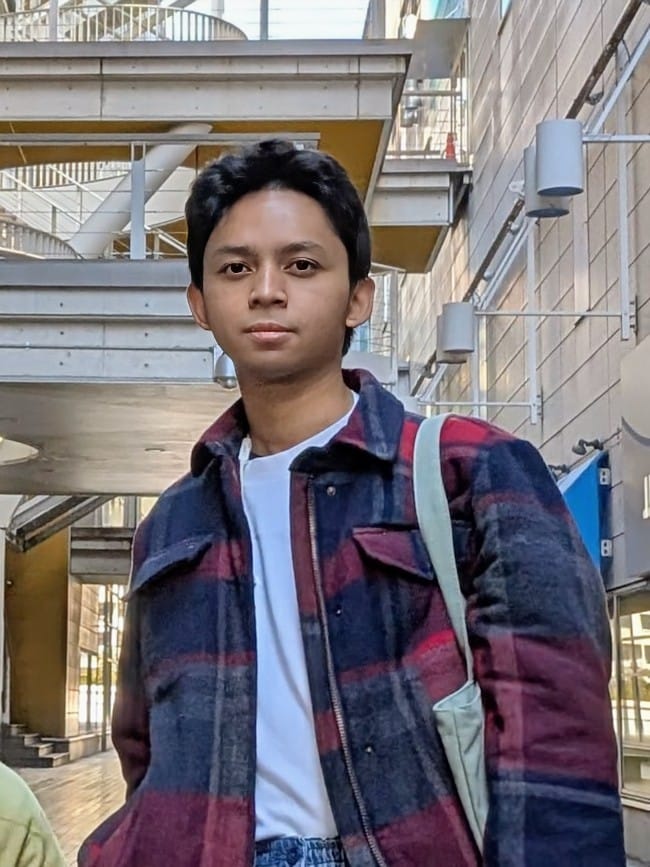
Muhammad Rifat Abiwardani
As an Informatics student at STEI ITB, I had the opportunity to explore my career interests and grow my academic portfolio beyond what I imagined possible when I first joined. I had been developing advanced practical and theoretical knowledge of machine learning through the assigned coursework, but my most valuable experience at IF was the opportunity to do research outside of the curriculum. During my third year, there was an opening for the position of research assistant in a quantum natural language processing research project. I did not have any prior knowledge in quantum computing, but the listing was very accommodating to students with zero experience. I took my chance and applied, and was excited to find out I had been selected as one of the research assistants under the supervision of Bu Fariska Ruskanda along with Pak Infall Syafalni, Pak Rahmat Mulyawan, and Bu Harashta Tatimma Larasati.
It took time to adapt, but I found myself enjoying learning quantum computing under the guidance of my professors. I committed to studying quantum computing and continued the research theme in my Bachelor’s final project under Bu Fariska’s supervision.
After graduation, I worked closely with Pak Infall and Bu Fariska to polish the research and get it published. They strongly supported my intention to pursue a higher education in quantum information and provided resources for programs abroad. I am certain my invaluable experience as research assistant and the research portfolio of conference papers and journal articles I published with my professors helped my applications get considered by professors abroad, which eventually landed me a scholarship at the Department of Information and Communication Engineering at the University of Tokyo through the MEXT Research Students program. I deeply cherish my irreplaceable time at IF, without which I never would have discovered this career path.
Enrollment Information
Learn about the registration procedures and application requirements to begin your academic journey at the School of Electrical Engineering and Informatics, ITB.