Master Program of Informatics

Pameran SEMARAK ITB 2025

MAGISTER INFORMATIKA

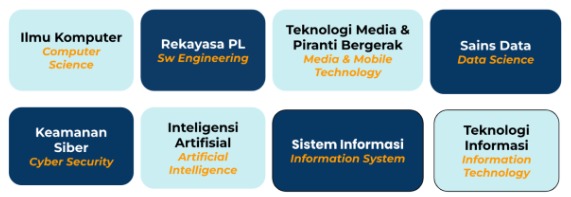
The Master of Informatics study program aims to equip its graduates with critical, innovative, and professional thinking skills to compete globally in the field of Informatics, as well as to develop research-based knowledge and technology for the field of Informatics. The scientific fields of the Master of Informatics study program include the basic scientific fields of computing (Fundamentals of Computing) and scientific fields according to their options. There are eight options, namely Computer Science (CS), Software Engineering (SE), Media and Mobile Technology (MMT), Data Science (DS), Artificial Intelligence (AI), Cyber ​​Security (CSec), Information Systems (IS), and Information Technology (IT). The types of programs in the Master of Informatics study program consist of: Regular, By Research/Project, Executive and Multidisciplinary

General Description & Curriculum

Master Program in Informatics has some objectives to produce graduates with profiles as Engineers, Managers, Consultants, or Researchers in the field of Informatics who have the following general competences during the early stages of their careers (3-5 years after graduation), namely:

  1.     Our graduates will have critical thinking, innovative, and professional aspects to compete globally in the field of informatics.
  2.     Our graduates will successfully pursue advanced study or engage in professional development.
  3.     Our graduates will have managerial capabilities in research in the field of informatics.

Student outcomes of the Master Program in Informatics are as follows.

  1. Students will be able to analyze problems in the field of Informatics or other fields of science to identify computing-based solutions.
  2. Students will be able to design and build computing-based solutions through an interdisciplinary or multidisciplinary approach
  3. Students will be able to evaluate computing-based solutions that fulfill the requirements through an interdisciplinary or multidisciplinary approach.
  4. Students will be able to develop research-based knowledge and technology in the field of informatics by engineering and developing specific scientific fields, including:
    a. algorithms or computational theory to solve actual and contemporary problems (computer science track), or
    b. software engineering, including developing reliable, innovative, and easy-to-maintain large-scale software (software engineering track), or
    c. the concept, architecture, and technology of media and mobile devices, including developing the media and mobile device applications using the principles of human and computer interaction as well as good and appropriate software engineering methodologies (media and mobile technology track), or
    d. management, processing, and interpretation of large and complex datasets for extraction of critical information and knowledge (data science track), or
    e. artificial intelligence concepts, technologies, and applications, including using the suitable tools to deliver an effective and efficient artificial intelligence solution (artificial intelligence track), or
    f. the development, operation, and testing of cybersecurity systems (cybersecurity track), or
    g. information system governance at the enterprise level to maximize the potential of the system and to minimize its risks using information technology resources efficiently (information systems track), or
    h. the analysis, modeling, design, construction, and development of information technology-based systems (information technology track)
    i. Development, operation, and security testing of cyber systems (CSec option).
  5. Students will be able to communicate effectively in diverse professional and academic contexts.
  6. Students will be able to function effectively in team activities by their field of knowledge.

There are 8 (eight) tracks, as follows Computer Science (CS), Software Engineering (SE), Media and Mobile Technology (MMT), Data Science (DS), Cyber Security (CSec), Artificial Intelligence (AI), Information System (IS), and Information Technology (IT).
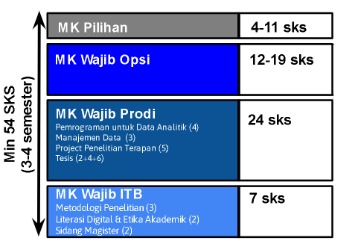
The curriculum of the Master Program in Informatics, comprising a total of 54 credits, is divided into 3 semesters with a maximum load of 18 credits per semester, following the composition below. For the multidisciplinary program scheme and the Double Degree program scheme, the curriculum is structured over 4 semesters.

ITB mandatory : 7 credits
Study Program mandatory : 12 credits of structured courses + 12 credits of Thesis
Track mandatory : 12-19 credits
Elective : 4-11 credits
The study period is scheduled within 3 to 4 semesters. The course structure of the Master Program in Informatics for 3 semesters is as follows. Students take 18 credits per semester.
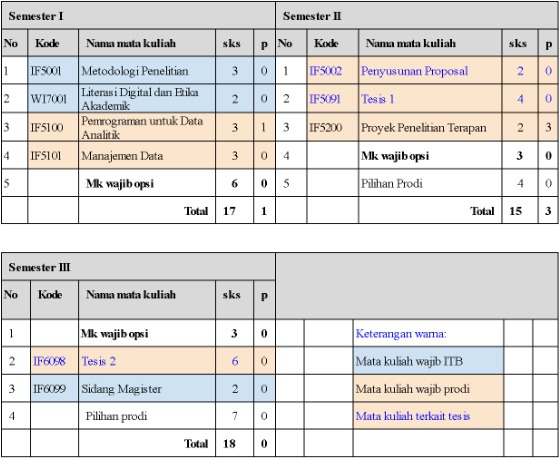
No Code Course Credits
1 IF5001
Research Methodology
  1. The nature and objectives of research, and elements of research methodology
  2. Determining research topics, identifying and formulating problems, novelty and/or innovative value of research
  3. Research questions, hypothesis formulation, and research design
  4. Experimental design, concepts of independent and dependent variables, or other data collection methods relevant to the nature of the discipline
  5. Sampling, sample, sampling error, sample size, characteristics of a good sample, and practical considerations in sampling
  6. Pengolahan data, analisis, pembahasan. dan kesimpulan Data processing, analysis, discussion, and conclusion
  7. Scientific report writing
3
2 WI7001
Digital Literacy and Academic Ethics
  1. Concepts of digital technology, models and strategies of communication, digital searching, and effective and positive digital collaboration
  2. Utilization of digital tools
  3. Principles of data literacy, artificial intelligence, machine learning, and deep learning
  4. Utilization of AI for research and scientific writing
  5. Academic integrity and ethics
  6. Integrity and ethics in research, projects, and scientific publications
2
3 IF5100
Programming for Data Analytics
  1. Programming fundamentals and data structures
  2. Object-oriented programming
  3. Algorithm complexity
  4. Algorithm strategies / computational problem-solving techniques
  5. Data exploration
  6. Introduction to machine learning
3
4 IF5101
Data Management
  1. General principles and concepts of data management and organization
  2. Data management systems
  3. Enterprise data infrastructure management
  4. Data governance
  5. Large-scale data storage
3
5 IF5002
Proposal Preparation
  1. Determining research topics, identifying and formulating problems, novelty and/or innovative value of research
  2. Research questions, hypothesis formulation, and research design
  3. Development of problem-solving methods for research
  4. Scientific report writing
  5. Scientific presentation
2
6 IF5091
Thesis 1
  1. Implementation and development of research problem-solving methods
  2. Academic communication
  3. Scientific report writing
4
7 IF5200
Applied Research Project
  1. Basic Research Skills in Computing Science
  2. Software delivery, mencakup: software development lifecycle, Agile methodologies, dan best practices for efficient delivery (termasuk di dalamnya CI/CD)
  3. Project Management
2
8 IF6098
Thesis 2
  1. Implementation and development of research problem-solving methods
  2. Academic communication
  3. Scientific report writing
  4. Scientific presentation
6
9 IF6099
Master's Session
  1. Research completion
  2. Scientific report writing
  3. Scientific presentation
2

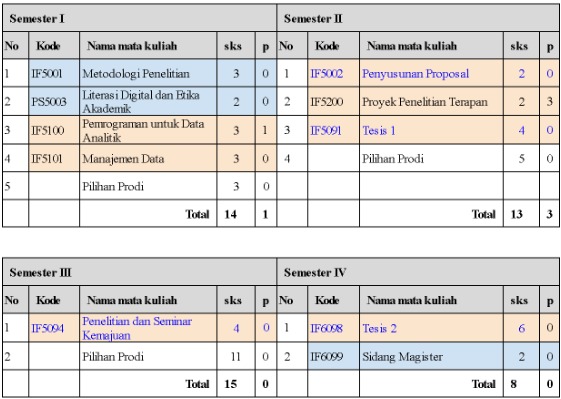
The course structure of the Master Program in Informatics for 4 semesters is as follows. Students take 11–16 credits per semester.

Specifically for the Research-based Master's track, the course composition is arranged according to the following structure, and the curriculum is designed over 4 semesters.
ITB mandatory : 7 credits : 7 sks
Required Study Program Study Program mandatory : 12 credits of structured courses + 16 credits of Thesis
Choice Electives : 19 credits
The course structure of the Master Program in Informatics for the Research-based Master's track is as follows.
Students in the Computer Science (CS) track are expected to develop research-based knowledge and technology in the field of Informatics by designing and developing algorithms or computational theories that can address current and real-world problems.

Compulsory courses for the Computer Science (CS) track:

No Code Matakuliah Credits P
1 IF5110
Algorithm Design
  1. Review basic concepts of algorithms: time complexity, data structures, heaps & disjoint sets data structures
  2. Techniques based on recursion: induction, divide & conquer, dynamic programming
  3. First cut techniques: greedy, graph traversal
  4. Complexity of problems: NP-complete problems, computational complexity, lower bounds
  5. Coping with hardness: backtracking, randomized algorithms, approximation algorithm
  6. Iterative improvement for domain-specific problems: network flow, matching
  7. Techniques in Computational Geometry: Geometric sweeping,Voronoi diagrams
3 0
2 IF5111
Mathematics for Computer Science
  1. Proofs
  2. Structures
  3. Counting
  4. Statistics and Probability
  5. Recurrences
  6. Algorithm complexity
3 0
3 IF5210
Compiler Design
  1. Lexical analysis
  2. Syntax analysis
  3. Scopes and symbol tables
  4. Interpretation
  5. Type checking
  6. Intermediate code generation
  7. Machine code generation
  8. Register allocation
  9. Functions
  10. Data flow analysis and optimisation
  11. Optimisation for loops
3 0
4 IF5112
Advanced Distributed Systems
  1. Model sistem terdistribusi
  2. Failure detectors
  3. reliable delivery
  4. atomic & reliable broadcast
  5. shared memory model
  6. consensus
  7. Distributed commitment protocol & atomic transactions
  8. Group membership
  9. View synchrony
  10. Cloud computing & virtualization
  11. Distributed ledger & blockchain
3 0

Students in the Software Engineering (SE) track are expected to develop research-based knowledge and technology in the field of Informatics by designing and developing large-scale software products that are reliable, innovative, and maintainable.

Compulsory courses for the Software Engineering (SE) track:

No Code Matakuliah Credits P
1 IF5120
Software Requirement Engineering
  1. Fundamentals of software requirements
  2. Requirements engineering process
  3. Requirements elicitation
  4. Requirements analysis
  5. Requirements specification
  6. Requirements validation
  7. Practical considerations
3 0
2 IF5121
Software Design
  1. Fundamentals of software design
  2. Software architecture
  3. Design patterns
  4. User interface design
  5. Analysis and evaluation of software design quality
  6. Software design notations
  7. Software design strategies and methods
  8. Software design tools
3 0
3 IF5220
Software Quality
  1. Fundamentals of software quality
  2. Software quality management process
  3. Practical considerations
  4. Software quality tools
  5. Fundamentals of software testing
  6. Levels of testing
  7. Testing techniques
  8. Testing-related metrics
  9. Testing process
  10. Software testing tools
  11. Specification languages
  12. Program refinement and derivation
  13. Verifikasi Formal
  14. Logical inference
3 0
4 IF5221
Software Product Innovation
  1. Introduction to software product innovation
  2. Topic and problem identification
  3. Market needs identification and analysis
  4. System requirements identification and analysis
  5. Requirements modeling
  6. Software product and quality planning
  7. Commercialization planning
  8. Proposal presentation
  9. Software product development implementation
  10. Presentation and demo
1 3
5 IF6120
Software Evolution
  1. SCM process management
  2. Software configuration identification
  3. Software configuration control
  4. Software configuration status
  5. Software configuration audit
  6. Software release management and delivery
  7. SCM tools
  8. Fundamentals of software maintenance
  9. Issues in software maintenance
  10. Software maintenance process
  11. Software maintenance techniques
  12. Software maintenance tools
3 0

Students in the Media and Mobile Technology (MMT) track are expected to develop research-based knowledge and technology in the field of Informatics by designing and developing concepts, architectures, and technologies for media and mobile devices, as well as developing applications for media and mobile devices using principles of human-computer interaction and proper software engineering methodologies.

Compulsory courses for the Media and Mobile Technology (MMT) track:

No Code Matakuliah Credits P
1 IF5130
Software Engineering for Game Domain
  1. Software engineering for the game domain
  2. Game design
  3. Game engine architecture
  4. Game testing
  5. Game analytics
  6. Ethics in game development
3 0
2 IF5131
Multimedia Data Processing and Management
  1. Introduction to multimedia data and applications
  2. Review of signal processing (Discrete Fourier Transform and Fast Fourier Transform)
  3. Review of multimedia data representation
  4. Automated analysis of multimedia data (preprocessing, feature extraction, recognition, and similarity retrieval)
  5. Multimedia data management and indexing methods
  6. Case studies of multimedia data-based applications
3 0
3 IF5230
Mobile Technology and Application
  1. Introduction to mobile devices
  2. Activities in mobile application development (requirements analysis, design principles and patterns, user interface (UI) design, technology implementation, testing, and quality)
3 0
4 IF6130
Interactive Media Technology & Application
  1. Introduction to interactive media
  2. Introduction to games (concepts, design, process)
  3. Gameplay
  4. Game production
  5. The art of game design
  6. Game implementation
3 0

Students in the Data Science (DS) track are expected to develop research-based knowledge and technology in the field of Informatics by designing and developing the management, processing, and interpretation of large and complex datasets for the extraction of important information and knowledge.

Compulsory courses for the Data Science (DS) track:

No Code Matakuliah Credits P
1 IF5140
Machine Learning
  1. Introduction to Machine Learning
  2. Supervised Learning
  3. Neural Networks
  4. Learning Theory
  5. Unsupervised Learning
  6. Reinforcement Learning
2 0
2 IF5141
Data Mining
  1. Process models for data mining (CRISP-DM)
  2. Basic concepts of data, statistics, and data visualization; measurement; and data pre-processing
  3. Basic techniques in pattern mining for frequent patterns, associations, and correlations
  4. Recall: Classification and cluster analysis using machine learning techniques
  5. Overview of advanced machine learning techniques for various types of data
  6. Data mining model evaluation
  7. Deployment of data mining models
  8. Case study on building a machine learning model for a specific problem/organization: business understanding, data understanding, data preparation, model building, model evaluation, deployment
3 1
3 IF5240
Business Intelligence and Analytics
  1. Fundamental concepts of business intelligence and business analytics: data, statistical models, decision-making, and decision support systems
  2. Management and operations of business analytics: business processes and operations, planning and control, requirements analysis and design, solution evaluation
  3. Data warehousing: concepts of data warehousing, data integration, data warehouse development, business analytics using data warehouses, data visualization
  4. Data warehouse technologies: platforms and tools for data warehousing, data integration, reporting, and visualization
  5. Business analytics using data mining techniques
  6. Case study on system development using a business intelligence approach and utilizing business analytics
3 1
4 IF5241
Big Data System
  1. Fundamental concepts of big data
  2. Big data infrastructure and technologies: big data technology stack, cloud computing, large-scale storage and file systems, NoSQL databases, data processing models: batch, streaming, and parallel
  3. Organization and management of big data systems: big data algorithms for large-scale data processing, data preprocessing algorithms, data ingestion and visualization, management and operation of big data systems
  4. Big data system development for data science: platforms and tools for big data analytics, design and development of big data systems and cloud-based systems, operation and management of big data and cloud services, and their relation to enterprise information systems
3 0
5 IF6097
Industrial Internship
  1. Method implementation
  2. Scientific report writing
3 0

Students in the Artificial Intelligence (AI) track are expected to develop research-based knowledge and technology in the field of Informatics by designing and developing concepts, technologies, and applications of artificial intelligence, including appropriate tools as effective and efficient AI solutions.

Compulsory courses for the Artificial Intelligence (AI) track:

No Code Matakuliah Credits P
1 IF5150
Advanced Artificial Intelligence
  1. Introduction and History of AI - Topics: Introduction to AI and its historical development, Basic concepts of AI
  2. Intelligent Agent - Topics: Concepts and architecture of intelligent agents, Implementation of intelligent agents
  3. Decision Making - Topics: Decision-making techniques in AI, Decision-making models
  4. Heuristic Algorithms - Topics: Concepts and applications of heuristic algorithms, Heuristic search techniques
  5. Descriptive, Propositional, and Predicate Logic - Topics: Descriptive, propositional, and predicate logic, Applications of logic in AI
  6. Answer Set and Ontology - Topics: Concepts of answer set, Ontology and its applications in AI
  7. Linked Data, Semantic Web, and Probabilistic Networks - Topics: Linked data and the semantic web, Bayesian networks and Markov decision networks
3 0
2 IF5151
Mathematics for Artificial Intelligence
  1. Introduction to Mathematics for Machine Learning
  2. Linear Algebra
  3. Calculus
  4. Statistics and Probability
  5. Optimization Methods
  6. Applied Mathematics for Machine Learning
3 0
3 IF5250
Deep Learning
  1. Introduction to Deep Learning
  2. Fundamentals of Neural Networks
  3. Convolutional Neural Networks (CNN)
  4. Recurrent Neural Networks (RNN) and LSTM
  5. Optimization and Regularization Techniques
  6. Deep Learning Applications
3 1
4 IF5251
Artificial Intelligence in Production
  1. Introduction to AI in Production – Challenges and considerations in deploying AI to production, Overview of MLOps and the model development lifecycle, Differences between development and production environments
  2. Data Management – Data collection, labeling, and storage, Data processing and feature engineering, Data versioning and lineage
  3. Model Development and Training – Algorithm and model architecture selection, Experimentation and model tracking, Distributed training and hardware acceleration
  4. Model Evaluation and Validation – Evaluation metrics and cross-validation, Error analysis and model interpretability, Data testing and validation
  5. Model Deployment – Deployment strategies (shadow, canary, blue-green), Containerization and orchestration, Scaling and performance optimization
  6. Model Monitoring and Supervision – Monitoring metrics and dashboards, Anomaly and data drift detection, Monitoring data integrity and model quality
  7. Security and Privacy – Adversarial attacks and defenses, Data encryption and anonymization, Security audits and compliance
  8. Ethical and Legal Considerations – Bias and fairness in AI, Transparency and accountability, Regulations and industry standards
  9. Case Studies and Industrial Applications – Case studies of AI implementation across industries, Best practices and lessons learned, Trends and future directions
3 0
5 IIF6150
Trustworthy Artificial Intelligence
  1. Introduction to Trustworthy AI – Topics: Introduction to the concept of Trustworthy AI, The importance of transparency, fairness, and robustness in AI
  2. Explainable AI (X-AI) – Concepts and Methods – Topics: Basic concepts of explainable AI, Methods for AI model interpretability
  3. Interpretability and Explanation Evaluation – Topics: Techniques for interpretability evaluation, Case studies on explainable AI applications
  4. Fairness in AI – Concepts and Challenges – Topics: Concepts of fairness in AI, Challenges in detecting and mitigating bias
  5. Techniques for Fairness in AI – Topics: Techniques for detecting bias, Methods for mitigating bias in AI models
  6. Robustness in AI – Concepts and Methods – Topics: Concepts of robustness in AI, Techniques to improve model robustness
  7. Ethical and Legal Considerations in AI – Topics: Ethical considerations in AI development, Legal implications of fairness and robustness in AI
  8. Final Project and Presentation – Topics: Implementation of innovative projects in Trustworthy AI, Project documentation and presentation, Evaluation and discussion of project results
3 0
6 IF6151
Artificial Intelligence Individual Project
  1. Current topics in Artificial Intelligence issues
3 0

Students in the Cybersecurity (CSec) track are expected to develop research-based knowledge and technology in the field of Informatics, particularly in the development, operation, and testing of cybersecurity systems.

Compulsory courses for the Cybersecurity (CSec) track:

No Code Matakuliah Credits P
1 IF5161
Data and Software Security
  1. Overview on Traffic, Vulnerability and Malware Analysis
  2. Access Control Enhancement to deal with malicious and buggy software
  3. Usable Integrity Protection
  4. User Authentication
  5. Virtual Private Databases
  6. Overview of Public-Key Cryptography
  7. Preventing SQL Injection Attacks
  8. Vulnerability Assessment and Management
  9. Code Inspection for Finding Security Vulnerabilities and Exposures
  10. Architectural Risk Analysis
  11. Penetration Testing, Concolic Testing
  12. Risk-Based Security Testing and Verification
  13. Withstanding adversarial tactics and techniques
3 0
2 IF6160
System Security & Privacy
  1. Cybersecurity and privacy regulations
  2. Security Building Block
  3. Cyber-Physical System Engineering
  4. Management & Incident
  5. Legal Issues & Ethics
  6. Malware
3 0
3 IF5260
Digital Forensics
  1. Introduction to Digital Forensics
  2. Computer crime and Legal issues
  3. Digital forensic tools
  4. Investigatory process
  5. Analysis of evidence
  6. Presentation of results
3 0
4 IF5160
Cybersecurity Operations
  1. Security concepts in organizations
  2. Network security
  3. Security operations
  4. Threat hunting
3 0
5 IF6161
Cybersecurity Individual Project
  1. Current topics in cybersecurity issues
3 0

Students in the Information Systems (IS) track are expected to develop research-based knowledge and technology in the field of Informatics by designing and developing Information Systems governance at the enterprise level to maximize system potential and minimize risks through the efficient use of Information Technology resources.

Compulsory courses for the Information Systems (IS) track:

No Code Matakuliah Credits P
1 IF5170
Digital Strategy
  1. Strategic thinking
  2. Predicting the direction of IT development
  3. Information technology adoption
  4. Change management and policy development
  5. Management and governance
  6. IT governance model
  7. Maturity and capability maturity models
3 0
2 IF5171
System Thinking
  1. Philosophy of systems
  2. Basic principles of systems
  3. Sociocultural systems
  4. Development
  5. Systems methodology
  6. Operational thinking
  7. Design thinking
3 0
3 IF5270
Applied Artificial Intelligence for Enterprise
  1. Artificial Intelligence
  2. Business Value of AI
  3. Leveraging Business Value Chain
  4. Development Methodology: CRISP-DM
3 1
4 IF5271
Information System Sustainability
  1. Sustainability concepts
  2. Regulations
  3. Green in OS
  4. Green by IS
  5. Product longevity
  6. Data center Design
  7. Software Optimization
  8. Power Management
  9. Material Recycling
3 0
5 IF6170
Data Governance
  1. Information and the role of data for organizations
  2. Data principles
  3. Data policies and procedures
  4. Data organizational structure
  5. Data privacy
  6. Data sharing
  7. Data Protection
3 0

Students in the Information Technology (IT) track are expected to develop research-based knowledge and technology in the field of Informatics by designing and developing the analysis, modeling, design, construction, and advancement of information technology-based systems.

Compulsory courses for the Information Technology (IT) track:

No Code Matakuliah Credits P
1 IF5180
Digital Twin Technology
  1. Digital Twin Concept
  2. Digital Twin Framework
  3. Data Acquisition & Capturing
  4. Data Processing & Analytics
  5. Modelling & Simulation
  6. Data Visualization
  7. User Interaction
  8. Digital Twin Development
3 0
2 IF5181
Information Technology Platform
  1. Fundamental concepts and key components of Information Technology platforms
  2. Business needs analysis and methods for selecting appropriate IT platforms
  3. System integration
  4. Security and scalability
3 0
3 IF5280
Digital Security, Privacy, and Forensics
  1. Reference models and principles of digital security
  2. Digital security vulnerabilities
  3. Digital threats and attacks
  4. Defensive and offensive digital security engineering
  5. Digital privacy requirements and regulations
  6. Implementation of digital privacy compliance
  7. Reactive digital forensics
  8. Proactive digital forensics
3 0
4 IF6180
Digital Transformation and Enterprise Architecture
  1. Basic Concepts and Relationship between Digital Transformation, Enterprise Architecture (EA), and Smart System
  2. Digital Transformation and It’s Frameworks
  3. Enterprise Architecture and It’s Frameworks
  4. Design Transformation Strategy and Plan
  5. Aligning Enterprise Architecture with Transformation Plan
  6. Design aligned Enterprise Architecture
  7. Case Studies
3 0
General Information

The registration schedule for prospective students of the Master Program in Informatics follows the Graduate Program Admission Schedule of ITB for Semester I of the 2025/2026 academic year, which can be accessed at: https://admission.itb.ac.id/info/program-magister/

Selection Test Plan for New Students of the Master Program in Informatics:

Batch 1:
Registration: January 23 – February 11, 2025
Selection test: Thursday, February 13, 2025, 09:00–13:00 (on-site)

Batch 2:
Registration: February 19 – March 12, 2025 (until 3:00 PM WIB)
Selection test: Friday, March 14, 2025, 09:00–11:00 and 13:00–15:00 (on-site)

Batch 4:
Registration: April 22 – May 20, 2025 (until 3:00 PM WIB)
Selection test: Thursday, May 22, 2025, 09:00–13:00 (on-site)

Batch 6:
Registration: July 1 – 17, 2025 (until 3:00 PM WIB)
Selection test: Monday, July 21, 2025, 09:00–13:00 (on-site)

Specifically for the MBR program of the Master Program in Informatics, the selection of MBR prospective students is conducted based on documents, written examination, and interview, as follows:

  1. Selection based on documents:

– TPA and TOEFL scores must comply with ITB regulations
– Berlatar belakang pendidikan Sains dan Teknik (ijazah S1)
– Portofolio yang mencantumkan publikasi dalam 5 tahun, pengalaman penelitian selama 5 tahun, predikat kelulusan (minimum IPK 3.0), pengalaman di institusi penelitian, dan riwayat hidup.
– Draft proposal riset yang telah didiskusikan dan disetujui oleh calon pembimbing dari prodi Magister Informatika.
– Direkomendasikan oleh calon pembimbing. Rekomendasi calon pembimbing berisi penilaian berdasarkan hasil pengamatan terkait kualitas calon mahasiswa (Pasal 12 ayat 3 Peraturan Rektor) dan track riset calon mahasiswa. Pembimbing dapat merekomendasikan jika calon mahasiswa memiliki  publikasi minimal makalah prosiding konferensi internasional, atau minimal memiliki konten riset pada tugas akhir S1, atau pengalaman riset yang dianggap lebih tinggi.

  1. A written exam specifically assesses basic competency in Informatics. This is the same as the regular pathway. For MBR students, it can be used to confirm their undergraduate degree.
  2. Interview  (includes presentation of draft research proposal)

-- Interview panel (minimum of 3 people): Head of the study program or representative, prospective supervisor, and a member of the selection team
– Wawancara menilai kesiapan mahasiswa melakukan penelitian mandiri, dan penentuan kelayakan mahasiswa mengikuti matakuliah secara mandiri terutama untuk matakuliah wajib prodi.
Prospective students are declared to have passed the MBR selection process if they meet the requirements for passing the regular selection process (TPA, TOEFL, Science and Engineering educational background, written test), have a draft proposal signed by the prospective supervisor, and are recommended by the prospective supervisor. The supervisor's role in the selection process is very important, especially since recommendations can only be given after evaluating the prospective student's potential based on the portfolio and observations during the discussion of the draft research proposal.

Specifically for PISM students who will take part in the MBR program, there are the following requirements:

– Di akhir semester 7, ada rekomendasi dari dosen pembimbing S1.
– Topik penelitian Tesis harus merupakan kelanjutan dari topik penelitian S1
– Minimal satu orang anggota tim pembimbing Tesis S2 adalah bagian dari tim pembimbing TA S1.

New Student Admission Consultation Services

For prospective graduate students and non-regular students who wish to consult about the new student admission administration at ITB, consultations can be made via Zoom, according to the information provided in the following link.

https://admission.itb.ac.id/home/kontak

Consultation schedule: Tuesday and Thursday from 13:30 to 14:30 WIB.

Other Information

Wisudawan Program Magister Informatika, Oktober 2023

No.Student Identification Number (NIM)NAMAJalur PilihanThesis Poster
123519014Fakhri AunurrahimSoftware engineeringPenerapan WOAmM pada Pelatihan FLANN untuk Meningkatkan Akurasi pada Software Effort Estimation
223519016IswahyudiSoftware engineeringAlat Bantu Identifikasi Permasalahan Kinerja I/O Pada Aplikasi Berbasis Web
323519031Raden Alf Fajrus ShuluhBusiness IntelligencePenerapan Algoritme Block Nested Loop Join Menggunakan
Metode Server-Side Processing untuk Basis Data MongoDB pada Lingkungan yang
Terdistribusi
423520016Rossevine Artha NathasyaIntelligence SystemSistem Pengenal Suara Untuk Bahasa Indonesia Menggunakan Transfer Learning Berbasis Wav2Vec2 Pada Beberapa Domain Spesifik
523520028Ratih Aflita RahmawatiBusiness IntelligenceKlasifikasi Data Time Series Berbasis Latent Motif untuk Prediksi Cuaca Ekstrem
623520030Daniel Tanta Christopher SiraitBusiness IntelligenceDeteksi Penyakit Kanker Menggunakan Principal Component Analysis dan Long-Short Term Memory
723520034Gabriel JonathanIntelligence SystemImplementasi Agen Reinforcement Learning Untuk Permainan Video Strategi Berbasis Giliran
823520052Raden Haryo Pandu PrakosoInformation SystemsStudi Metodologi Pemodelan Data untuk Basis Data Berorientasi Kolom
923521004Ricky YuliawanMedia Technology and Mobile DevicesRancang Bangun Aplikasi Gawai OpenCourseWare Menggunakan Pendekatan Player-Centered Design
1023521009Muhammad IkhsanSoftware engineeringPath Selection Prioritization pada Control Flow Testing dengan Metode Clustering
1123521011Dionisius PratamaBusiness IntelligenceAnalisis Opini Publik tentang Transportasi di Kota Bandung dan Jakarta pada Media Sosial Twitter dengan Model Bidirectional Encoder Representations from Transformers
1223521020Zalina Fatima AzzahraInformation SystemsManajemen Service Level Agreement (SLA) menggunakan Smart Contract berbasis Blockchain Untuk Meningkatkan Kualitas Manajemen Layanan Teknologi Informasi
1323521024Ihsan FauziBusiness IntelligenceMetode Resampling Bauran Menggunakan DBSCAN dan Particle Swarm Optimization (PSO) untuk Menangani Ketidakseimbangan Data pada Proses Klasifikasi
1423521025Vincent Joel SinatraSoftware engineeringAnalisis Keterkaitan antara Code Review dan Bug dalam Software Release dengan Menggunakan Teknik Mining Software Repositories
1523521027Kadek Denaya Rahadika DianaIntelligence SystemExtractive Summarization dengan Text Encoder Sentence-Bert dan Reinforcement Learning untuk Teks Bahasa Indonesia
1623521030Dhiya Ulhaq DewanggaIntelligence SystemSistem Text To Speech Untuk Gangguan Bicara Disfonia Menggunakan Arsitektur Adversarial Networks Dengan Pendekatan Kloning Suara
1723521049Faisal Ridwan SiregarMedia Technology and Mobile DevicesPembelajaran Berbasis Aplikasi Gawai Bergamifikasi dalam Belajar Membaca Al-Qur'an
1823521050Ginanjar Septian AdhitiaBusiness IntelligenceOperator Agregasi OLAP Cube pada Basis Data NoSQL Berorientasi Kolom Dengan Pendekatan Resilient Distributed Dataset
1923521054Muhammad Fadhlan PutrantoIntelligence SystemModel Deep Learning Untuk Prediksi Curah Hujan Ekstrim Dengan Memanfaatkan Data Satelit Himawari dan Data Model Rapidly Development Cumulus Area (RDCA)
2023521063Anranur Uwaisy MarchiningrumInformation SystemsPredictive Maintenance Mesin Turbin Uap pada Proses Pengolahan Kelapa Sawit dengan Pendekatan Konsep Digital Twin
2123521071Insan Ganang PutrandaMedia Technology and Mobile DevicesPenggunaan Teknologi Mixed Reality dengan Pemrosesan Sinyal Audio dalam Melatih dan Meningkatkan Motivasi Pembelajaran Alat Musik Tuts
2223521072Ahmad Tarmizan KusumaInformation SystemsDesain Integrasi Blockchain dan Metaverse Berbasis API untuk Layanan Publik (Studi Kasus: Pendataan Identitas Digital)
2323521079Nima RohmaliaInformation SystemsPerancangan Model Central Bank Digital Currency (CBDC) Retail Sebagai Sistem Pembayaran
2423521083Wawan Indrawan MaddaSoftware engineeringRDB2OL dan RDB2FHIR: Bahasa dan Kakas untuk Memetakan Basis Data Relasional ke Fast Healthcare Interoperability Resources
2523521090Syfa Nur LathifahInformation SystemsOptimalisasi Sistem Pemantauan Budidaya Jamur Tiram Melalui Implementasi Konsep Digital Twin
2623521093Mochammad FarrellSoftware engineeringPenerapan Event Driven Architecture dalam Memenuhi Kebutuhan SLA Query Information DAN Query Transaction pada Studi Kasus Bulk Payment
2723521094Muhammad HarunSoftware engineeringGamifikasi Berbasis Personalized Learning untuk Menghasilkan Rekomendasi Jalur Belajar Ejaan Bahasa Indonesia
2823521095Jatmiko HerjatiSoftware engineeringPerancangan dan Implementasi Kakas Pembangkitan Diagram Arsitektur dari Deskriptor Sistem
2923522006Radhinansyah Hemsa GhaidaData Science and Artificial IntelligencePengembangan Metode DTLPLP untuk Prediksi Link pada
Network Heterogen Dinamis dengan Pendekatan Heter-LP
3023522011Michael HansInformation SystemsPredictive Analytics untuk Optimasi Emisi Karbon dari Aktivitas Pembelajaran Mahasiswa (Studi Kasus: Institut Teknologi Bandung)
3123522012Anindya Prameswari EkaputriData Science and Artificial IntelligencePengembangan Model Pencari Pakar dengan Propagasi Nilai Graf dan Ekspansi Query Berbasis Semantik
3223522013Hollyana Puteri HaryonoData Science and Artificial IntelligenceDynamic Heter-LP: Pengembangan Algoritma Heter-LP sebagai Solusi Link Prediction untuk Graf Heterogen Dinamis dengan Integrasi DTLPLP
3323522015Adriel Gustino Parlinggoman SitumorangData Science and Artificial IntelligenceStudi Komparasi Estimasi Nilai Reproduction Number dari penyakit COVID-19 pada Model Kompartemen SIR Menggunakan Algoritma Kalman Filter dan Optuna untuk Tata Kelola Berbasis Data
3423522018Patrick SegaraInformation SystemsFramework Implementasi Green IT pada Perguruan Tinggi (Studi Kasus: Institut Teknologi Bandung)
3523522020Danendra Athallariq Harya PutraData Science and Artificial IntelligenceEkstraksi Tuple Opini Menggunakan Pendekatan Generatif Berbasis Model Bahasa Pra-latih untuk Analisis Sentimen Berbasis Aspek
3623522023Christovito HidajatData Science and Artificial IntelligenceModel Pendeteksian Fraud pada Transaksi Keuangan Menggunakan Algoritma Least-Squares Support Vector Machine Probabilistik Berbasis Ekspektasi dan Kuantil dengan Data Simbolis
3723522043Vhydie Gilang Christianto TheInformation SystemsSistem Pendukung Keputusan Cerdas untuk Pengelolaan Peralatan Teknologi Informasi (Studi Kasus: Institut Teknologi Bandung)
3823522044Byan Sakura Kireyna AjiInformation SystemsModel Pemantauan Cerdas Carbon Footprint untuk Bangunan di Institut Teknologi Bandung Ganesha
3923522045Muhammad Farid AdilazuardaIntelligence SystemPembangunan Metode LanguageFusion untuk Mengatasi Language Identification Bottleneck pada Modular Multilingual Language Models


Wisudawan Program Magister Informatika, Juli 2023

No.Student Identification Number (NIM)NameJalur PilihanThesis Poster
123521017Hilmi Aziz BukhoriBusiness IntelligenceSistem Deteksi Anomali pada Transaksi Perbankan menggunakan Model Pembelajaran Mesin Berbasis Graph Neural Network
223521023Dimmas MulyaIntelligence SystemEkstraksi Kejadian Biomedis Menggunakan Klasifikasi Multi-Label dan BERT Pra-Latih
323521028Rizal Kusuma PutraIntelligence SystemPengenalan Objek Berbahaya Berbasis Kemiripan Menggunakan Siamese Network Pada Pemeriksaan X-Ray Bagasi
423521077Muhammad Faris MuzakkiIntelligence SystemImage Synthesis Menggunakan Generative Adversarial Network Untuk Mengatasi Permasalahan Imbalance Pada Kasus Klasifikasi X-Ray Dada
523521085Aaz Muhammad Hafidz AzisIntelligence SystemKlasifikasi Pelafalan Huruf Hijaiyah Sesuai Sanad Menggunakan Metode SVM, CNN dan LSTM
623522007Moch. Nafkhan AlzamzamiIntelligence SystemPengembangan Abstract Meaning Representation Parser Lintas Bahasa Indonesia-Inggris dengan BART, Konkatenasi Input, dan Augmentasi Data
723522033Ilham Syahid SyamsudinIntelligence SystemAdaptasi Penerapan Layer-wise Adaptive Rate Scaling (LARS) Pada Model Pembelajaran Mesin Terdistribusi


Wisudawan Program Magister Informatika, April 2023

No.Student Identification Number (NIM)NameJalur PilihanThesis Poster
123520009Arian NurrifqhiInformation SystemsPengembangan Model Penilaian Risiko Manajemen Proyek Aplikasi pada GX PMBOK Menggunakan Checklist Scenario Analysis dan Simple Additive Weighting (Studi Kasus: Pemerintah Daerah Kabupaten Bandung)
223520013Faishol Muzaky Dwi PutraInformation SystemsPenentuan Lokasi Ponsel Pintar di Dalam Ruangan Dengan Menggunakan WLAN
323520029Safara Cathasa Riverinda RijadiInformation SystemsPerancangan Tata Kelola Penanganan Pandemi COVID-19 di Indonesia
423520050Muhammad Anwari LeksonoIntelligence SystemPenerapan Pelabelan Sekuensial dan DNABERT untuk Memprediksi Splice Sites pada DNA Homo Sapiens
523521006Muhammad Isfan RahadiBusiness IntelligencePrediksi Angka Kasus Covid-19 Setelah Program Vaksinasi Menggunakan Model SEIVR dan Latin Hypercube Sampling
623521021Miftahul MahfuzhIntelligence SystemKlasifikasi Multi-Label Pada Pemrosesan Teks Menggunakan Arsitektur Transformer Dengan Pendekatan Multi-Task Learning
723521062Anggastya Diah Andita H.PInformation SystemsPenelusuran Ketercapaian Sasaran Mutu Dalam Penerapan Sistem Manajemen Mutu (ISO 9001) Berbasis Blockchain


Wisudawan Program Magister Informatika, Oktober 2022

No.Student Identification Number (NIM)NameJalur PilihanThesis Poster
123520001Muhammad UlfiBusiness IntelligenceSistem Query by Humming Menggunakan Ekstraksi Melodi Frequency-Temporal Attention Network dan Modifikasi Unified Algorithm
223520002Yusuf Luthfi RamdhaniInformation SystemsPengembangan Model Tata Kelola AI di Perusahaan Berdasarkan Struktur Model CMMI (Studi Kasus: Bidang Kesehatan)
323520007Labib Izzatur RahmanSoftware engineeringPengembangan Domain-Specific Languange Untuk Spesifikasi Smart Contract
423520012Fairuz Astra PratamaIntelligence SystemPembuatan Wang Tiles Otomatis Menggunakan Pendekatan Parametrik
523520014Josua Crishan MintamanisBusiness IntelligenceAnalisis Semantic Textual Similarity antara Headline dan Content pada Deteksi Berita Clickbait menggunakan ColBERT dengan Arsitektur Siamese Network
623520017Widya Puteri AuliaIntelligence SystemDeteksi Dini Penderita Depresi Melalui Teks Berbahasa Indonesia dengan Transfer Learning dan Fitur Metadata Linguistik
723520026Walim Abdul SomadSoftware engineeringPerancangan Arsitektur Integrasi Aplikasi Menggunakan Service-Oriented Architecture Studi Kasus Pendaftaran Pelaku Usaha
823520047Harits AbdurrohmanIntelligence SystemAdopsi Knowledge Distillation dan Siamese Network Dalam Segmentasi Semantik Berbasis Semi-Supervised Learning
923521005Rayza Mahendra Guntara HarsonoIntelligence SystemZero-shot dan Few-shot Learning Pada Klasifikasi Teks Domain Bahasa Indonesia
1023521014Firdausi Aditya DarmawanBusiness IntelligencePengembangan Sistem Prediksi Mahasiswa yang Berpotensi Dropout Menggunakan Data Mining
1123521052Moch Azhar DhiaulhaqIntelligence SystemPost-Control Prosodi dan Emosi untuk Sistem Text to Speech Bahasa Indonesia
1223521067Aisyah Nurul Izzah AdmaIntelligence SystemDiarisasi Emosi pada Audio Percakapan Bahasa Indonesia Menggunakan Kode Peran Pembicara dan Model Hybrid RNN-CRF


Wisudawan Program Magister Informatika, Juli 2022

NoStudent Identification Number (NIM)NAMAJalur PilihanThesis Poster
123519024Giffari AlfarizyIntelligence SystemVerifikasi Unanswerable Question pada Sistem Question Answering Menggunakan Sentence-BERT dan Cosine Similarity
223519033Hadi PermanaIntelligence SystemAnalisis Sentimen pada Bahasa Sunda Menggunakan Pre-trained Language Model Multi Bahasa
323519036Ayu KomalasariSoftware engineeringOptimasi Prediksi Defect Menggunakan Kombinasi Metrik Perangkat Lunak
423520020Oktefvia Aruda LisjanaBusiness IntelligenceKlasifikasi dan Clustering untuk Mendapatkan Struktur Teks Laporan Masyarakat
523520032Aditya Rachman PutraIntelligence SystemPembangkitan Abstract Meaning Representation Lintas Bahasa dari Kalimat Berbahasa Indonesia
623520036Sigit WidodoSoftware engineeringPengembangan Kakas Bantu Deteksi Design Smell dengan Menggunakan UML Class Diagram
723520038Gisela KurniawatiIntelligence SystemPrediksi Performa Akademik dan Waktu Kelulusan Mahasiswa Menggunakan LSTM dan GRU
823520046I Nyoman SwitrayanaIntelligence SystemSistem Rekomendasi Paper Menggunakan Pendekatan Hybrid untuk Mengatasi Data Sparsity
923520049Hasna KarimahSoftware engineeringPerancangan Dan Implementasi Sistem QAR Untuk Pembelajaran Sejarah Dengan Teknologi Marker Based Augmented Reality
1023521044Fajar MuslimIntelligence SystemPenyelesaian Coreference Resolution Bahasa Indonesia Menggunakan Arsitektur Word Level Coreference Resolution
1123521045Marsa Thoriq AhmadaIntelligence SystemImage Captioning Dengan Text Augmentation dan Transformer. Studi Kasus: Data Pariwisata


Wisudawan Program Magister Informatika, April 2022

NoStudent Identification Number (NIM)NAMAJalur PilihanThesis Poster
123518031Kukuh MuhammadInformation SystemsPengembangan Protokol Komunikasi Data Aman pada Sistem IoT dengan Skema Autentikasi Mutual Berbasis HMAC untuk Menjamin Integritas Data
223518038Goklas Henry Agus PanjaitanInformation TechnologyPlatform Deteksi Penyakit Daun Berbasis Komputasi Tepi Pada Sistem Multimedia IoT
323518039Izuardo ZulkarnainBusiness IntelligenceEkstraksi Informasi Tabel Menggunakan Data Augmentation pada Deep Learning dan Image Processing
423519008Muhammad Haris MaulanaIntelligence SystemKategorisasi Aspek Tanpa Supervisi Untuk Analisis Sentimen Menggunakan Aspect Embedding dan Pruning
523519028Irvan AriyantoBusiness IntelligenceKlasifikasi Mood Multilabel Berbasis Fitur Lirik Lagu Bahasa Indonesia
623519035Arrival Dwi SentosaIntelligence SystemPrediksi Resiko White Spot Syndrome Virus pada Udang Vannamei
dengan Pendekatan Machine Learning dan Expert Knowledge
723520011Fauzan FirdausIntelligence SystemPengenalan Wajah Bermasker menggunakan Deep Learning
823520022Made Raharja Surya MahadiIntelligence SystemMembangkitkan Gambar Dari Teks Deskripsi Bahasa Indonesia Menggunakan Generative Adversarial Networks
923520039Nadya AditamaIntelligence SystemEstimasi Kalori pada Jajanan Pasar di Indonesia Menggunakan Mask R-CNN dan Regresi Linear Berganda
1023520044Haris OrizadiBusiness IntelligencePrediksi Multivariate Time Series Domain Finansial Menggunakan Spectral Temporal Graph Neural Network
1123520053I Putu Eka Surya AdityaBusiness IntelligencePembelajaran Transfer dengan Post Training untuk Analisis Sentimen Berbasis Aspek Berbahasa Indonesia


Wisudawan Program Magister Informatika, Oktober 2021

No.Student Identification Number (NIM)NameJalur PilihanThesis Poster
123517003Eki SaputraInformation TechnologyImplementasi Algoritma Fuzzy Topsis untuk Penjadwalan dan Sebaran Penerima Bantuan BST Di Kota Bandung Pada Masa Pandemi
223518021Jadequeline Marsha PricilaComputer SciencePembangkit Keterangan Gambar Dengan SeqGAN Menggunakan Augment-Reinforce (AR) Estimator
323518035Wisnu Arya DipaInformation SystemsPrediksi Defect Perangkat Lunak Menggunakan SMOTE dan Artificial Neural Network
423519004Muhammad Husni MubarakBusiness IntelligencePeramalan Konsumsi Listrik Bulanan dengan Metode Hybrid ARIMA-RF dan Teknik Dekomposisi CEEMDAN-SSA
523519010Oky RahmantoSoftware engineeringTrust Management Dalam Heterogeneous IoT System
623519013Zalid Qomalita HijrianaIntelligence SystemVerifikasi Wajah 3D dari Gambar Tunggal Beresolusi Rendah Berdasarkan Eksploitasi Deep Convolutional Feature
723519015Muhammad Adrinta AbdurrazzaqBusiness IntelligenceOptimasi Arsitektur MAGNET dalam Klasifikasi Teks Multi-Label
823519021Muhammad Sidik AsyakyIntelligence SystemPenerapan Word Embeddings dan UMAP Untuk Meningkatkan Kinerja HDBSCAN Pada Clustering Teks Pendek
923519026Adnan Setiawan ARSoftware engineeringSistem E-voting Berbasis Blockchain
1023519034Mokhamad Arfan WicaksonoBusiness IntelligenceAnalisis Statistik dan Model Prediksi Throughput pada Wireless Sensor Network Multimedia Menggunakan Pembelajaran Mesin Mendalam dengan Arsitektur Long Short-Term Memory
1123520008Hani'ah WafaIntelligence SystemImplementasi Reinforcement Learning dengan Pendekatan Komputasi Kuantum
1223520018Kurniandha Sukma YunastrianSoftware engineeringPenentuan Prioritas Kebutuhan Perangkat Lunak Dengan Metode Collaboration Value Oriented Prioritization
1323520019Ranindya ParamithaSoftware engineeringStudi Security Smell pada Aplikasi Berbahasa Java
1423520025Irfan Ihsanul AmalIntelligence SystemPembangkitan Teks Judul Spesifik untuk Gambar Produk Menggunakan Atribut Semantik
1523520033Rifo Ahmad GenadiIntelligence SystemPembelajaran Transfer dan Representasi Berbasis Span untuk Ekstraksi Triplet Opini untuk Analisis Sentimen Berbasis Aspek
1623520043Dandy Arif RahmanIntelligence SystemPemanfaatan Shallow Learning untuk Klasifikasi COVID-19 Berdasarkan Suara Batuk
1723520302Dinda Yora IslamiIntelligence SystemPengembangan Model Akustik Menggunakan DNN Berbasis Chain Model Pada Sistem Pengenal Ucapan (Studi Kasus: Percakapan Kedokteran Gigi)


Wisudawan Program Magister Informatika, Juli 2021

No.Student Identification Number (NIM)NameJalur PilihanThesis Poster
123518013Setyo LegowoComputer ScienceStudi Peningkatan Kecepatan Inferensi Model BERT pada CPU x86 Menggunakan Apache TVM
223519001Amany AkhyarIntelligence SystemPeringkasan Otomatis Berita Berbahasa Indonesia Dengan Abstract Meaning Representation
323519003Paulus Setiawan SuryadjajaIntelligence SystemPenerapan Sentence-BERT untuk Meningkatkan Kinerja Peringkasan Teks Ekstraktif Berbasis Density Peaks Clustering
423519005Triana Dewi SalmaBusiness IntelligenceKlasifikasi Teks Menggunakan XLNet dengan Proses Pelabelan Otomatis Infomap
523519011Annisa MuzdalifaIntelligence SystemAbstraksi Kluster dengan Graph Reduced Summarization terhadap Hasil Pencarian Kata Kunci Berbasis Metode Klustree
623519012Gayuh GiliyuwanaBusiness IntelligenceOptimasi Clustering dengan Variable Weighting K-Means dan Antlion Optimizer untuk Pengelompokkan Feeder 20 kV Berdasarkan Indeks Keandalan Sistem Distribusi Tenaga Listrik
723519018Keenan Adiwijaya LemanIntelligence SystemAplikasi Pengenalan Aktivitas Manusia Sebagai Sistem Pendeteksi Kekerasan Fisik
823519027SuwardimanBusiness IntelligenceAdaptive Ridge Regression-FS dengan Normalisasi Pembobotan pada Prediksi Pertumbuhan PDB Indonesia dengan Google Trends
923520003Nabila Rahmi MaulidaBusiness IntelligencePembelajaran Mesin Menggunakan Gabungan Model ARIMA dan LSTM Untuk Prediksi Kepadatan Lalu Lintas
1023520027Hamdi Ahmad ZuhriBusiness IntelligenceSistem Rekomendasi Produk pada E-commerce Menggunakan Multi Task Two Tower Retrieval Model


Wisudawan Program Magister Informatika, April 2021

No.Student Identification Number (NIM)NameJalur PilihanThesis Poster
123516006Adhe Setya PramayogaSoftware System SecurityPengamanan Pesan Pada Protokol MQTT-SN Berbasis Teknologi LoRa Menggunakan Skema Authenticated Encryption with Associated Data
223518002Andreas Novian Dwi TriastantoIntelligence SystemQuery by Humming Music Information Retrieval dengan Menggunakan Ekstraksi Melodi Berbasis DNN-LSTM dan Filtrasi Derau
323518015Inkreswari Retno HardiniInformation TechnologyPengembangan Sistem Pelacakan Wajah Berbasis Mean-Shift dengan Optimasi Locust Search Algorithm
423518025Zilfikri Yulfiandi RachmatIntelligence SystemPeningkatan Performansi Algoritma Virus Colony Search Pada Permasalahan Travelling Salesman Problem
523518037Fais Zharfan AzifMedia Technology and Mobile DevicesPerancangan Kerangka Kerja Evaluasi Game Edukasi Berdasarkan Mekanik Game
623519009Isjhar KautsarIntelligence SystemModel Akustik mGRUIP dengan Temporal Convolution pada Sistem Pengenalan Suara untuk Evaluasi Bacaan Alquran

The Bachelor and Master's Integration Program (PPSM) aims to increase the number of ITB undergraduate students who continue their studies in the Master's Program, with a study period that meets the integration program's target. This is done to achieve one of the indicators of the ITB Strategic Plan 2021-2025, namely a 40% postgraduate student percentage by 2025. Based on the fulfillment of basic competencies. computing, there is a general scheme or unification of cognate and non-cognate Bachelor-Masters degrees with the Informatics Masters Study Program, which is divided into three categories as follows:

  1. Linear, for undergraduate students who have met all basic competencies. Based on the curriculum, undergraduate programs that meet these requirements are those from STEI-K (Informatics Engineering and Information Systems & Technology).
  2. Semi-linear, for undergraduate students who have fulfilled some of the basic competencies. Based on the curriculum, the undergraduate programs that fulfill this requirement are those from STEI-R (Electrical Engineering, Telecommunication Engineering, Biomedical Engineering, Electrical Power Engineering).
  3. Non-linear, for undergraduate students who do not yet have basic competencies. Other study programs outside of STEI can generally be categorized as non-linear, except for those that have basic competencies. computing. Evaluation of study programs outside the STEI environment whether they are included in the semi-linear or non-linear category will be carried out on a case-by-case basis when the related undergraduate study program students register for this program.


Basic Competency Table Computing

Basic competencies Description
Programming
  1. Students recognize and understand the concepts and basics of data structures.
  2. Students are able to use available data structure packages.
  3. Students are able to design and implement data structure packages.
  4. Students are able to perform problem solving (with procedural programming, medium scale) using algorithms, data structures, and databases by using available APIs/libraries or by building their own libraries.
Database
  1. Students have an understanding of the role of database systems in fulfilling information needs.
  2. Students are able to perform small-medium scale data modeling using the entity-relationship model.
  3. Students are able to design relational database schemes
  4. Students are able to implement a database using Relational DBMS
  5. Students are able to create queries and manipulate data in databases using SQL.
Discrete Mathematics
  1. Students are able to understand the basic concepts of discrete mathematics 
  2. Students are able to model problems using discrete mathematics concepts. 
  3. Students are able to apply discrete mathematics methods in the field of computing
Computer System
  1. Know the development of modern computer architecture
  2. understand the abstraction of computer systems, including components, structure and functions of computers
  3. Understanding the representation of numeric and non-numeric data on computers
  4. Understanding instruction execution on a Von Neumann Machine
  5. Can identify types of memory technology and principles of memory management
  6. Can explain the use of interrupts in implementing I/O control and data transfer
  7. Explains how the operating system manages hardware

The course structure of the PPSM Informatics Masters Study Program is as follows.
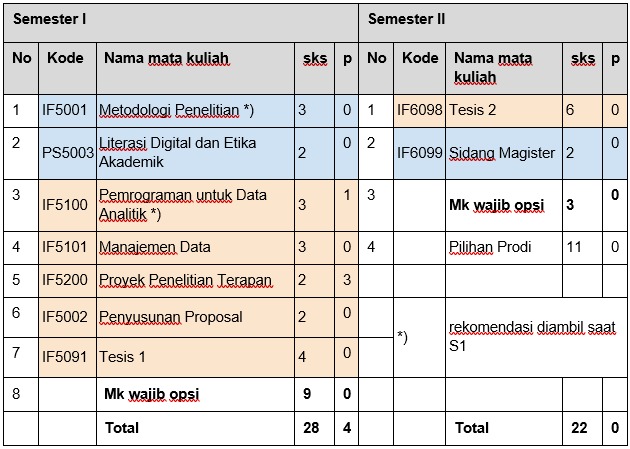
PPSM students are required to undertake a continuous TA Thesis, which is the implementation of TA in the undergraduate program and thesis in the master's program with a continuous topic so that it is part of the work/research in the same area. Related to the category of PPSM program participants, the rules for implementing a Continuous TA Thesis are defined as follows. 

  1. Linear: students are required to carry out a Continuing Thesis TA with the same topic and supervisor.
  2. Semi-linear: Students are advised to undertake a Continuous Thesis TA with a topic that is possibly multidisciplinary in nature with the student's undergraduate program field and with a supervisory team that can come from the student's undergraduate study program and from the Informatics Master's study program. However, if not, then students are required to undertake a TA with a topic in the field of computing, even though it is not continuous with the thesis topic in the Informatics Master's Study Program and can be carried out with a different supervisor.
  3. Non-linear: students are advised to undertake a Continuous Thesis TA with a topic that is possibly multidisciplinary in nature with the student's undergraduate program field and with a supervisory team that can come from the student's undergraduate study program and from the Informatics Master's Study Program. However, if not, then students are advised to take a TA topic in the field of computing, although it is still possible to take another topic outside the field of computing according to the field of their study program, so that it can be carried out with a different supervisor than the thesis.

The general management plan for the Continuous Thesis TA is as follows.

  1. Supervisor requirements:
    The Continuous Thesis TA is carried out with the same supervisor for both the TA and the Thesis. The maximum number of supervisors is 2 people, both for the TA and the Thesis. If there is only 1 supervisor, then the supervisor must be eligible as the main supervisor in the undergraduate study program and the Master of Informatics Study Program. If there are 2 supervisors, then one of the supervisors must be eligible as the main supervisor in the Master of Informatics Study Program and the rules for the order of the main and assistant supervisors follow the rules in the undergraduate study program and the Master of Informatics Study Program. The list of supervisors for the Master of Informatics Study Program can be accessed at Dosen Pembimbing Tesis Magister Informatika ITB.
  2. Topic requirements:
    • The topic of the Continuing Thesis TA must be within the scope of the computing field.
    • The topic of the Continuing Thesis TA must consider the appropriate level of knowledge and depth and must can be divided clearly target untuk proses TA di program sarjana dan target proses tesis di program magister. 
    • The topic of the Continuing Thesis TA must consider the appropriate level of knowledge and depth and must
    • Thesis topics for Continuing Thesis Projects can come from prospective supervisors or from student proposals. If the proposal originates from the student, it must be consulted with and approved by the supervisor.
  3. Student data collection:
    Before the 7th semester of the undergraduate student program begins, the PPSM implementation team held a meeting and socialization with all students participating in the PPSM program who were due to take their TA in the 7th semester. Students were asked to submit their TA Thesis taking plan to get information about participants who would take the Continuous Thesis TA, especially for students from the semi-linear and non-linear categories.
  4. Topic and supervisor allocation procedures:
  • For all students who will undertake a Continuous Thesis TA, the PPSM implementation team coordinates with all TA implementation teams in all related student study programs and the thesis implementation team of the Master of Informatics Study Program to coordinate the allocation of Thesis TA topics and supervisors for the students concerned.
  • The process of allocating the topic and TA Thesis supervisor can be a special case in the allocation of the topic and TA supervisor in the student's undergraduate study program and the procedure can be adjusted to the procedure in each undergraduate study program provided that the topic requirements (see point 2) and supervisor (see point 1) are met.
  • After students are allocated a topic and supervisor, students report the Continuing Thesis TA planning proposal that has been signed by the student and supervisor to the PPSM implementation team.
  • The topic and supervisor allocation process can begin before semester 7 begins and must be completed no later than the 7th week of semester 7 of the student's undergraduate program. 
  1. Taking related courses:
    a. Taking TA course in undergraduate study programs

    • Assumption: There are TA-I courses in semester 7 and TA-II in semester 8 in each undergraduate study program. 
    • Students carry out the Continuous Thesis TA portion for the undergraduate program by following the TA implementation procedures in their respective study programs with the following note: in submitting the TA proposal, the topic and planning for the implementation of the Thesis must also be included.
    • Students take the TA-I course in semester 7. All or part of the topic and supervisor allocation process can be done in this semester (see point 4.d.)
    • TA-II courses are taken in semester 8.
  1. Taking Research Methodology and Thesis course This is implemented after the student changes status to a Master of Informatics student. The Research Methodology course is taken in semester 1 and the Thesis course is taken in semester 2 and is implemented according to the procedures and regulations applicable in the Master of Informatics study program.
    Note: In submitting the thesis proposal, the results of the TA must be submitted which will be continued in the thesis.
  1. During the Continuing Thesis TA implementation, students are not permitted to change topics and supervisors, especially from TA to Thesis. Changing topics or supervisors may be done for certain emergency reasons and follow procedures established by the Informatics Master's Program and acknowledged by the PPSM implementation team.

The Master Program in Informatics at the School of Electrical Engineering and Informatics, ITB, offers a Dual / Double Degree Program (DDP) in collaboration with several partner universities abroad. Students participating in the DDP can obtain degrees from both institutions—one from ITB and one from ITB’s partner university overseas. 

Students may begin their studies in the Master Program in Informatics at ITB and attend courses at ITB during the first year, following the ITB Master in Informatics curriculum. In the second year, they will continue their studies at a partner university abroad. The reverse also applies for students from partner universities: they will follow the curriculum at their home university during the first year, and then continue their second year of study at ITB.

Currently, the Master Program in Informatics at ITB offers a Dual / Double Degree Program (DDP) in collaboration with the following four partner universities: 

1. Toyohashi University of Technology – Computer Science & Engineering (Japan)

Toyohashi University of Technology – Computer Science & Engineering (Japan) The TUT-ITB DDP was formally initiated with the Agreement for Double Master’s Degrees between Toyohashi University of Technology (TUT) and Institut Teknologi Bandung (ITB) on August 18, 2023, and the Addendum Agreement for Double Master’s Degrees between the Department of Computer Science and Engineering, TUT and the Informatics Program, ITB on August 22, 2023. Website link: https://www.tut.ac.jp/english/introduction/publications.html Agreement for Double Master’s Degrees between Toyohashi University of Technology (TUT) and Institut Teknologi Bandung (ITB) August 18, 2023, and Addendum Agreement for Double Master’s Degrees between Computer Science and Engineering TUT and Informatics ITB August 22, 2023.
Link web: https://www.tut.ac.jp/english/introduction/publications.html 

2. Singapore Management University – Master of IT in Business (Singapore)

This program is officially listed under the LPDP Double Degree Scholarship Program.

https://lpdp.kemenkeu.go.id/storage/beasiswa/kebijakan-umum/file/public_policy_file_1737168598.pdf 

Other scholarships: Soegiarto Adikosoemo Postgraduate Scholarship

Website Link: https://masters.smu.edu.sg/programme/master_of_it_in_business/community-stories/bridging_borders_and_minds_smuitb_double 

3. Grand Valley State University – College of Computing

Website Link: https://www.gvsu.edu/computing/itb-international-agreements-191.htm 

4. La Trobe University –

INFORMATION FOR FOREIGN STUDENTS

1. Study Permit & Visa Application

Necessary documents: https://partnership.itb.ac.id/pre-arrival/ 

Visa Fee : IDR 6,500,000,00 (subject to change)

Process flow:

Procedures
Applicant Receive the Letter of Acceptance (LoA) from ITB
Applicant

send all required documents to IRO ITB. 

Necessary documents: https://partnership.itb.ac.id/pre-arrival/ 

After IRO ITB receives all required documents, it takes 2-3 months for your study permit and visa. Visa fee is about 6.5 – 9 millions IDR

.

Process study permit online to Director of Institutional Affairs, DIKTI, Jakarta.

After obtaining a study permit from DIKTI, proceed with online application for E-Visa C-316 to the Directorate General of Immigration, Jakarta.

Applicant Receive E-Visa C-316 approval from The International Relations Office Institut Teknologi Bandung (IRO ITB).
2. Guide for ITB accommodation

ITB Student dormitory information : https://asrama/ditsp.itb.ac.id/asrama/1/

Necessary information & documents: photo, phone number, birthday, birthplace, current addres (with postcode), guardian name, guardian phone number, emergency contact
Process flow:

Procedures
Applicant

provide all required information to STEI Office. 

After STEI Office receives all required information, it takes 1-2 weeks . Dormitory rent is about 1.5 millions IDR per month.

. The Directorate of Facilities and Infrastructure, through the Housing Service Section 
Applicant Receive accommodation confirmation from STEI officer.