Prof. Trio Adiono, S.T., M.T., Ph.D
School of Electrical Engineering and Informatics
Erwin Setiawan, S.T., M.T.
ITB Microelectronics Center, IC Design Lab
Michael Jonathan, S.T.
ITB Microelectronics Center, IC Design Lab
Abstract
With nearly 70% of the Earth's surface covered by water, activities related to the aquatic environment are becoming increasingly important. Underwater wireless communication (UWC) is an alternative technology used for ocean exploration. Acoustic and radio frequency (RF) technologies are the most popular wireless technologies for ocean exploration. However, acoustic communication technology has limited bandwidth, while underwater RF devices only reach very short distances. Therefore, optical communication has emerged as a new alternative that can be used to achieve higher data rates compared to acoustic and relatively longer distances compared to RF.
In this study, we propose a System-on-Chip (SoC)-based UWC real-time communication prototype. To improve throughput and bandwidth efficiency, Orthogonal Frequency Division Multiplexing (OFDM)-based modulation is used. With a bandwidth of 32 MHz, the achievable real-time data rate is 54 Mbps.
Keyword: UWC, VLC, SoC, FPGA.
Introduction
Indonesia is a maritime nation with enormous marine resources. Ocean exploration has attracted considerable attention due to its scientific, strategic, and economic importance. With rapid technological developments, underwater wireless communications and networking have become a rapidly growing field with extensive applications in both commercial and military-based systems. Underwater wireless communications are needed for applications such as remote control in the offshore oil industry, pollution monitoring in environmental systems, scientific data collection from underwater stations, disaster detection and early warning, and national security and defense.
Several technologies can be used for underwater communication, including acoustic communication, radio waves (RF), and wireless optical communication. Acoustic communication is a technique often used for underwater wireless communication because it has a long range of up to tens of kilometers. However, acoustic communication for underwater has disadvantages such as high latency due to the slow propagation of sound waves in seawater, high power consumption, and Doppler scattering. RF has the advantage of providing data rates of up to tens of Mbps. However, this technology has disadvantages such as its very short range (a few meters), high energy consumption, high cost, and the need to be equipped with a large antenna.
Research Method
In the initial stage, system modeling was performed using MATLAB. At this stage, various signal processing algorithms were developed, including modulation design and protocol design for effective and efficient internet packet generation. System performance was measured using the BER versus SNR curve. The channels to be used were also adjusted. After the modeling was completed, the system was designed and implemented in the form of a real-time FPGA-based prototype. The system is divided into three parts: an analog signal processing block, a digital signal processing block, and a system-on-chip.
The analog processing block is designed with a circuit consisting of analog components that convert baseband digital signals into analog signals and drive a laser diode (LD) (transmitter). The receiver side does the opposite, receiving light using a photodetector (PD) and then converting the analog signal to baseband digital. The digital processing block is a real-time implementation of modulation and protocols. This block will be designed on a field-programmable gate array (FPGA) chip. The output of this block is a baseband signal that will be connected to the analog processing block.
The System-on-Chip design was carried out on an FPGA SoC to connect the baseband signal to the ARM processor, thus creating an integrated system for UWC. The OFDM baseband processor supports 4-QAM and 16-QAM modulation.
Discussion & Result
The underwater channel testing was conducted using an aquarium filled with fresh water. Two RFSOC4x2 FPGAs were used in the testing for TX and RX. For TX, we used an Osram PL450B 450nm 80mW LD. This LD has a very high bandwidth of around 1 GHz. We set the bias current for this LD to 30 mA using a top-bench power supply. For RX, we used a Femto HSPR-XI-1G4-SI Si-PIN PD module that has a bandwidth of 10 kHz to 1.4 GHz. The distance between TX and RX is 1.5 m.


Various disturbances are introduced to the water to simulate real-world conditions, such as turbulence. Turbulence can be created by adding a water heater to the aquarium. The higher the water temperature, the greater the turbulence. The effect of turbulence is measured using the Scintillation Index (SI). A higher SI value indicates greater turbulence. The greater the turbulence, the more refraction of light passing through the water due to the increasingly irregular water molecules. This refraction of light causes the amplitude of the received signal to fluctuate. This is one of the differences between free-space and underwater.
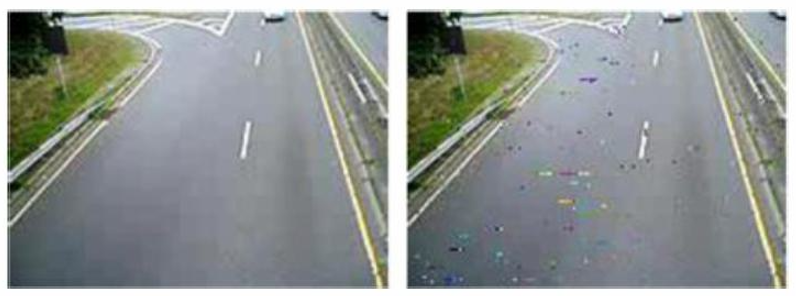
We tested the UOWC system by sending a real-time video file. The video is in RGB format and has a size of 120 x 160 pixels. The video has a total of 120 frames. Therefore, the number of bits in the video file is 55296000 bits. The maximum real-time data rate is 54 Mbps. We added turbulence by adding a water heater to the aquarium. The SI value of the water was measured at 0.188, while the normal condition without turbulence is 0.000322. The water temperature in the heater area was measured at around 23°C, while the other areas were measured at 21°C.
Conclusion
An OFDM prototype for UWC communications has been tested on an RFSOC 4×2 FPGA with an underwater channel for video transmission. With a bandwidth of 32 MHz, the achievable real-time rate is 54 Mbps. The influence of turbulence will increase bit errors.